



Authorities in Ceuta are struggling to cope with thousands of people that remain in the autonomous city following the mass arrival of migrants last week.
Security forces estimate that around 73,500 people have already left the North African exclave and returned to Morocco, while local authorities say up to 5,000 remain in the Spanish territory, including 862 minors.
The crisis has so far resulted in at least 88 confirmed deaths, according to Ceuta’s authorities, in addition to bodies recovered by Moroccan authorities in Moroccan waters.
Juan Vivas, the president of Ceuta, estimates that between 3,000 and 5,000 migrants remain in the city four days after the mass influx from Morocco. He said the situation has not yet returned to normal and that Ceuta is still dealing with the aftermath of the incident.
Vivas added that between 1,800 and 2,000 people had already entered the city by swimming in the days before the mass crossing, a warning sign that he said showed the need for stronger border monitoring and better coordination to prevent another such crisis.
The Ceuta leader also highlighted the emotional toll of the crisis on residents, describing the fear, uncertainty, and sense of helplessness some had experienced. In an interview with Spanish newspaper El País, Vivas said: “Morocco has shown that it cannot be trusted; we must demand respect from it.”
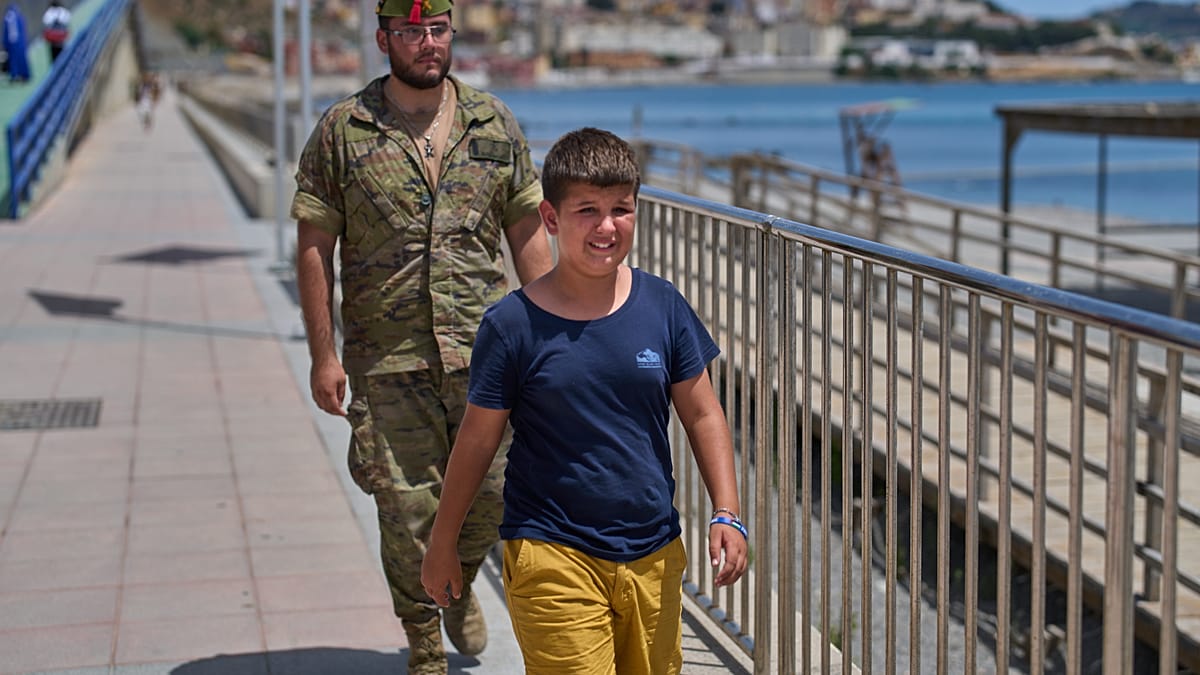
More than 860 minors remain
Ceuta is seeking to expand its reception capacity to care for the 862 minors currently left under the city’s watch.
Authorities say the figure could approach one thousand and admit that some may still be on the streets and unaccounted for.
While new facilities are being prepared, existing shelters are operating beyond their capacity. The Spanish territory is continuing to offer support for the minors and is preparing new reception measures while it processes possible transfers to mainland Spain.
City services have increased support, providing accommodation, food and clothing. Younger children have been placed in more suitable facilities, while older teenagers are being housed in temporary spaces until more resources become available.
Caring for minors has become one of the city’s main priorities, with around 250 workers assigned to the task. Officials do not rule out further increases in the number of children under the city’s care. Drawing on the experience of the 2021 migration crisis, the Ceuta government estimates the figure could eventually reach between 1,000 and 1,100 minors.
The city’s reception system is completely overwhelmed. Its 29 standard places for minors are currently operating at almost 3,000% of their capacity. The local government is calling on the Spanish state to provide urgent assistance and additional funding, while preparing new facilities, including an industrial warehouse in El Tarajal, to cope with the arrivals.
Ceuta residents take action amid growing uncertainty
Fears of further incidents following the mass arrivals have prompted some residents of Ceuta to set up barriers in the territory, installing makeshift fences to restrict access to certain streets.
Tensions have risen in several parts of the city in recent days, with residents reporting isolated incidents and confrontations, according to El Faro de Ceuta. In one neighborhood, a resident claimed he was assaulted after refusing to give a cigarette, while some young migrants said they regretted that the actions of a small number of individuals were affecting the image of the wider group.