
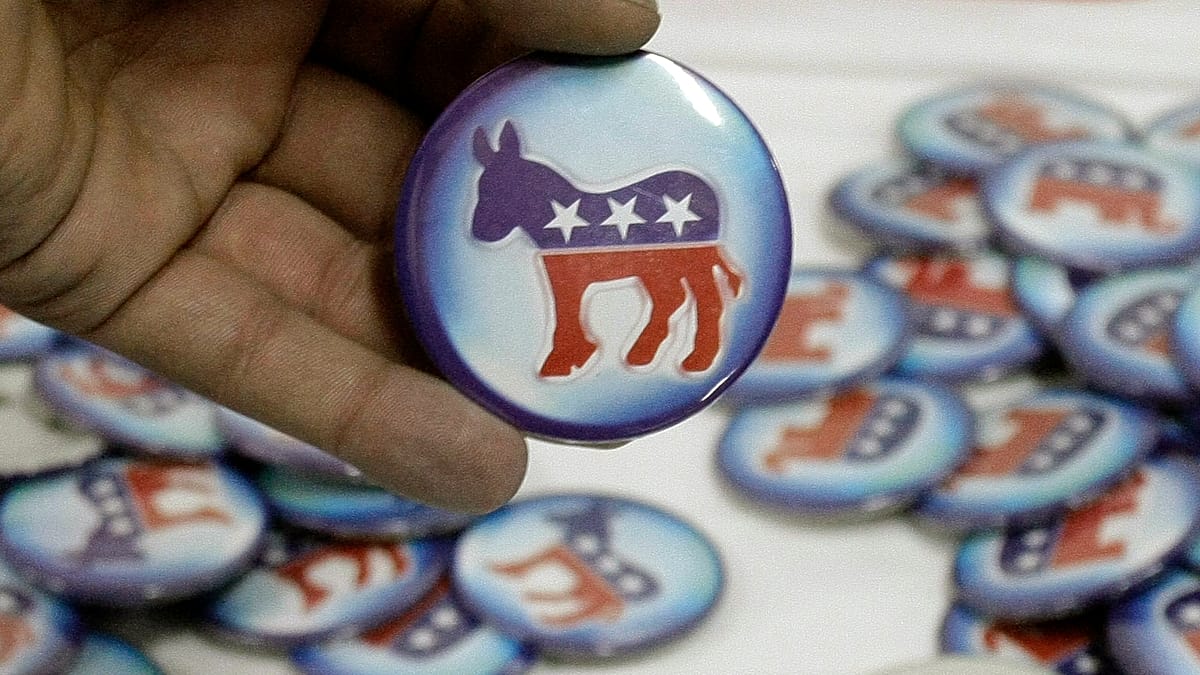
No one is officially running for president but everyone is campaigning.
By the time Democratic voters cast their first ballots in Iowa and New Hampshire in early 2028, the nomination battle may already have been underway for nearly two years.
Across America, Democratic governors are leading fundraising events in states that hold early presidential primaries. Senators are publishing memoirs. Cabinet veterans are making carefully choreographed television appearances. Members of Congress are building enormous social media audiences while insisting they are focused entirely on their current jobs. Political action committees are quietly hiring staff. Donors are taking meetings. Pollsters are testing slogans. Consultants are mapping delegate strategies.
No one is announcing. Everyone is preparing.
The Democratic Party is entering perhaps its most unpredictable presidential contest in half a century—a genuine open primary with no incumbent president, no sitting vice president automatically inheriting the mantle, and no obvious consensus leader.
The result is what Washington strategists increasingly call the “Invisible Primary”: a sprawling shadow campaign in which dozens of ambitious Democrats are competing for influence long before a single candidate files official paperwork.
A party looking for its next identity
The stakes extend far beyond personalities.
The Democratic Party is still wrestling with the political lessons of the Trump era. Should Democrats move toward the centre to reclaim suburban moderates? Or embrace a more populist economic message that energizes younger voters? Should immigration remain a defining issue? Can climate politics be reframed around jobs rather than sacrifice? How should the party address cultural issues that Republicans have used against it effectively in recent elections?
The eventual nominee will not simply inherit a coalition.
They will define what the Democratic Party represents after nearly a decade dominated by Donald Trump.
That uncertainty explains why so many potential candidates are behaving like presidential hopefuls without saying so.
Gavin Newsom: campaigning without campaigning
Few politicians have embraced the shadow campaign more visibly than California Governor Gavin Newsom.
For years, Newsom has carefully expanded his national profile through televised debates with conservative figures, appearances in Republican-led states, high-profile podcast interviews and relentless criticism of the Trump administration and of Trump himself.
His message is straightforward: Democrats cannot simply oppose Republicans—they must beat them in the national argument.
Newsom has cultivated major donors, developed relationships with labour unions and positioned himself as one of the party’s most recognizable communicators.
His challenge remains equally obvious.
Republicans would relish running against a California governor, portraying Newsom as the embodiment of progressive excess. Democrats themselves remain divided over whether his polished media style translates into broad electoral appeal.
Andy Beshear: The Democrat Republicans keep electing
If Democrats are searching for proof that liberal politics can still succeed in deeply conservative territory, Kentucky Governor Andy Beshear has become Exhibit A.
Twice elected in one of America’s most Republican states, Beshear has cultivated a calm, bipartisan image focused on disaster response, healthcare and economic development.
His appeal is obvious.
If Democrats hope to rebuild support across rural America, Beshear offers perhaps their strongest case study.
His challenge is equally significant: can a governor with relatively limited national exposure translate regional popularity into a national movement?
Even seemingly unrelated headlines—such as his recent public call for greater transparency regarding Kentucky Senator Mitch McConnell’s health—have reinforced his image as a measured, executive leader willing to address politically sensitive issues.
Pete Buttigieg: still the best communicator?
Few Democrats perform as effectively in hostile media environments as Pete Buttigieg.
The former transportation secretary has become one of the party’s most effective television advocates, regularly appearing on conservative networks where he calmly dismantles Republican arguments.
Since his surprisingly strong 2020 presidential campaign, Buttigieg has expanded his political profile beyond policy expertise into broader discussions of democracy, economics and American identity.
Supporters argue he represents the next generation of Democratic leadership. But critics question whether his appeal extends beyond highly educated suburban voters.
Either way, few observers doubt he remains one of the most disciplined potential candidates.
Alexandria Ocasio-Cortez: from activist to national leader?
New York congresswoman Alexandria Ocasio-Cortez has undergone perhaps the most remarkable political transformation inside the Democratic Party.
Once dismissed by moderates as a protest candidate, she has evolved into one of the party’s most influential national figures.
Her enormous online following gives her direct access to millions of younger voters without relying on traditional media.
Her challenge is convincing sceptical Democrats that she could unite the broad coalition necessary to defeat Republicans nationally.
Supporters increasingly argue that the party cannot afford to nominate another cautious centrist.
Critics fear her progressive brand remains too polarizing in key swing states.
Josh Shapiro: Pennsylvania’s executive
Pennsylvania Governor Josh Shapiro occupies another attractive lane.
Young, articulate and governing perhaps the country’s most important battleground state, Shapiro has steadily accumulated national attention through bipartisan infrastructure projects and crisis management.
Many Democratic strategists privately view Pennsylvania as indispensable in any Electoral College path back to the White House.
Winning there as governor naturally attracts presidential speculation.
JB Pritzker: The billionaire progressive
Illinois Governor JB Pritzker possesses something every presidential candidate values : resources.
As one of America’s wealthiest politicians (the Pritzker family owns the Hyatt hotel chain), Pritzker can finance enormous political operations while presenting himself as an unapologetic defender of progressive priorities, organized labour and abortion rights.
His willingness to aggressively confront Republicans has made him increasingly popular among Democratic activists.
Whether that popularity extends nationally remains an open question.
Raphael Warnock: the senate voice
Georgia Senator Raphael Warnock continues to attract quiet presidential speculation.
His compelling personal story—from pastor at Ebenezer Baptist Church to senator representing one of America’s most competitive states—gives him a uniquely inspirational profile.
Warnock’s challenge is timing.
Many Democrats believe his political future may ultimately lie in 2032 rather than 2028, allowing additional time to build national experience.
Kamala Harris: the great unknown
No figure generates more uncertainty than former Vice President Kamala Harris.
After leading the Democratic ticket in 2024, Harris remains one of the party’s best-known figures.
Her national organization, fundraising network and political experience would instantly make her one of the strongest contenders—if she chooses to run.
Yet many Democrats continue debating whether the party should embrace a familiar national figure or turn decisively toward a new generation.
Her decision—or refusal—to run may shape the entire field.
The dark horses
Every open presidential contest eventually produces surprise candidates.
Georgia Senator Jon Ossoff has begun attracting increasing attention as Democrats search for a figure capable of appealing across ideological factions, although he continues to deny presidential ambitions while focusing on his Senate campaign.
Maryland Governor Wes Moore continues to impress donors with his biography and executive style.
Even figures like Arizona Senator Mark Kelly, Connecticut Senator Chris Murphy or former Chicago Mayor and White House chief of staff Rahm Emanuel could emerge if the better-known contenders falter.
History suggests someone barely mentioned today could become tomorrow’s front-runner.
The new rules of presidential politics
Unlike in previous generations, today’s invisible primary plays out continuously online. Candidates no longer need speeches in Iowa to build momentum.
A single podcast interview can reach millions of viewers, dominate the news cycle, and elevate a candidate’s national profile overnight. A viral TikTok clip may reach more young voters than weeks of television advertising.
Every policy address becomes campaign content. Every overseas trip is scrutinized as a test of presidential leadership and every cable news interview serves as a miniature presidential debate.
Political consultants increasingly argue that candidates are now building personal media brands years before formally entering presidential politics.
Obama still casts a long shadow
Hovering over the entire field is one man who is not running.
Former President Barack Obama remains perhaps the Democratic Party’s single most influential voice.
Although he has carefully avoided endorsing any potential successor, many party leaders believe his opinion could become decisive if the primary remains fragmented.
Whether Obama ultimately plays kingmaker—or deliberately stays neutral—could shape donor behaviour and elite endorsements across the party.
The Midterms come first
For now, every prospective presidential hopeful insists that 2026—or, in some states, 2027—is the immediate priority. Governors must govern while senators must defend their seats.
Democrats must first prove they can regain congressional power before dreaming about recapturing the White House. Yet every campaign stop, fundraising dinner and national television appearance is being viewed through another lens.
Who looked presidential? Who impressed donors? Who connected with younger voters?Who survived the week’s headlines? The answers are quietly shaping a race that officially does not exist.
But in Washington, few are fooled. The race for the 2028 Democratic presidential nomination is already underway — even if the candidates simply refuse to admit it.