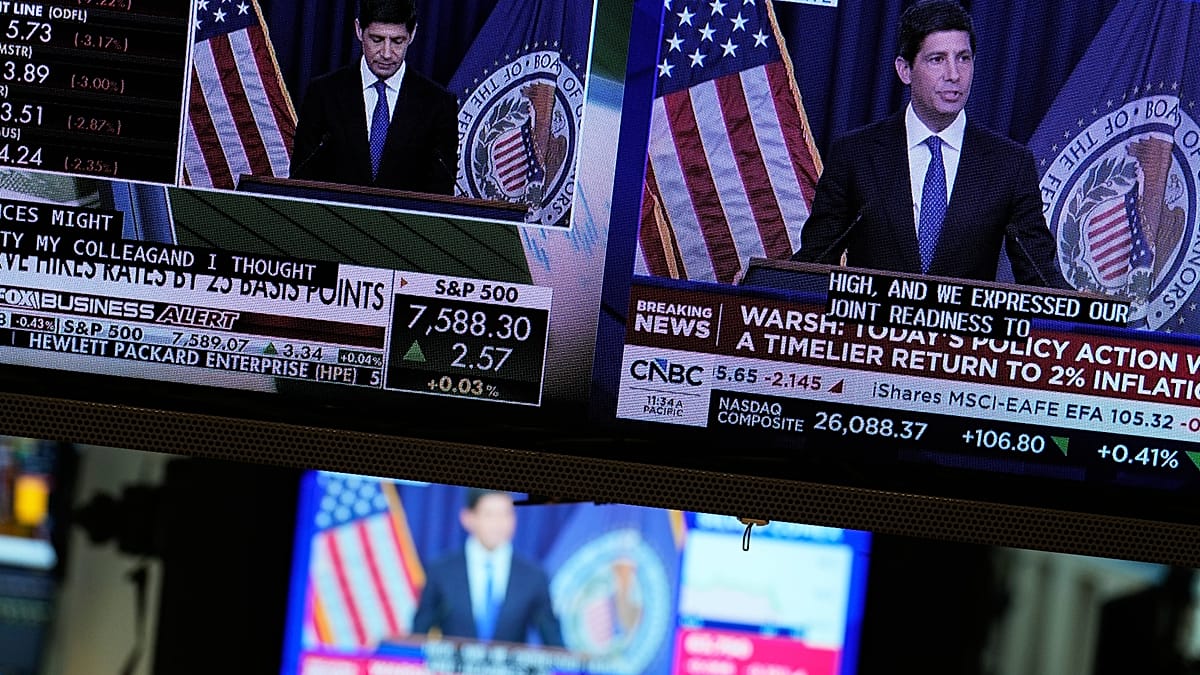





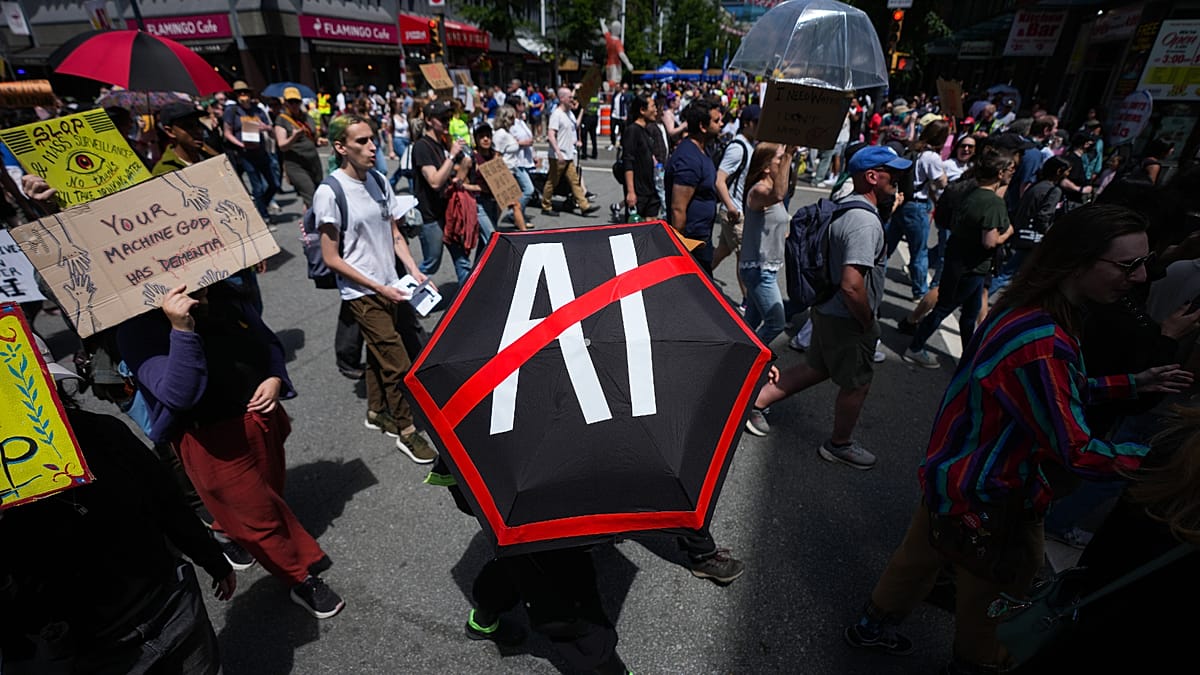
In its Annual Economic Report, published on Sunday, the Bank for International Settlements (BIS), known as the central bank for central banks, warned that the enormous spending on AI is accumulating financial vulnerabilities that could amplify any future shock and spread from markets into the wider economy.
Presenting the findings, BIS general manager Pablo Hernández de Cos said the message was one of “urgency”, with policymakers urged to act before any reversal makes the eventual adjustment more painful.
At the core of the warning is the scale of the spending, despite massive investment having supported global growth over the past year.
The five largest “hyperscalers”, the technology giants racing to build AI infrastructure, are on track to commit more than $1 trillion (€878bn) to AI-related investment across 2025 and 2026, a pace that is outstripping their earnings and free cash flow and pushing some to borrow heavily to keep up.
The BIS suggests this race is fuelled by a belief that only a handful of dominant players will ultimately prevail, encouraging firms to pour money into projects whose returns remain deeply uncertain.
Echoes of past manias
The report sets today’s AI boom against a long historical lineage, from the canal mania of the 1830s and Britain’s railway mania of the 1840s to the electrification of the 1920s and the dotcom bubble.
Each began with a genuine technological breakthrough that attracted more capital than commercial returns could justify, the BIS notes, with each episode ending “with an eventual reversal in investment, inducing economy-wide recessions”.
Compounding the danger are stretched share prices and opaque financing.
The BIS highlights the spread of “circular financing”, in which chipmakers and cloud giants take equity stakes in AI labs that then commit to buying their chips and computing power, effectively recycling money back to the original investors as revenue.
Much of the funding now flows through hedge funds and private credit vehicles that face lighter scrutiny than banks.
According to Zhang Tao, the BIS chief representative for Asia and the Pacific, that reliance on non-bank channels means an AI downturn could unwind into a sharper, faster crash than a traditional banking crisis.
The hidden costs of data centres
Beyond financial markets, critics argue the true cost of the AI build-out is being obscured in plain sight.
A central concern, examined by the Wall Street Journal, is how the technology giants account for their data centres.
By assuming the expensive equipment inside them will stay useful for longer, firms can spread its cost over more years, lowering the depreciation charged against profits in any given period and making earnings look healthier than the underlying cash burn implies.
However, the specialist chips at the heart of these facilities may become obsolete far faster than those extended schedules assume, leaving a gap between reported profits and economic reality, as well as a balance sheet more exposed than it appears should demand disappoint or a sizable need to replace hardware arise.
The physical scale is staggering.
Columbia University economist Stijn Van Nieuwerburgh estimates the build-out could cost in the region of $8 trillion (€7tn) over the next six years, financed in part through the kind of off-balance-sheet arrangements the BIS flagged.
The costs are also no longer confined to corporate accounts.
Some economists now warn of a so-called “third wave” of inflation, after the pandemic and tariffs, driven this time by the AI build-out. As chip manufacturers prioritise high-margin parts for AI servers, the resulting squeeze on memory and storage has rippled out to consumer electronics.
For example, Apple raised prices on its MacBooks, iPads and other devices last week, citing an “extraordinary surge in demand for memory and storage” and saying it had “never seen a component price increase this much, this quickly”.
The company’s shares fell around 6%, their worst day in over a year, as Microsoft, Nintendo and Sony have also made similar moves.
Beyond hidden costs and inflationary pressures, where the strain may spread furthest is raw power.
Goldman Sachs expects data centres to account for nearly half of the growth in US electricity demand by 2030, with consumer power prices forecast to rise around 6% a year through 2026 and 2027.
The BIS itself notes that the build-out’s hunger for electricity is already pressuring prices and input costs, with potential spillovers to inflation, though it stresses, as do many economists, that AI could yet prove disinflationary if its promised productivity gains eventually arrive.