
Close Menu
Daily Guardian EuropeDaily Guardian Europe
  • Home
  • Europe
  • World
  • Politics
  • Business
  • Lifestyle
  • Sports
  • Travel
  • Environment
  • Culture
  • Press Release
  • Trending
What's On

Russians vote in elections with no party opposing Putin or war in Ukraine

September 18, 2026

A new wave of listings: Tashkent prepares companies for global markets

September 18, 2026

From Madrid to Zagreb, Europe’s autonomous vehicles are multiplying

September 18, 2026

Europe’s most popular castles and palaces revealed – according to traveller reviews

September 18, 2026

“Iris” and “Weeping Willow”: unseen Monet paintings go on sale in Paris

September 18, 2026
Facebook X (Twitter) Instagram
Web Stories
Facebook X (Twitter) Instagram
Daily Guardian Europe
Newsletter
  • Home
  • Europe
  • World
  • Politics
  • Business
  • Lifestyle
  • Sports
  • Travel
  • Environment
  • Culture
  • Press Release
  • Trending
Daily Guardian EuropeDaily Guardian Europe
Home»Business
Business

Syria’s president pays for coffee with Visa card as Damascus rejoins financial systems

By staffAugust 27, 20263 Mins Read
Syria’s president pays for coffee with Visa card as Damascus rejoins financial systems
Share
Facebook Twitter LinkedIn Pinterest Email

Published on 27/08/2026 – 11:13 GMT+2•Updated
11:23

A cup of coffee in the Old City of Damascus became Syria’s chosen symbol of global economic reintegration.

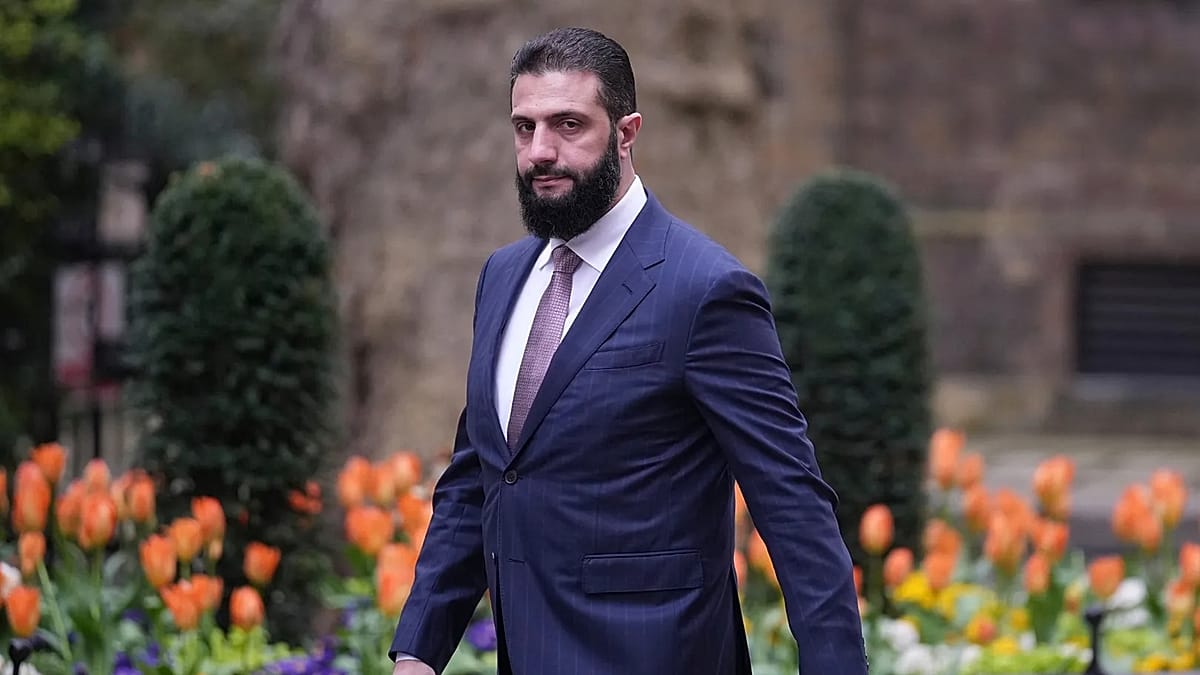
Syrian President Ahmed al-Sharaa, accompanied by central bank governor Mohammed Safwat Raslan, tapped a Visa card at a café in a video posted by an official government account to mark Washington’s decision to strike the country from its terrorism blacklist.

“For more than 15 years, this simple transaction was impossible,” the accompanying post read.

Raslan called the delisting “a historic step that restores the country to its natural place in the global economic system.”

What sanctions were lifted?

The US State Department rescinded Syria’s designation as a state sponsor of terrorism on Monday, ending a listing that had stood since 1979.

It took effect after a 45-day congressional review triggered by US President Donald Trump’s July notification to lawmakers.

The decision came alongside the removal of Hayat Tahrir al-Sham, the former paramilitary group that led the offensive resulting in the fall of the al-Assad regime in Syria, from a specially designated global terrorist list.

Most US sanctions had already gone before. The comprehensive programme was terminated in mid-2025 and Congress repealed the Caesar Act — its most severe secondary sanctions regime — in a December 2025 defence spending bill.

However, the terrorism designation carried restrictions on financial transactions that continued to deter banks and investors.

The US Treasury has since confirmed that American financial institutions may service Syrian clients, process payments involving Syrian banks and establish correspondent banking relationships.

The action “will help foster additional investment in Syria to promote political and economic stability,” US Treasury Secretary Scott Bessent said.

Delisting amounts to “effectively, a green light” for reconstruction investment, according to Tellimer, a Dubai-based emerging markets research firm, which expects banking, technology and telecommunications to gain most from restored SWIFT access.

Measures remain against ousted dictator Bashar al-Assad’s associates, human rights abusers and captagon traffickers, and Syria is still on the G7’s Financial Action Task Force grey list over money-laundering concerns.

Where the EU stands

Brussels has moved alongside the US when it comes to lifting sanctions on Syria.

The European Council lifted all economic sanctions in May 2025, retaining only those imposed on security grounds, including arms and technology that could be used for internal repression of the population.

It went further this year.

On 11 May the Council restored full application of the EU-Syria Cooperation Agreement, suspended in part since 2011, and held its first high-level political dialogue with Damascus since before the civil war.

A week later it renewed measures against figures linked to the former regime until June 2027 while de-listing seven entities, among them the interior and defence ministries now run by the transitional authorities.

Share. Facebook Twitter Pinterest LinkedIn Tumblr Email

Keep Reading

A new wave of listings: Tashkent prepares companies for global markets

Portuguese prime minister outlines plan to tackle rising living costs without changing VAT

Portuguese prime minister outlines plan to tackle rising cost of living, keeps VAT unchanged

Expected years in retirement: For how long do Europeans receive their pensions? 

Asian stocks track Wall Street rally as oil prices decline

Japan’s central bank raises benchmark interest rate to 1.25%

Anthropic priced above $2 trillion as markets eagerly await IPO filing

Bank of England holds rates at 3.75% in 6-3 split vote as inflation hits five-month high

Revolut hack: criminals steal data of 700 European clients, demand $3m ransom

Editors Picks

A new wave of listings: Tashkent prepares companies for global markets

September 18, 2026

From Madrid to Zagreb, Europe’s autonomous vehicles are multiplying

September 18, 2026

Europe’s most popular castles and palaces revealed – according to traveller reviews

September 18, 2026

“Iris” and “Weeping Willow”: unseen Monet paintings go on sale in Paris

September 18, 2026

Subscribe to News

Get the latest Europe and world news and updates directly to your inbox.

Latest News

British MPs to tackle UK crisis — why it does so badly in Eurovision – POLITICO

September 18, 2026

Child protection is not 'only one party's responsibility', business group says

September 18, 2026

Video. Latest news bulletin | September 18th, 2026 – Midday

September 18, 2026
Facebook X (Twitter) Pinterest TikTok Instagram
© 2026 Daily Guardian Europe. All Rights Reserved.
  • Privacy Policy
  • Terms
  • Advertise
  • Contact

Type above and press Enter to search. Press Esc to cancel.