
Close Menu
Daily Guardian EuropeDaily Guardian Europe
  • Home
  • Europe
  • World
  • Politics
  • Business
  • Lifestyle
  • Sports
  • Travel
  • Environment
  • Culture
  • Press Release
  • Trending
What's On

Zia Yusuf, the ‘British Muslim patriot’ Nigel Farage trusts with the border – POLITICO

March 31, 2026

Newsletter: Lebanese minister says situation ‘dramatic’ as Israel expands ground invasion

March 31, 2026

Oil remains above $110 as markets once again grapple with uncertainty over Trump’s next move

March 31, 2026

From Seville to Zamora: Spain’s best places to experience an unforgettable Holy Week

March 31, 2026

Russlands Angst vor dem Tribunal – POLITICO

March 31, 2026
Facebook X (Twitter) Instagram
Web Stories
Facebook X (Twitter) Instagram
Daily Guardian Europe
Newsletter
  • Home
  • Europe
  • World
  • Politics
  • Business
  • Lifestyle
  • Sports
  • Travel
  • Environment
  • Culture
  • Press Release
  • Trending
Daily Guardian EuropeDaily Guardian Europe
Home»Lifestyle
Lifestyle

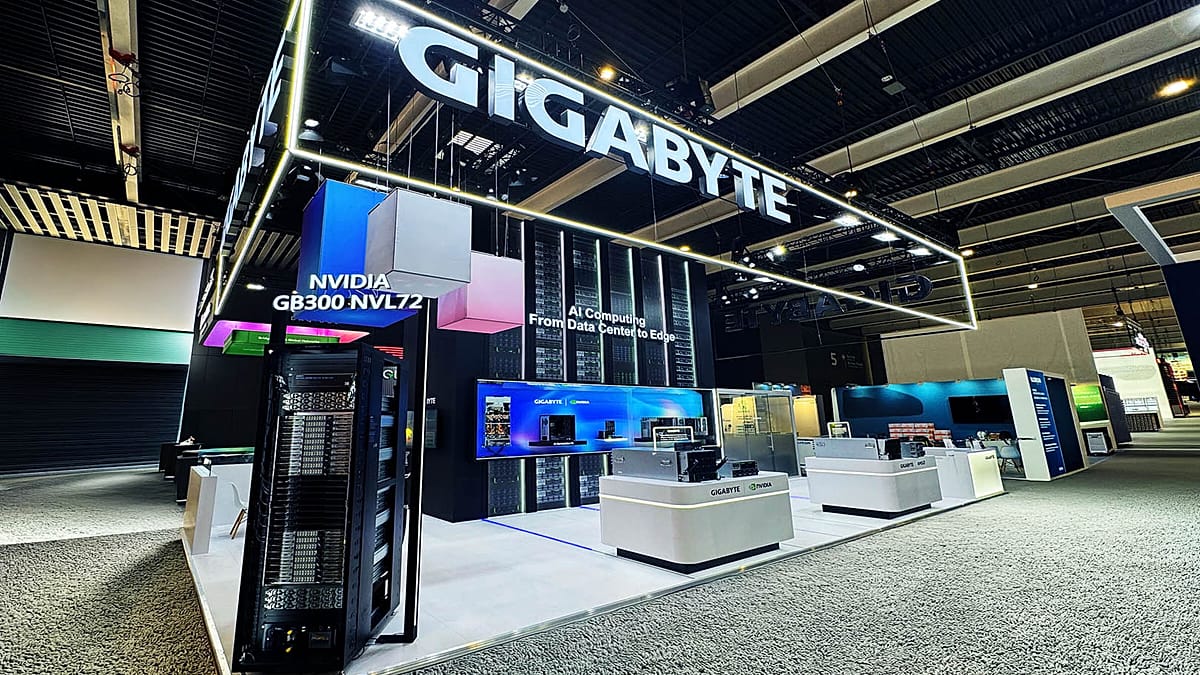
Supercomputers and sustainability: Taiwanese company Gigabyte shares vision for democratising AI

By staffMarch 10, 20263 Mins Read
Supercomputers and sustainability: Taiwanese company Gigabyte shares vision for democratising AI
Share
Facebook Twitter LinkedIn Pinterest Email

In just a few short years, artificial intelligence (AI) has completely re-shaped technology and, in turn, the world.

The next important step is broadening its accessibility, according to the Taiwanese computer manufacturer Gigabyte, who laid out its ambitious vision for democratising AI at this year’s Mobile World Congress (MWC) in Barcelona.

“We believe that AI will be good for everyone when it’s more accessible to more people,” Jack Chou, a brand marketing specialist at Gigabyte, told Euronews Next.

“We are providing AI solutions from rack scale, infrastructure scale, all the way down to end users in an effort to bring AI computing to different users so that we can all fulfil and realise the AI vision together,” Chou added of their mission to make AI computing more ubiquitous.

Gigabyte was founded in 1986 and quickly went on to become one of the world’s leading manufacturers of computer motherboards.

They have since expanded their portfolio vastly, launching full-stack AI infrastructure and, more recently, AI-driven telecom networks and specialised AI supercomputers.

From entertainment to empowerment

Core to the company’s new strategy is a shift towards computing that’s no longer just for entertainment, but primarily widespread empowerment.

“In the past, we provided computing solutions for end users [consumers] that might be used more for entertainment and gaming, but now we believe we’re empowering more people with AI computing, so people can develop their own AI models in their own homes, they can create their own AI inventions,” Chou explained.

Gigabyte have also been experimenting with physical AI, which involves robots that can help enhance productivity and efficiency for manufacturers.

“We develop the big brain and the small brain for physical AI in the data centre, and then train the robots’ intelligence on clusters (data groupings in a machine learning algorithm), racks and servers. Then, when the robots are out on the field, our embedded industrial systems allow the robot brain to see and interact with the real world,” said Chou.

Responsible AI innovation

At a time of growing concerns over the huge environmental strain caused by water-guzzling AI data centres, Chou also noted that sustainability remains a priority for Gigabyte’s high powered-innovations.

“Gigabyte pursues green sustainable AI computing by incorporating advanced cooling technologies, such as direct liquid cooling and immersion cooling. These technologies allow us to conduct thermal management with less power, which offsets the power consumption of AI computing,” he said.

“The AI data centre actually uses less power overall, so we can have better performance, but a greener, more sustainable operation.”

Share. Facebook Twitter Pinterest LinkedIn Tumblr Email

Keep Reading

‘Europe needs AI cloud infrastructure’: Mistral raises $830m for data centre near Paris

What is Anthropic’s Mythos? The leaked AI model that poses ‘unprecedented’ cybersecurity risks’

How misinformation and AI deepfakes on social media are reshaping the Iran war

Maps, Math, and the Moon: How women’s innovations have shaped modern computer science

Robotics can improve musical timing between performers, new study shows

Space creature or humble potato? What NASA astronaut Don Pettit’s latest photo actually shows

A new era of quantum computing may pose threats closer than we think, Google warns

Judge rejects Trump administration’s ‘Orwellian’ branding of Anthropic as national security threat

AI tools risk distorting users’ judgment by agreeing too often with them, researchers say

Editors Picks

Newsletter: Lebanese minister says situation ‘dramatic’ as Israel expands ground invasion

March 31, 2026

Oil remains above $110 as markets once again grapple with uncertainty over Trump’s next move

March 31, 2026

From Seville to Zamora: Spain’s best places to experience an unforgettable Holy Week

March 31, 2026

Russlands Angst vor dem Tribunal – POLITICO

March 31, 2026

Subscribe to News

Get the latest Europe and world news and updates directly to your inbox.

Latest News

The unanimity trap: what is the EU veto and why is it so hard to reform?

March 31, 2026

Bucha, four years on: why Ukraine cannot afford Russia’s ‘Peace’

March 31, 2026

Are fuel cuts back on the table? – POLITICO

March 31, 2026
Facebook X (Twitter) Pinterest TikTok Instagram
© 2026 Daily Guardian Europe. All Rights Reserved.
  • Privacy Policy
  • Terms
  • Advertise
  • Contact

Type above and press Enter to search. Press Esc to cancel.