
Published on •Updated
Growing instability in the Gulf and disruption in the Strait of Hormuz are a direct challenge to European energy supply and trade, the UAE president’s top adviser said on Sunday.
“We did not arrive at where we are in 2026,” Diplomatic Adviser to the UAE President Dr Anwar Gargash told the GLOBSEC conference in Prague.
“The seeds of discontent, so to speak, whether it’s in the international system or in the Middle East as a subsystem of the international system, have been there for a long time.”
When asked about the fallout from the Iran war, Gargash said Gulf states had worked hard to avoid conflict, while recognising the risks any escalation would pose to both the region and the wider international system.
“We understood that any war has the tendency to create also subsets of crisis, and this is what we have seen in this war,” he said.
He described Iran as “a much-weakened state today” but warned that the war had also produced wider instability, including attacks on Gulf infrastructure, pressure on shipping routes and threats to global trade flows.
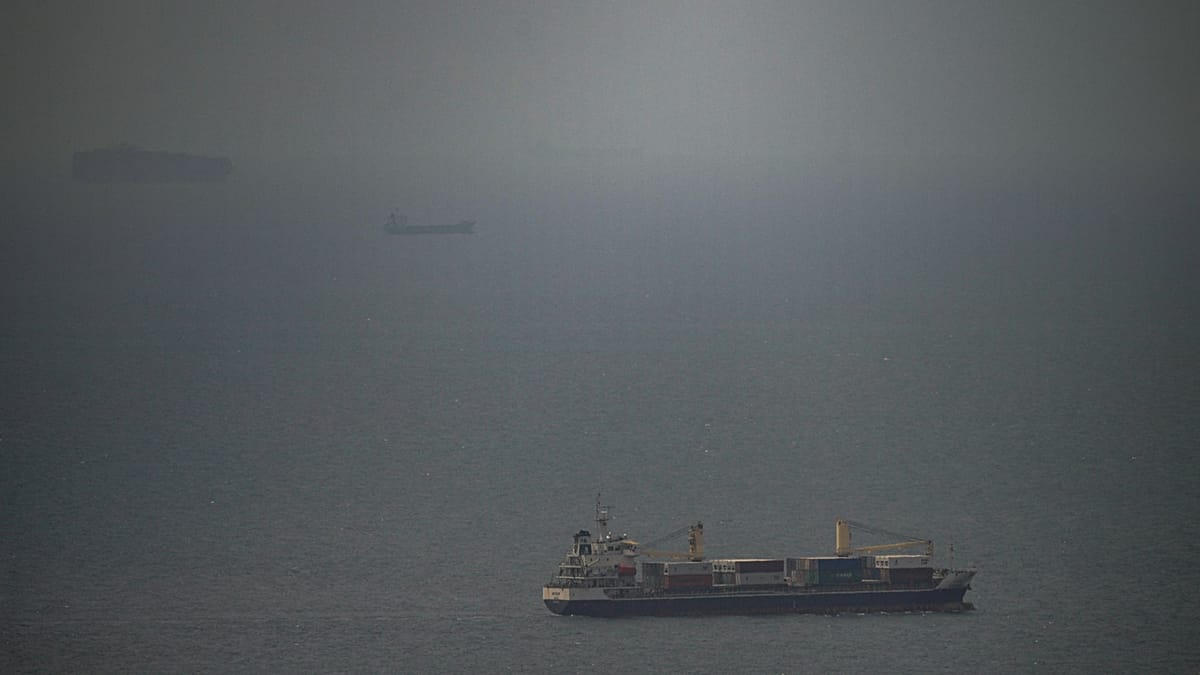
“One of the issues that we have seen recently is the Strait of Hormuz,” Gargash said, warning that the waterway through which a significant portion of the world’s energy supplies pass every day had “become also a vital part of the overall conflict.”
He stressed that Europe had a direct stake in ensuring freedom of navigation remained protected.
“Today, any change in the status of Hormuz will have serious implications on all of Europe,” Gargash said.
“That’s why we’re urging also the Europeans to see this not only as a distant problem, but a problem very much connected with their energy, with their trade.”
The comments come as European governments face renewed concerns over energy resilience, supply chains and maritime security following months of heightened regional tensions.
Gargash also called for greater European engagement in safeguarding navigation routes, while making clear the UAE was not seeking direct military intervention from European countries.
“I don’t think we are asking the Europeans to get involved in an active conflict,” he said. “But I think we are asking the Europeans also to look at their national interest in terms of the free navigation in the strait.”
The UAE presidential adviser praised European support during the crisis, specifically mentioning France and Greece for their backing during Iranian attacks on Gulf states.
Gargash also revealed the scale of attacks launched against the UAE during the conflict, describing it as the country’s “worst-case scenario”. “The total number is around 3,300 missiles and drones that targeted the UAE in 40 days and plus,” he said.
Asked how many penetrated UAE air defences, Gargash replied, “Very little, I think about 4% or something like that.”
Despite the regional instability, Gargash argued that the UAE’s economic and social foundations remained resilient. “The fundamentals of the UAE are strong,” he said. “Our societies are quite attractive societies. This is also a country of opportunities in many ways.”
When asked about the possibility of a wider political settlement with Tehran, Gargash said diplomacy remained essential despite the current tensions.
“We do need to really find a political solution, stay away from further military confrontations, but dig deep in order to address the root causes of instability in the Gulf,” he said.