
Close Menu
Daily Guardian EuropeDaily Guardian Europe
  • Home
  • Europe
  • World
  • Politics
  • Business
  • Lifestyle
  • Sports
  • Travel
  • Environment
  • Culture
  • Press Release
  • Trending
What's On

Culture Digest: The best things to do, hear, see or watch in Europe this week

December 22, 2025

Q&A A lack of grid flexibility threatens to short-circuit Britain’s electrification – POLITICO

December 22, 2025

Exclusive: Eva Kaili doubles down on ‘Belgiangate’ after fresh wave of Brussels scandals

December 22, 2025

Two gunmen threw homemade bombs that failed to detonate at crowd celebrating Hanukkah in Sydney

December 22, 2025

US threatens European companies. Why it may not have the desired effect

December 22, 2025
Facebook X (Twitter) Instagram
Web Stories
Facebook X (Twitter) Instagram
Daily Guardian Europe
Newsletter
  • Home
  • Europe
  • World
  • Politics
  • Business
  • Lifestyle
  • Sports
  • Travel
  • Environment
  • Culture
  • Press Release
  • Trending
Daily Guardian EuropeDaily Guardian Europe
Home»Europe
Europe

Sport, a lever for inclusion for people with intellectual disabilities

By staffOctober 2, 20253 Mins Read
Sport, a lever for inclusion for people with intellectual disabilities
Share
Facebook Twitter LinkedIn Pinterest Email

Published on
02/10/2025 – 10:21 GMT+2

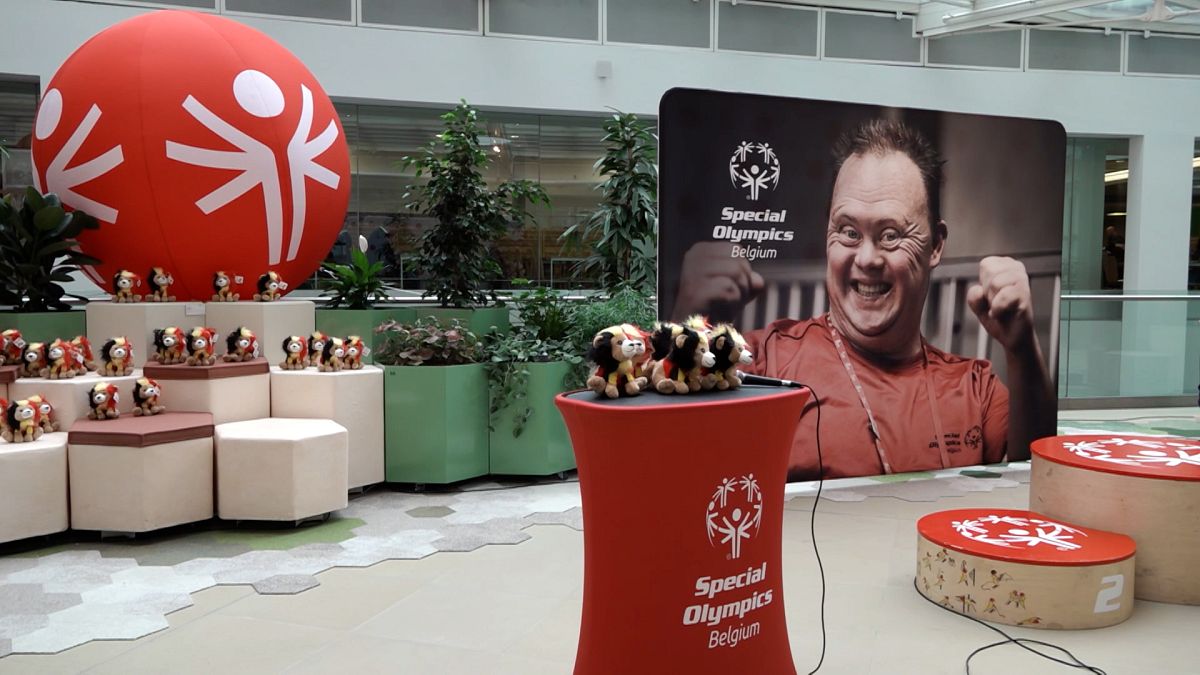
Athletes with intellectual disabilities competed in boccia and table tennis at the European Commission during European Sports Week, pressing EU officials to increase funding and policies for inclusion in sport, education, employment and healthcare.

The event, organised at the European Commission by Special Olympics, aims to promote the inclusion of people with intellectual disabilities in the EU.

“We are here to show the European Union that funds and policies are needed for greater inclusion, not only in sport, but also in education, employment and health services,” Bulgarian athlete Viktor Petrov Hristov told Euronews.

Hristov discovered horse riding some 10 years ago, thanks to the Special Olympics. Founded in 1968, this movement organises sporting events and competitions in over 200 countries to combat discrimination against people with disabilities.

“I love riding because I interact with the horse, I have to manage the horse. It’s something that gives me comfort, makes me brave and makes me more like other people”, explains Viktor.

It’s an opportunity to challenge the pervasive perceptions that still exist in sport and society.

“In my experience, people are afraid, they don’t know how to talk to (people with disabilities) and they think they’re just children. But we are human beings. We work, we go to school, we have friends,” added Inge Maiberg, Estonia’s top athlete at the Special Olympics.

The swimmer trains five times a week to stay active and look after her mental health. She also works in a kindergarten and campaigns for inclusion through the Special Olympics. She believes that gender diversity on the sports field and communication on social networks help to advance the cause.

‘Social education, awareness, outreach’

People with intellectual disabilities face stigmatisation and isolation, warns David Evangelista, President of Special Olympics Europe and Eurasia.

“Unfortunately, on a global scale, they are the most under-employed, the most under-educated, the most trafficked, the most exploited and often the most abused. The situation of people with disabilities is scandalous,” Evangelista told Euronews.

“If they have difficulty accessing sports clubs, what do you think a hospital looks like? What does a school look like? What does a workplace look like? It’s unacceptable,” he adds.

In his view, the emphasis must be on education and awareness-raising.

“Look around you. When these people go back to their offices, they will have a different understanding of what mental disability is,” Evangelista said. “It has a lot to do with social education, awareness, outreach.”

The Special Olympics representatives met with members of the European Commission and the European Parliament to seek to advance inclusion in the EU.

Estonian MEP Jüri Ratas hopes that funds will be allocated to the cause in the EU’s next long-term budget. According to available data, more than 20 million people in Europe have a learning disability.

Share. Facebook Twitter Pinterest LinkedIn Tumblr Email

Keep Reading

Exclusive: Eva Kaili doubles down on ‘Belgiangate’ after fresh wave of Brussels scandals

Podcast: Brussels is broke but has no government, but does anyone care?

Video of coup in Paris: how an AI-generated video caused Macron a major headache

Which EU countries have the highest education dropout rates and why?

Misleading online claims oversimplify Bulgaria’s government crisis

Europe Today: A dramatic end to the EU summit on Ukraine and Mercosur

Mercosur signature delayed to January after Meloni asked for more time

Which country spends the most on gifts at Christmas?

Watch the video: European Council summit — what is behind the curtain?

Editors Picks

Q&A A lack of grid flexibility threatens to short-circuit Britain’s electrification – POLITICO

December 22, 2025

Exclusive: Eva Kaili doubles down on ‘Belgiangate’ after fresh wave of Brussels scandals

December 22, 2025

Two gunmen threw homemade bombs that failed to detonate at crowd celebrating Hanukkah in Sydney

December 22, 2025

US threatens European companies. Why it may not have the desired effect

December 22, 2025

Subscribe to News

Get the latest Europe and world news and updates directly to your inbox.

Latest News

Video. Latest news bulletin | December 22nd, 2025 – Morning

December 22, 2025

Income of richest 10% after tax: How do Europe’s top earners compare globally?

December 22, 2025

Wie kann Europa sich und die Ukraine verteidigen? Mit Claudia Major – POLITICO

December 22, 2025
Facebook X (Twitter) Pinterest TikTok Instagram
© 2025 Daily Guardian Europe. All Rights Reserved.
  • Privacy Policy
  • Terms
  • Advertise
  • Contact

Type above and press Enter to search. Press Esc to cancel.