
Close Menu
Daily Guardian EuropeDaily Guardian Europe
  • Home
  • Europe
  • World
  • Politics
  • Business
  • Lifestyle
  • Sports
  • Travel
  • Environment
  • Culture
  • Press Release
  • Trending
What's On

Would you let AI design your next tattoo? Tattoo artists say AI is changing the way they work

September 9, 2026

Swiss and French train stations named among best in Europe – with Germany free-falling down rankings

September 9, 2026

New Baths of Trajan museum opens: Great Mosaic and Painted City restored

September 9, 2026

Serbian leader calls snap elections after dissolving country’s parliament – POLITICO

September 9, 2026

EU to give cities more power to curb Airbnb and short-term rentals

September 9, 2026
Facebook X (Twitter) Instagram
Web Stories
Facebook X (Twitter) Instagram
Daily Guardian Europe
Newsletter
  • Home
  • Europe
  • World
  • Politics
  • Business
  • Lifestyle
  • Sports
  • Travel
  • Environment
  • Culture
  • Press Release
  • Trending
Daily Guardian EuropeDaily Guardian Europe
Home»Culture
Culture

Spanish archaeologists find 4,400-year-old tomb in Egypt with original colours intact

By staffSeptember 8, 20263 Mins Read
Spanish archaeologists find 4,400-year-old tomb in Egypt with original colours intact
Share
Facebook Twitter LinkedIn Pinterest Email

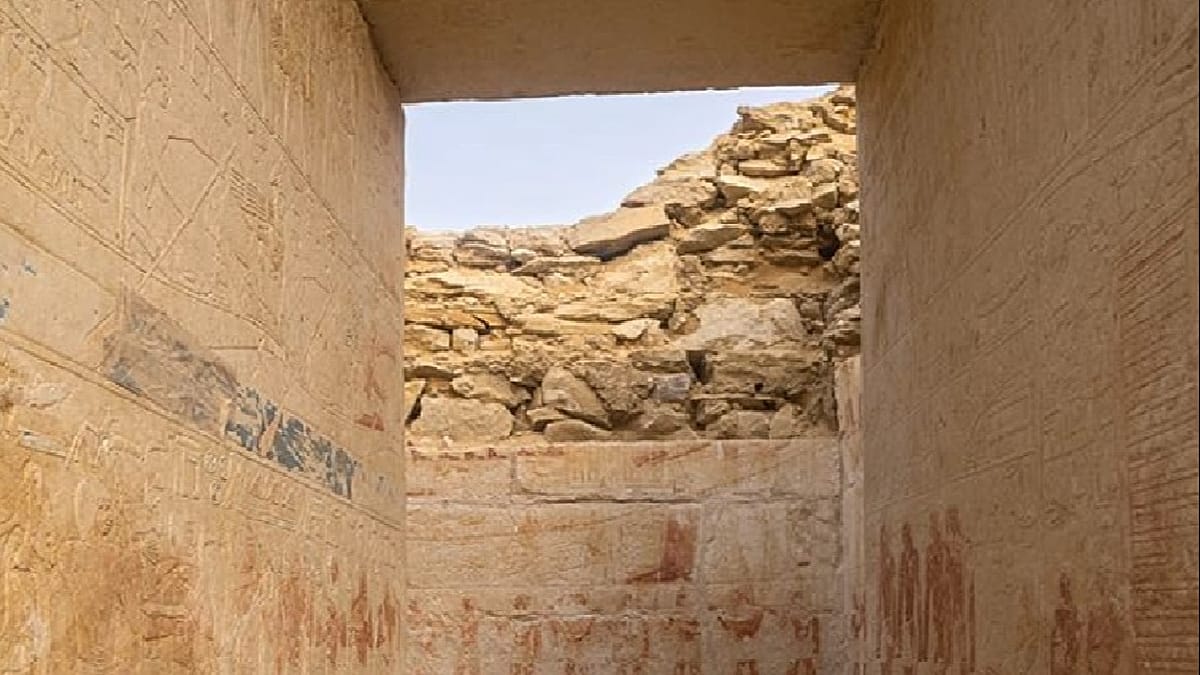
A Spanish-Egyptian archaeological mission led by Spanish Egyptologist Josep Cervelló has uncovered an “intriguing and beautiful” tomb dating from the late Fifth Dynasty of Egypt’s Old Kingdom (2494–2345 BC) in the necropolis of Saqqara, southwest of Cairo.

The find was made during this summer’s excavations, directed by the Autonomous University of Barcelona (UAB) and Egypt’s Supreme Council of Antiquities. It is an exceptional mastaba with two funerary chapels, commissioned by Yunmen, a senior official of Pharaoh Djedkare Isesi, who also ordered that his father, Iti, a lower-ranking official, be buried there.

Egypt’s Ministry of Tourism and Antiquities confirmed that the tomb dates from the end of the Fifth Dynasty, during the reign of Djedkare Isesi, and is located in the Mariette necropolis, north of Saqqara. According to the statement, it contains “two funerary chapels belonging to two high officials, Younmin and his father, Ity”.

According to the UAB, the tomb has shed light on figures of great historical, social and cultural interest. For the archaeological team, the discovery also came as a surprise because of the monument’s richness and beauty.

Among the most notable features are a high-quality architrave and funerary texts tailored to the personality and offices of its owner. The Egyptian ministry also highlights the exceptional state of preservation of the scenes and reliefs, which depict “agricultural activities and processions with offerings”, and notes that many of them “have retained their original colours”.

The decoration also includes depictions of donkeys and other animals. According to the Egyptian authorities, the discovery “provides new and valuable information about the architecture, art and administrative life of ancient Egypt at the end of the Fifth Dynasty”.

The excavation sheds light on daily life in the Saqqara necropolis

As well as its historical and scientific value, the mastaba stands out for its beauty. Archaeologists believe that the double tomb may reflect the social rise of Yunmen, the son of a provincial official who went on to hold a senior position in the central administration and wished to share his funerary fate with his father.

The area has been known since the nineteenth-century excavations of Auguste Mariette, but it had never been studied and documented in depth. The research sought to reconstruct the topography of Saqqara and to understand the necropolis as a living space, where ancient Egyptians brought offerings and worked continually on the construction of funerary monuments.

The aim is to understand how the necropolis was organised and functioned, from its streets and squares to the movement of people and the rituals of worship. The analysis of maps and the reconstruction of the layout led the team to a previously unknown mastaba and to traces of two more nearby, which they hope to excavate in future seasons.

Share. Facebook Twitter Pinterest LinkedIn Tumblr Email

Keep Reading

New Baths of Trajan museum opens: Great Mosaic and Painted City restored

Braga celebrates African heritage over two days with music, film and debates

From tram depot to contemporary art: A new cultural centre looks beyond the Silk Road

‘A scam’: Glastonbury fans furious over music festival’s historically high ticket prices for 2027

South Park creators troll Donald Trump by changing name of show to ‘South America’

Possible massacre and cannibalism 7,000 years ago uncovered in Granada

Israeli TV series ‘Fauda’ returns to Netflix with new season set during aftermath of 7 October attacks

Vivian Wilson hits out at AI and estranged father Elon Musk in new Desigual fashion campaign

Smash and grab: Thieves steal works worth €10m from Renoir Museum in France

Editors Picks

Swiss and French train stations named among best in Europe – with Germany free-falling down rankings

September 9, 2026

New Baths of Trajan museum opens: Great Mosaic and Painted City restored

September 9, 2026

Serbian leader calls snap elections after dissolving country’s parliament – POLITICO

September 9, 2026

EU to give cities more power to curb Airbnb and short-term rentals

September 9, 2026

Subscribe to News

Get the latest Europe and world news and updates directly to your inbox.

Latest News

When war takes away the classroom, can children ever catch up?

September 9, 2026

Sweden is preparing for AI-powered election interference. What does that defence actually look like?

September 9, 2026

Albania, Hong Kong and Egypt tipped as the trending destinations to watch in 2027

September 9, 2026
Facebook X (Twitter) Pinterest TikTok Instagram
© 2026 Daily Guardian Europe. All Rights Reserved.
  • Privacy Policy
  • Terms
  • Advertise
  • Contact

Type above and press Enter to search. Press Esc to cancel.