





Published on
Spain and Morocco have reached an agreement for the urgent return of migrants who crossed the border into the Spanish enclave of Ceuta on Thursday.
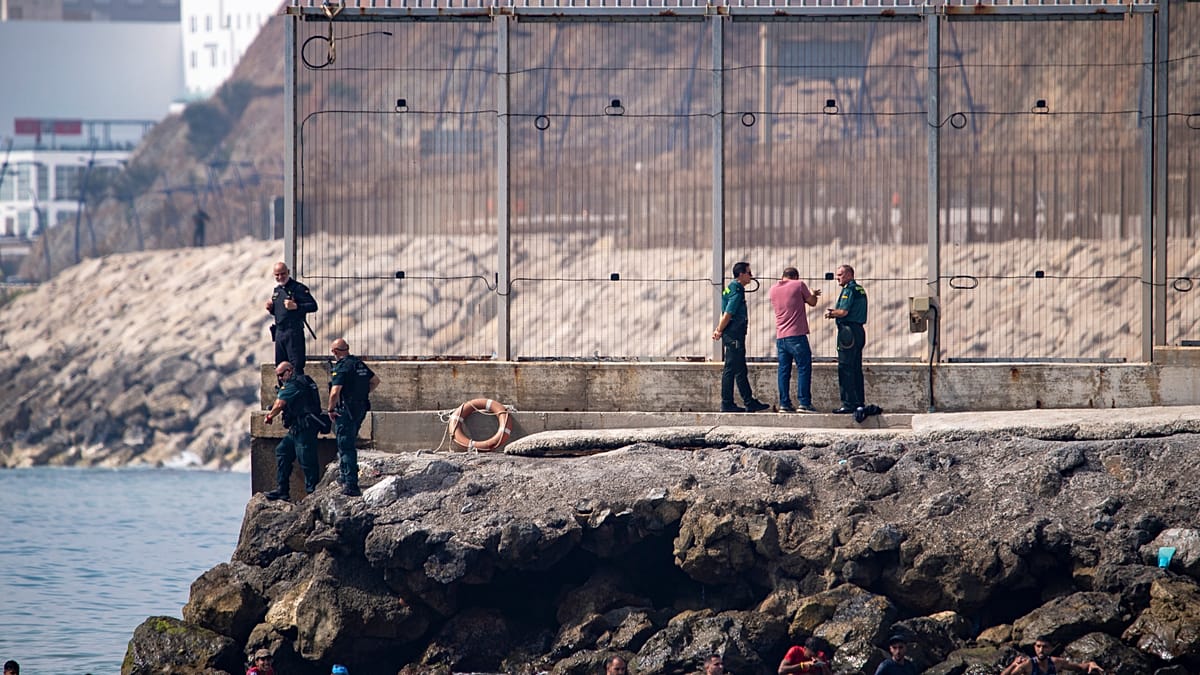
Thousands of migrants entered Ceuta from Morocco on Thursday, swimming or using inflatable devices to reach Tarajal beach and overwhelming Civil Guard officers.
Left behind on the sand are the remains of the crossing: flippers, flotation devices and wetsuits. Most of those arriving are young men, although women and children have also been among those to have made the crossing in recent days.
Ceuta’s president, Juan Jesús Vivas, estimates that the recent average has been around 300 sea arrivals per day and warns that the figure continues to rise. More than 60 people have died attempting the crossing over the past 12 months.
Spanish Prime Minister Pedro Sánchez has said his government is “fully committed to providing an immediate response to the situation in Ceuta” and that he would work with Moroccan authorities to “restore normalcy as soon as possible.”
Call for Madrid to declare national emergency
Faced with the sustained increase in arrivals, Vivas has urged the Spanish government to declare a national emergency and take control of managing the crisis in the autonomous city. He also asked for extra resources and funding to deal with what he describes as a collapse of local services.
The Interior Ministry has ruled out that option.
According to ministry sources, Spain’s civil protection regulations do not classify migration flows as a risk covered by the National Civil Protection System, meaning the mechanism and related emergency plans cannot be activated. Interior Minister Fernando Grande-Marlaska is expected to travel to Ceuta to meet local officials and assess the situation for himself.
The Interior Ministry has also suggested that human trafficking networks may be taking advantage of a recent court ruling to encourage the arrival of undocumented migrants, most of whom are young men.
The ruling states that people who enter by swimming, without breaking through any physical barrier of the border fence, do not meet the legal requirements for immediate rejection at the border without an individual case being opened. As a result, many of those crossing through Tarajal cannot be immediately returned.
Morocco blames criminal organisations
Morocco’s embassy in Madrid has blamed the mass arrivals on criminal organisations involved in human trafficking and the illegal smuggling of migrants, describing cooperation with Spain on migration as exemplary.
Moroccan diplomatic sources insist that the recent attempts at irregular entry do not reflect any intention on the part of the authorities in Rabat to facilitate these movements.
Civil Guard sources in Ceuta, however, have questioned the extent of that cooperation.
They say assistance from the Moroccan Gendarmerie on the ground has been limited and insufficient to contain the pressure at the border, despite the Spanish government’s claim that active cooperation from Morocco is taking place.
Spain and Morocco agreed on Thursday to step up coordination between the two countries and review procedures in order to speed up, as much as possible, the return of people who have entered Ceuta illegally. For now, no specific timetable has been set for implementing these measures.