



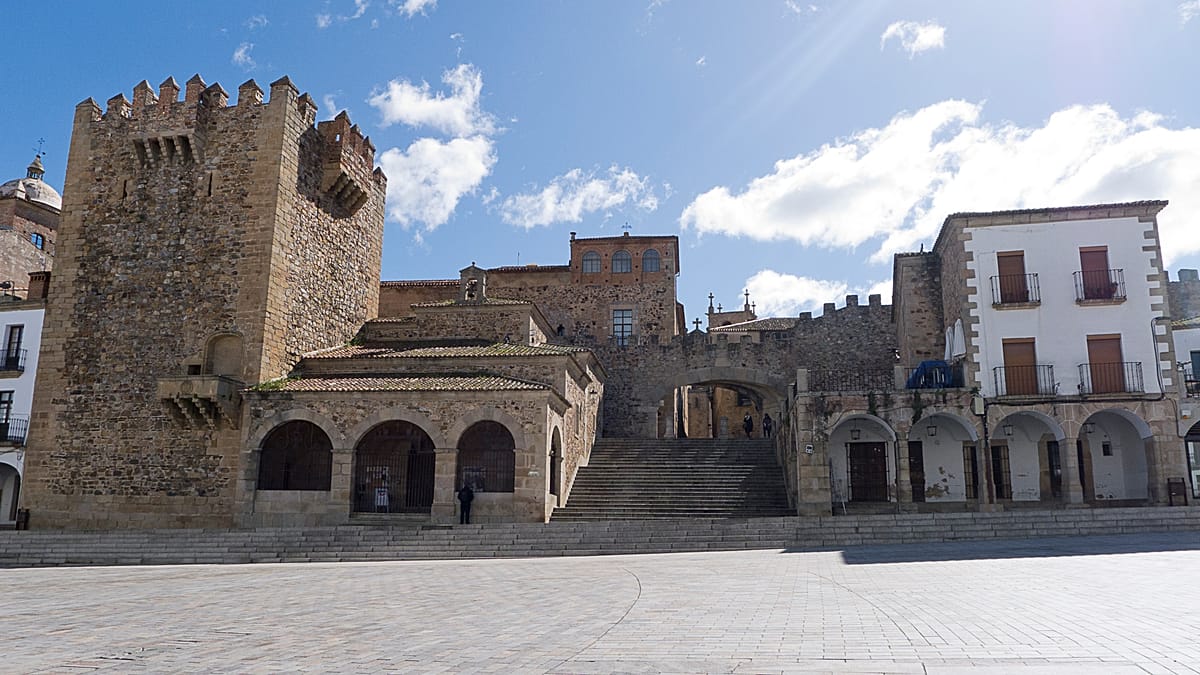
The city of Cáceres want to become European Capital of Culture 2031, a recognition awarded each year by the European Union to highlight the continent’s cultural wealth.
In total, nine cities are competing to represent Spain in this edition. Among them are Burgos, Granada, Jerez de la Frontera, Las Palmas de Gran Canaria, Oviedo, Mallorca, Potries and Toledo.
A shortlist is expected to be drawn up this month, with the the final decision will be announced in December.
The European Capitals of Culture initiative was launched in 1985 at the instigation of the European Commission and since then more than 60 cities have received the honour.
In Spain, cities such as Madrid in 1992, Santiago de Compostela in 2000, Salamanca in 2002 and San Sebastián in 2016 have been recognised.
The chosen city will organise a wide-ranging cultural programme throughout 2031 with artistic activities, international projects and events aimed at boosting cultural life and local economic development.
For Cáceres, whose medieval old town, the Ciudad Vieja de Cáceres, is a World Heritage Site, the nomination is also an opportunity to project its heritage and history to the rest of Europe.
Beyond its walls, palaces and historic squares, the city also has many curious stories and traditions. Here are five of the most striking ones that help to understand the character and memory of Cáceres.
1. Cáceres, a great set for international TV series
The historic quarter of Cáceres, declared a World Heritage Site 40 years ago, has become a great film set in recent years. Its medieval streets and Renaissance palaces have been used to recreate scenes from different periods and European cities, attracting international production companies.
Series such as ‘The Cathedral of the Sea’, the popular ‘Game of Thrones’ and ‘The House of the Dragon’ have used the city of Extremadura as a backdrop. For this purpose, some areas of the monumental centre were transformed with sets and props that made it possible to recreate everything from 16th century Verona to the Gothic church of Santa María del Mar.
One of its great hidden gems is the 12th century cistern, a structure that still works today and continues to collect the rain that falls in the Renaissance courtyard that covers it. It is one of the largest of its time, hence its splendour, enhanced by the golden light that falls from the zenith towards the five naves made up of horseshoe arches.
2. The sculpture you have to kiss the feet of to find a partner
Outside the co-cathedral of Santa María stands a statue of San Pedro de Alcántara which conceals two little-known curiosities. The sculpture was made by the Extremaduran artist Enrique Pérez Comendador and, according to legend, is actually a self-portrait of the sculptor himself.
Popular tradition also attributes singular properties to the statue: touching or kissing its feet would help to find a partner or marry the person you love. Such is the fame of the belief that today the figure’s feet are visibly worn down by the passage of thousands of visitors.
3. The alley with a wall made of bones
The alleyway of Don Álvaro, in the heart of the historic quarter of Cáceres, may at first glance appear to be just another narrow medieval passageway. However, one of its walls hides a story that is as surprising as it is disturbing.
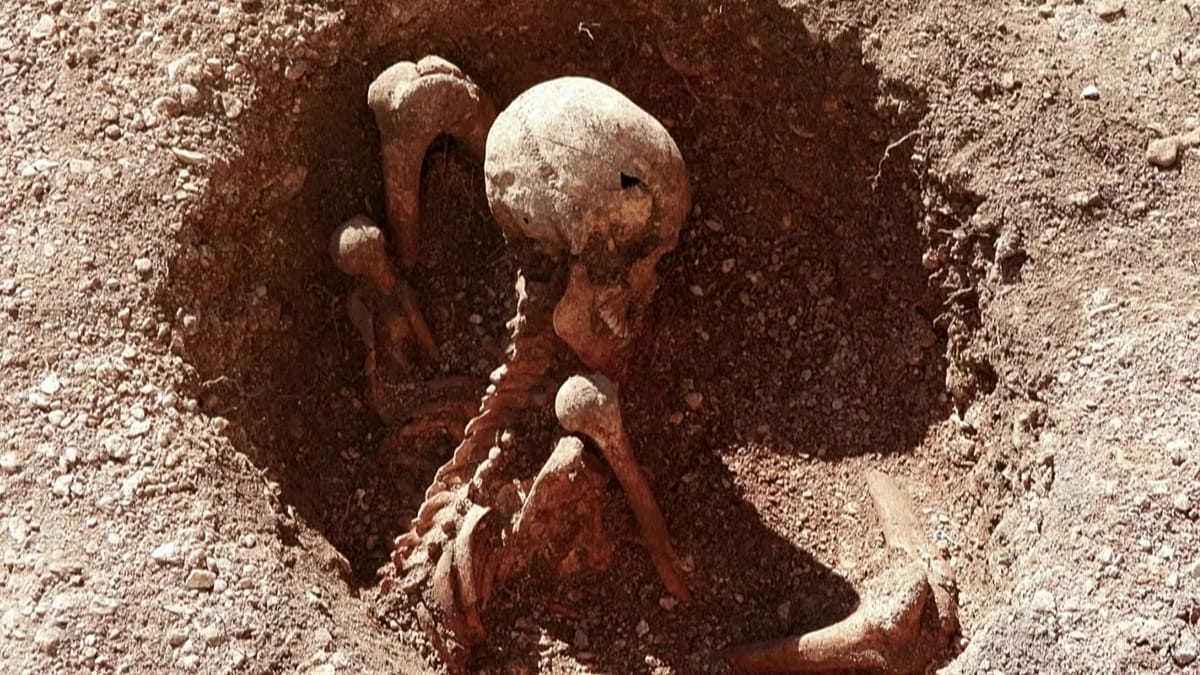
According to local tradition, bone remains mixed with other materials from ancient cemeteries located next to nearby churches were used during its construction. It is said that some fragments can be seen on the wall, which has turned this corner into one of the city’s most striking curiosities.
4. The square that was bombed by Soviet planes.
The paving of the Plaza de Santa María preserves a trace of the city’s recent past. During the Spanish Civil War, in 1937, a bombing raid damaged part of the paving of this space located in front of the co-cathedral.
After the attack, the floor had to be repaired, leaving two clearly differentiated areas between the original paving and the one laid later. Over time, a popular legend also arose, attributing the protection of the site during that episode to the Virgin of the Mountain, patron saint of the city.
5. The legend of ‘La Casa del Mono’ (The Monkey House)
On the slope of Aldana is the house of the Espadero-Pizarro family, popularly known as ‘the House of the Monkey’, a 15th century construction. The building is linked to an old legend that is part of the popular imagination of Cáceres.
The story goes that a merchant gave his wife a monkey he acquired during one of his travels. The animal was treated for years as a member of the family, until the birth of a son provoked the primate’s jealousy.
According to folklore, the monkey allegedly threw the baby out of a window, prompting the owner to punish it by chaining it to death. Three gargoyles can be seen on the façade of the building, which, per tradition, represent the monkey, the man and the woman with the child.
6. Helga de Alvear Museum of Contemporary Art
Last but not least, an art visit is always recommended, and Cáceres has one of the most modern contemporary art museums in the area, the Helga de Alvear Museum.
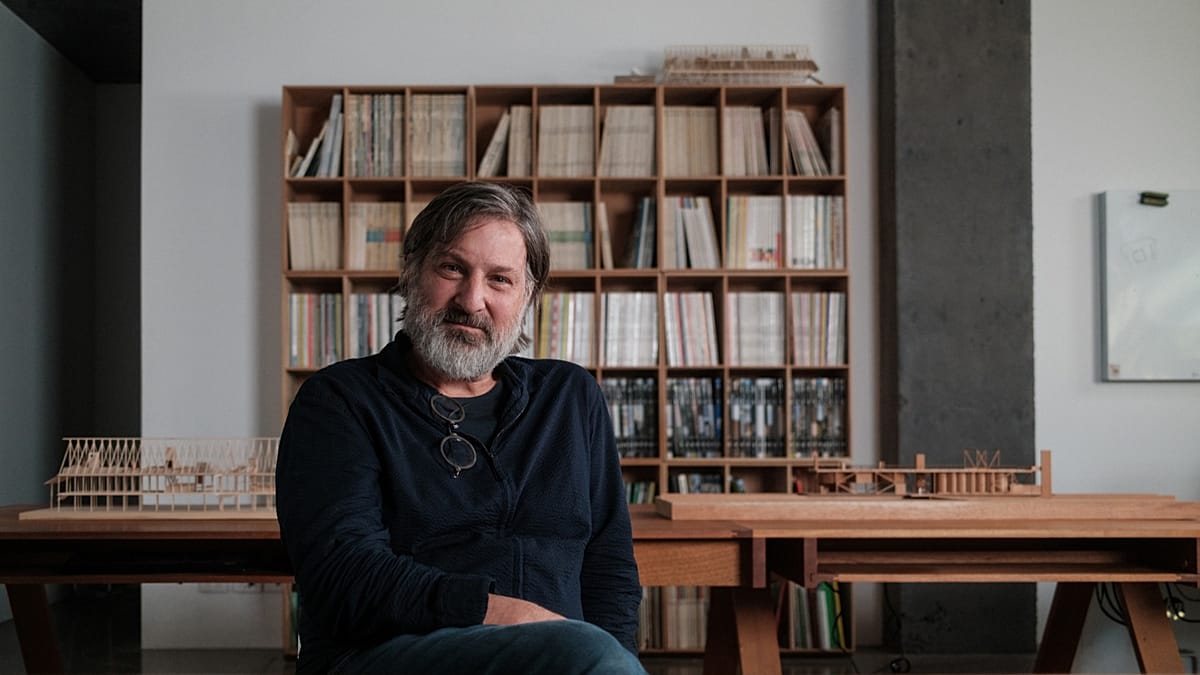
The award-winning design studio, Tuñón Arquitectos, created the building, which opened its doors in 2021. It was a custom-made design to house the Helga de Alvear Collection.
This building served as an extension of what was formerly known as the Helga de Alvear Visual Arts Centre, which opened in 2010.
Helga de Alvear, born in 1936, whose maiden name was Helga Müller Schätzel, was educated at various schools in Europe; Salem College, on the shores of Lake Constance, and later in Lausanne, Geneva and London, where she spent a year expanding her knowledge.
In 1957, at the age of 21, she travelled to Spain with the aim of learning Spanish and deepening her knowledge of Hispanic culture through the Complutense University of Madrid. It was there that she met the architect Jaime de Alvear, whom she married. Settling in Madrid, the couple had three daughters: María, Ana and Patricia. She died in Madrid on 2 February 2025, at the age of 88.
The museum inherits its name from the German gallery owner and art collector of the same name, Helga de Alvear, who received numerous awards for her work, such as the Medal of Extremadura and the Gold Medal for Merit in Fine Arts.
So, don’t hesitate, the Helga de Alvear Museum of Contemporary Art is both an artistic and architectural attraction that leaves no one indifferent.