
Close Menu
Daily Guardian EuropeDaily Guardian Europe
  • Home
  • Europe
  • World
  • Politics
  • Business
  • Lifestyle
  • Sports
  • Travel
  • Environment
  • Culture
  • Press Release
  • Trending
What's On

Laws, pledges or an iron grip? How the EU, US and China are reining in AI

October 7, 2026

Interlaken vs Innsbruck: How Europe’s adventure travel hotspots compare for a winter holiday

October 7, 2026

US, Greece to jointly combat security threats, Rubio says – POLITICO

October 7, 2026

EU releases €1.24 billion for Ukrainian-made drones and munitions

October 7, 2026

Scientists identify ancient Egyptian crocodile whose skull is missing its nose like the Sphinx

October 7, 2026
Facebook X (Twitter) Instagram
Web Stories
Facebook X (Twitter) Instagram
Daily Guardian Europe
Newsletter
  • Home
  • Europe
  • World
  • Politics
  • Business
  • Lifestyle
  • Sports
  • Travel
  • Environment
  • Culture
  • Press Release
  • Trending
Daily Guardian EuropeDaily Guardian Europe
Home»World
World

Scientists identify ancient Egyptian crocodile whose skull is missing its nose like the Sphinx

By staffOctober 7, 20262 Mins Read
Scientists identify ancient Egyptian crocodile whose skull is missing its nose like the Sphinx
Share
Facebook Twitter LinkedIn Pinterest Email

Published on
07/10/2026 – 14:18 GMT+2

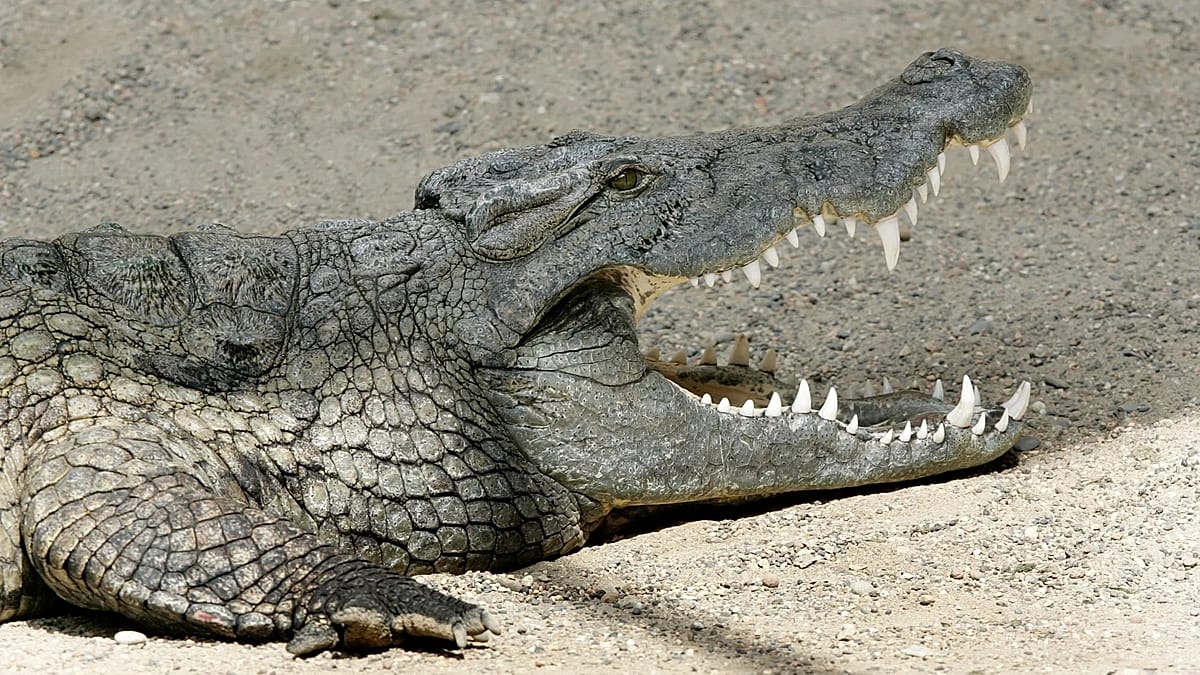
Scientists have identified a new crocodile genus from a 45-million-year-old Egyptian fossil after using CT scans to re-examine a skull recovered nearly a century ago.

The fossil comes from the Mokattam Formation, the same limestone formation from which the Great Sphinx was carved. Like the monument, the skull is missing the tip of its snout.

Researchers from Egypt, the UK, Sweden and Germany have named the animal Herugavialis cairensis. The findings were published in Royal Society Open Science.

The animal was first described in 1927 as Tomistoma cairense, placing it in the same genus as the living false gharial, which has a long, narrow snout.

But the new examination revealed differences in the skull’s structure and the animal’s evolutionary relationships. Among its distinctive features were raised, projecting eye sockets.

Those differences prompted the researchers to place the species in a separate genus, changing a classification that had stood for almost a century.

Paul Burke of the Swedish Museum of Natural History led the study, co-led by Philip Mannion of University College London.

Mannion said in a statement that the resemblance between the fossil’s missing snout tip and the Sphinx’s absent nose helped inspire the name, which honours the Egyptian god Heru.

About 45 million years ago, much of the region lay beneath shallow seas. Herugavialis lived alongside at least two other species of long-snouted crocodiles.

The animal belonged to a group whose only surviving members are the Indian gharial and false gharial. Fossils show that their relatives once had a far wider distribution, with more than 40 species recognised.

The researchers suggest that cooling and falling sea levels reduced suitable habitats around the Mediterranean, while later warming may have allowed their diversity to recover.

Studying more fossils could help explain how these ancient crocodiles spread around the Mediterranean and why they later disappeared from the region.

Share. Facebook Twitter Pinterest LinkedIn Tumblr Email

Keep Reading

Video. Kyiv residents take refuge underground during overnight Russian attacks

İzmir’s centre-left mayor joins Erdoğan’s AK Party, shocking Turkish opposition

Russia asks Vietnam for planes as illegally re-registered Western fleet falls apart

Israel pauses in moment of silence to remember those killed on 7 October

Christa Pike awake a week after lethal injection as her lawyers seek answers

The Caspian Sea has been shrinking for decades. Now, a new island has emerged

Trump says US moved their B-1 bombers from RAF Fairford airbase after additional threats were made

‘Whole world is paying’ for Iran war, Qatar warns as mediation efforts continue

UK trial of three Iranians over alleged plot to target Iran dissident journalists

Editors Picks

Interlaken vs Innsbruck: How Europe’s adventure travel hotspots compare for a winter holiday

October 7, 2026

US, Greece to jointly combat security threats, Rubio says – POLITICO

October 7, 2026

EU releases €1.24 billion for Ukrainian-made drones and munitions

October 7, 2026

Scientists identify ancient Egyptian crocodile whose skull is missing its nose like the Sphinx

October 7, 2026

Subscribe to News

Get the latest Europe and world news and updates directly to your inbox.

Latest News

India hikes interest rates for first time in over three years as Iran war fuels inflation

October 7, 2026

WHO seeks clarity on second pneumonia case in Russia amid plague fears – POLITICO

October 7, 2026

Hungary set to lift veto on Ukraine’s EU membership talks

October 7, 2026
Facebook X (Twitter) Pinterest TikTok Instagram
© 2026 Daily Guardian Europe. All Rights Reserved.
  • Privacy Policy
  • Terms
  • Advertise
  • Contact

Type above and press Enter to search. Press Esc to cancel.