
Published on •Updated
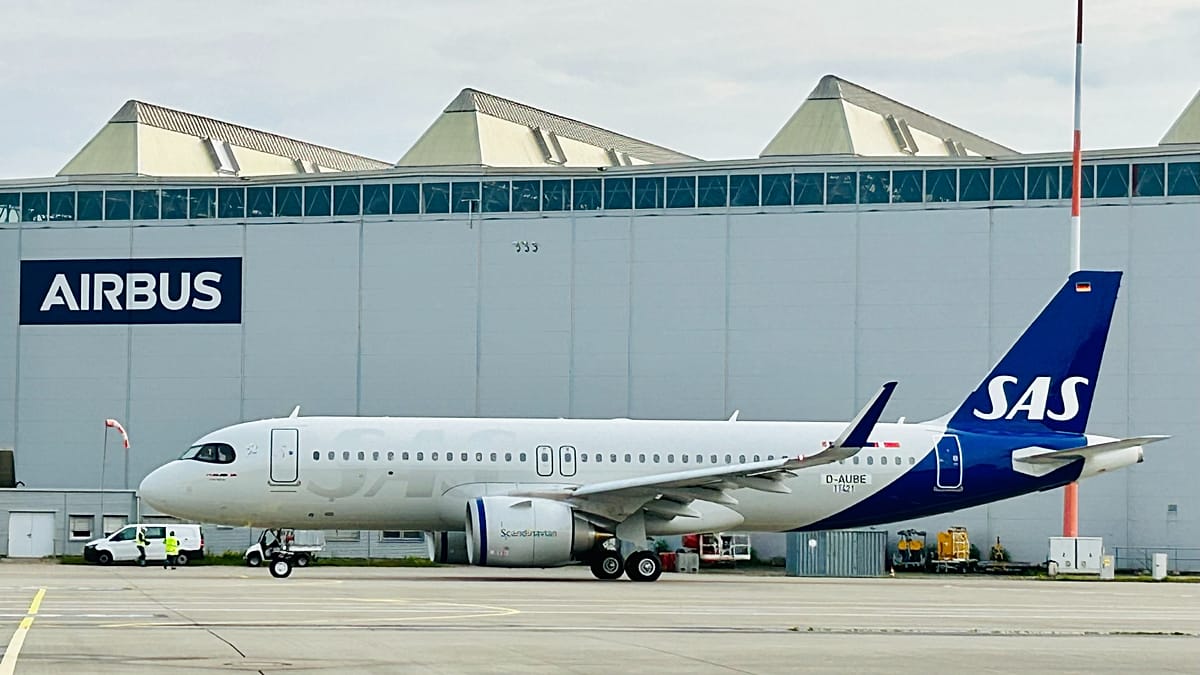
The Scandinavian airline SAS confirmed a record order at a press conference in Copenhagen on Tuesday, committing to as many as 40 twin-aisle aircraft from Airbus’s A330 family to renew and expand its long-haul fleet.
At list prices the jets carry a combined value above $10 billion (€8.75bn), though, as is standard in the industry, SAS is likely to have negotiated a substantial discount for such a large bulk purchase.
The order covers a mix of the new, more fuel-efficient A330-900, part of the upgraded A330neo range, and the older A330-300, which will support the airline’s growth in the nearer term.
First deliveries are expected from the early 2030s and the scale of the commitment marks a remarkable turnaround.
SAS emerged from US Chapter 11 bankruptcy protection in 2024 after a painful restructuring that wiped out billions in debt, delisted its shares and brought in new owners led by the Air France-KLM group.
As part of the overhaul, the carrier also left the Star Alliance collective to join the rival SkyTeam grouping.
The recovery has since gathered pace, with SAS returning to operating profit in 2025 after heavy losses the year before.
The Airbus deal follows an order last year for 55 Embraer regional jets, and the airline is presenting the combined investment as the foundation of its plans for the decade ahead.
Why Airbus won
The decision is a notable victory for the European manufacturer Airbus over its US rival Boeing, whose 787 Dreamliner and 777X had been in contention.
SAS already operates Airbus A330s on its long-haul network, and sticking with the same manufacturer spares it the heavy cost of introducing an entirely new aircraft type, with the retraining, spare parts and ground support that would entail.
That logic of fleet commonality runs through the order.
SAS said the additional A330-300s would be fully compatible with its existing Airbus operations, while the newer A330-900 shares the overwhelming majority of its airframe components with the older model.
For Airbus, the win adds another European flag carrier to a widebody order book already swollen by airlines racing to replace ageing and less efficient jets.
Additional sources • AP