
Close Menu
Daily Guardian EuropeDaily Guardian Europe
  • Home
  • Europe
  • World
  • Politics
  • Business
  • Lifestyle
  • Sports
  • Travel
  • Environment
  • Culture
  • Press Release
  • Trending
What's On

Comment “le mur de fer” promis contre l’immigration clandestine à Mayotte s’est enlisé – POLITICO

August 26, 2026

Next Atlantic tropical storm will be named Dolly but no connection to Parton’s death

August 26, 2026

Europe’s gas prices are surging. Who will be the first to pay more?

August 26, 2026

Day trips in Europe: Top 10 sightseeing stops beyond the beaten track for autumn 2026

August 26, 2026

Drohnen, Drohungen, Deutschland – POLITICO

August 26, 2026
Facebook X (Twitter) Instagram
Web Stories
Facebook X (Twitter) Instagram
Daily Guardian Europe
Newsletter
  • Home
  • Europe
  • World
  • Politics
  • Business
  • Lifestyle
  • Sports
  • Travel
  • Environment
  • Culture
  • Press Release
  • Trending
Daily Guardian EuropeDaily Guardian Europe
Home»Europe
Europe

Safeguards for new EU members need objective criteria, Montenegro’s ambassador says

By staffJuly 24, 20263 Mins Read
Safeguards for new EU members need objective criteria, Montenegro’s ambassador says
Share
Facebook Twitter LinkedIn Pinterest Email

Published on 23/07/2026 – 17:31 GMT+2•Updated
24/07/2026 – 7:01 GMT+2

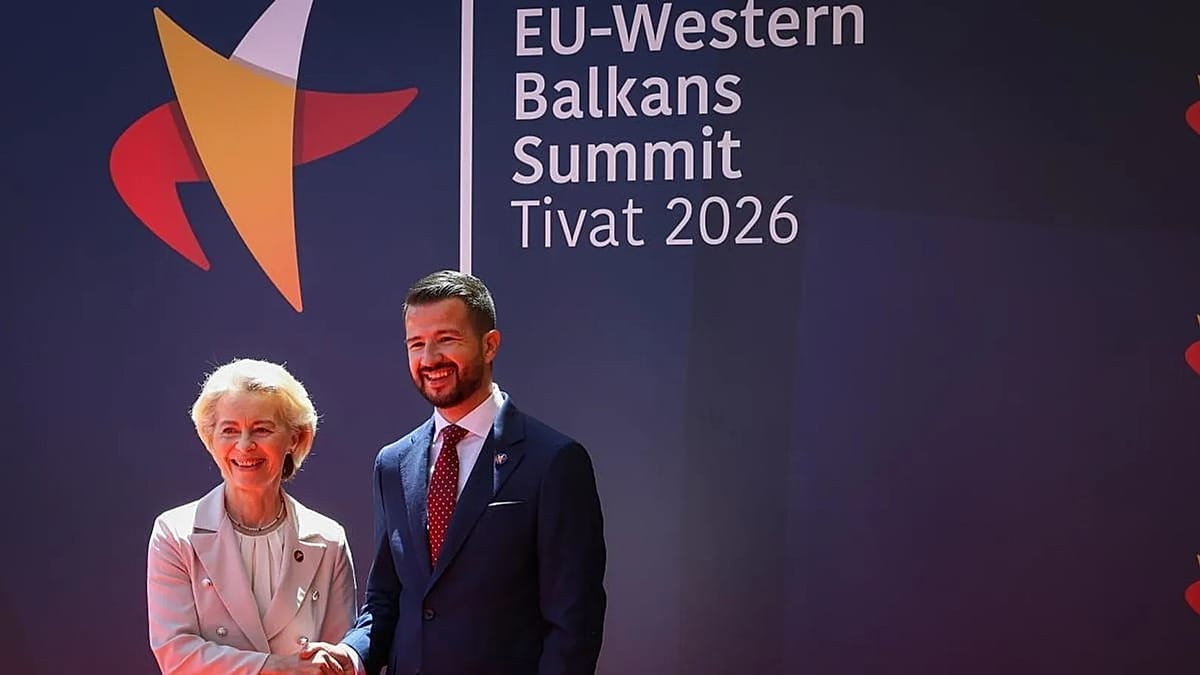
Montenegro backs new safeguards to stop future EU members backsliding on the rule of law and democratic standards, but only if they rest on objective criteria for assessing systemic breaches, the country’s ambassador to the EU has told Euronews.

Montenegro is the most advanced candidate country in the accession process, aiming to become the 28th EU member state in 2028. But its bid might be complicated by a string of proposals to overhaul how enlargement works.

Chief among them: five of the six EU founding members have called for stronger safeguards against democratic rollback after accession — a lesson drawn from Viktor Orbán’s Hungary.

Petar Marković, Montenegro’s head of mission to the EU, told Euronews his country supports tougher safeguards, noting that Podgorica already outperforms some member states on rule of law reforms, according to the European Commission’s periodic review.

“Montenegro has an interest in introducing guarantees meant to maintain EU standards. But the potential breaches would have to be assessed on a case-by-case basis against objective criteria to prove systematic backsliding,” he said.

Marković argued the criteria must be agreed before membership begins, and should not be used to pre-emptively curtail a new member’s voting rights through a transitional period — a move he called politically and legally dubious, warning it could effectively create a second-class membership.

At the same time, the ambassador acknowledged that one of Montenegro’s main incentives for accepting new safeguards is that they could smooth the ratification process, providing additional reassurance, particularly as the political spectrum in some founding members shifts rightward and grows more sceptical of enlargement.

Reform of the methodology

Another proposal on the table is “gradual integration,” pushed by France and Germany, which would let candidate countries reap early benefits of EU membership as they advance through the accession process.

“For far too long, there has not been a real discussion on the enlargement methodology,” Marković said, welcoming the return of enlargement as a top political priority in European capitals.

But he argued that after 14 years of intensive work in the accession process, it would be unfair to change the rules this late — especially since Montenegro was the first country to accept, and the most advanced country approaching the finishing line under the current methodology.

“This is not about what we deserve. This is a rational choice. Discussions on a new methodology should focus on the candidate countries for which the current methodology has not worked. For Montenegro, it clearly has,” Marković added.

“Strategically, the stakes could not be higher. The EU has a real chance to reverse the Brexit effect and return to expanding again,” Marković concluded.

Share. Facebook Twitter Pinterest LinkedIn Tumblr Email

Keep Reading

French driver, 46, detained in Italy after three Akeron missiles found in van

At least 306 people infected with salmonella in Belgium in outbreak linked to eggs

Three arrested after Slovak police say they thwarted a planned arson attack

EU officials to travel to China as October deadline for trade rebalancing looms

EXCLUSIVE: France wants to limit Ukraine’s non-European procurement with EU money

CIA director Ratcliffe arrives in Moscow on secret visit, US reports claim

Spain to reform asylum laws to align with EU rules as Ceuta crisis remains unresolved

Germany and Italy clash over migrant rescue ships and returns

Finnair cancels Dubai flights for entire winter season

Editors Picks

Next Atlantic tropical storm will be named Dolly but no connection to Parton’s death

August 26, 2026

Europe’s gas prices are surging. Who will be the first to pay more?

August 26, 2026

Day trips in Europe: Top 10 sightseeing stops beyond the beaten track for autumn 2026

August 26, 2026

Drohnen, Drohungen, Deutschland – POLITICO

August 26, 2026

Subscribe to News

Get the latest Europe and world news and updates directly to your inbox.

Latest News

France and Germany collide over Europe’s industrial future – POLITICO

August 26, 2026

Iran and Oman discuss temporary corridor in Strait or Hormuz

August 26, 2026

Kemi Badenoch’s Conservatives wish they could be as popular as she is – POLITICO

August 26, 2026
Facebook X (Twitter) Pinterest TikTok Instagram
© 2026 Daily Guardian Europe. All Rights Reserved.
  • Privacy Policy
  • Terms
  • Advertise
  • Contact

Type above and press Enter to search. Press Esc to cancel.