
Close Menu
Daily Guardian EuropeDaily Guardian Europe
  • Home
  • Europe
  • World
  • Politics
  • Business
  • Lifestyle
  • Sports
  • Travel
  • Environment
  • Culture
  • Press Release
  • Trending
What's On

Missed the eclipse? Here’s where to travel to see 2027’s ‘eclipse of the century’

August 13, 2026

Romania shuts off second reactor at Cernavodă NPP amid low water levels on Danube

August 13, 2026

Azerbaijan bets on the pomegranate as its next big export

August 13, 2026

This boutique hotel in Lisbon has an in-house library, rooftop sunset sessions and a pillow menu

August 13, 2026

Euronews Culture’s Film of the Week: ‘The End Of Oak Street’

August 13, 2026
Facebook X (Twitter) Instagram
Web Stories
Facebook X (Twitter) Instagram
Daily Guardian Europe
Newsletter
  • Home
  • Europe
  • World
  • Politics
  • Business
  • Lifestyle
  • Sports
  • Travel
  • Environment
  • Culture
  • Press Release
  • Trending
Daily Guardian EuropeDaily Guardian Europe
Home»Europe
Europe

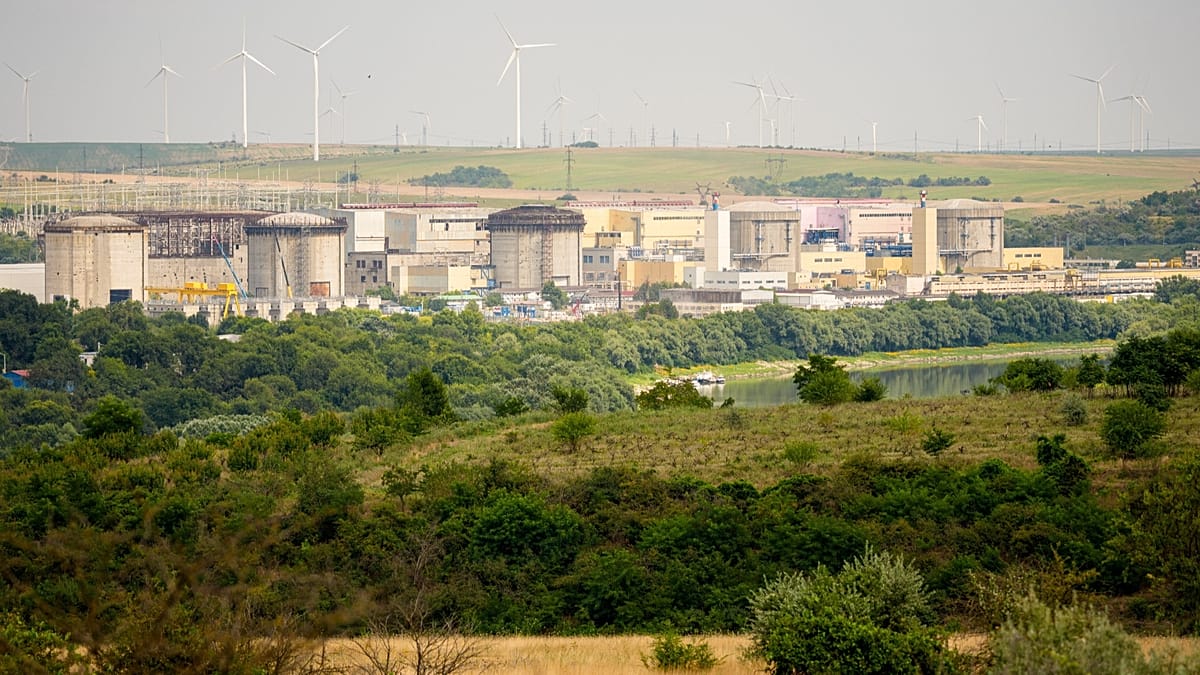
Romania shuts off second reactor at Cernavodă NPP amid low water levels on Danube

By staffAugust 13, 20263 Mins Read
Romania shuts off second reactor at Cernavodă NPP amid low water levels on Danube
Share
Facebook Twitter LinkedIn Pinterest Email

Published on
13/08/2026 – 15:01 GMT+2

Romania halted operations of its only nuclear power plant on Thursday, a rare shutdown due to a drought scorching Europe that has caused the Danube river, whose waters cool the plant, to fall to record lows.

Much of Europe is facing another heatwave this summer amid droughts that have driven rivers to historic lows.

The Cernavodă plant, which usually generates a fifth of Romania’s electricity, has been shut down just once before, in 2003, due to drought.

The national nuclear energy company Nuclearelectrica had already shut down one of the plant’s two reactors last month and announced on Thursday that it needed to shut the second as well “due to the significant and ongoing drop in the water level of the River Danube.”

“We do not foresee a restart within the next ten days,” the plant’s director, Romeo Urjan, told the AFP news agency.

Efforts to divert Danube flow

Romania had been trying to avert a complete shutdown of the plant’s two 700MW reactors.

It had budgeted more than €2 million to try to divert the Danube’s flow in order to maintain cooling of the reactors, including blowing up a rock and sinking four barges filled with rocks into the river.

Alternative power sources, including from wind power as well as electricity imports, are expected to ensure adequate supplies, the energy ministry said on Wednesday.

But it also reiterated an appeal for “responsible consumption.”

It has warned that as a last resort, large industrial consumers would have to face restrictions on consumption in the evening hours to save electricity.

In early August, the government said the carmakers Dacia and Ford would pause production in the country until 19 August to help with the power deficit.

Record-low flows

Nearly two-thirds of the Danube has seen flow rates that are the lowest on record for a month of July in 34 years, according to an analysis published on Monday by the European climate change observatory, Copernicus.

The current drought has been exacerbated by human-induced climate change, according to a report by the World Weather Attribution group of scientists, who warn that the problem is set to worsen.

Neighbouring Hungary has so far been able to avoid a complete shutdown of its only nuclear plant, Paks, whose four reactors are also cooled by the Danube.

But with the Danube expected to drop even more, Hungarian Prime Minister Péter Magyar said on Wednesday that the government had ordered the construction of a submerged wall, or weir, to try to control flows nears the plant.

Two 80-metre barges are also being stationed at Paks that could be sunk to raise the water level.

Paks, whose output usually covers around a third of Hungary’s electricity needs, has been partially shut down since late last month.

The low levels of the Danube, Europe’s second-longest river, have also severely impacted shipping along its 2,850-kilometre route stretching from western Germany to its mouth on the Black Sea.

Additional sources • AP, AFP

Share. Facebook Twitter Pinterest LinkedIn Tumblr Email

Keep Reading

TikTok’s finfluencers: How reliable is the financial advice reaching young investors?

EU budget: Sweden, part of the ‘frugal’ camp, is about to turn even more hawkish

Reform UK leader Nigel Farage and Count Binface go head-to-head in snap UK poll

The EU loses one in four litres of treated water. Can digitalisation fix that?

Italy: Po River runs low amid prolonged heat and drought

Morocco accuses Spain of assaulting migrants crossing into Ceuta and claims sovereignty over enclave

Fake videos and false allegations target candidates in French 2027 presidential election

EU sends €2 million to Colombia after deadly earthquake

EU’s centrist coalition might fall short of a majority for the first time

Editors Picks

Romania shuts off second reactor at Cernavodă NPP amid low water levels on Danube

August 13, 2026

Azerbaijan bets on the pomegranate as its next big export

August 13, 2026

This boutique hotel in Lisbon has an in-house library, rooftop sunset sessions and a pillow menu

August 13, 2026

Euronews Culture’s Film of the Week: ‘The End Of Oak Street’

August 13, 2026

Subscribe to News

Get the latest Europe and world news and updates directly to your inbox.

Latest News

TikTok’s finfluencers: How reliable is the financial advice reaching young investors?

August 13, 2026

Who is Mohsen Rezaei, Iran’s new security chief with an Interpol Red Notice?

August 13, 2026

China’s lead in orbital data centres risks leaving Europe behind

August 13, 2026
Facebook X (Twitter) Pinterest TikTok Instagram
© 2026 Daily Guardian Europe. All Rights Reserved.
  • Privacy Policy
  • Terms
  • Advertise
  • Contact

Type above and press Enter to search. Press Esc to cancel.