




Published on •Updated
Rheinmetall shares fell as much as 13% after the German government scrapped plans for a major warship order from the firm, which would have been the biggest warship commission since the Second World War.
The news magazine “Der Spiegel” reported on Tuesday that the multi-billion-euro project to build six of the world’s largest frigates, the F126, had been cancelled.
The ministry in Berlin said the decision was a response to significant delays, foreseeable cost increases and other risks. However, cancelling the contract could prove costly for taxpayers.
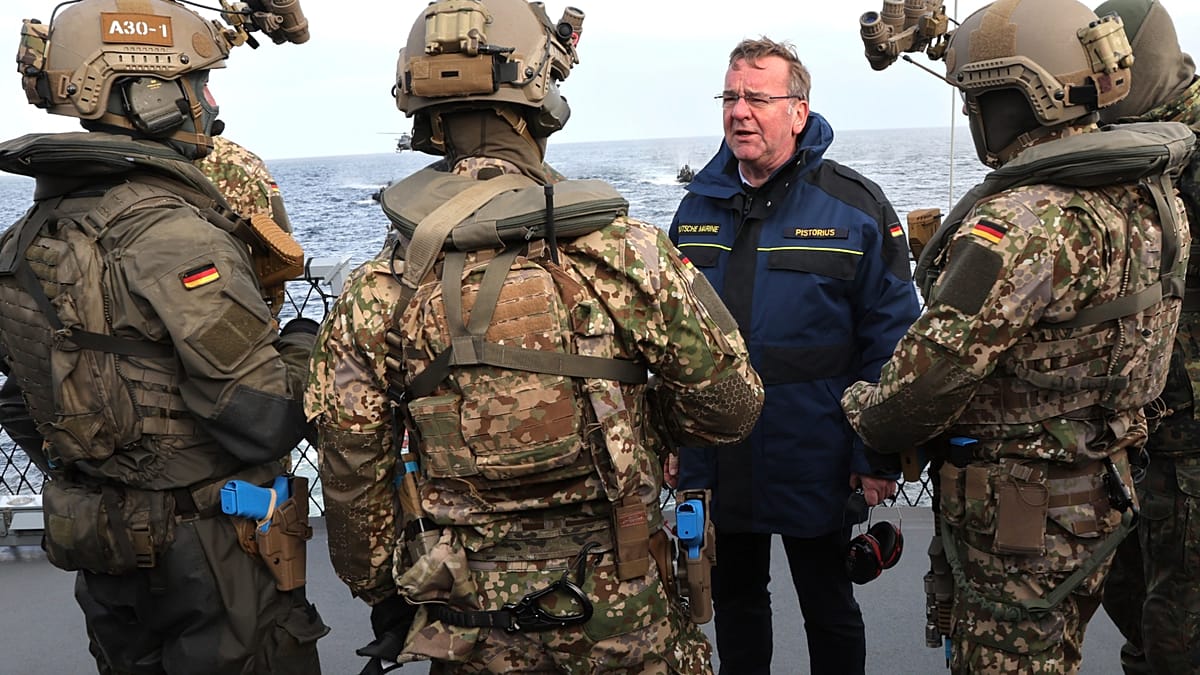
At the same time, Defence Minister Boris Pistorius wants to procure eight smaller frigates instead. To that end, Berlin awarded new contracts to defence contractor TKMS, whose shares rose about 10% in early trading on Wednesday.
According to the newspaper, the warship project was first launched by Ursula von der Leyen (CDU) when she was defence minister. In 2020, her successor, Boris Pistorius (SPD) ordered the super-frigate F-126 in the Netherlands from the Damen shipyard.
However, because of delays and other problems, German shipbuilder Lürssen Naval Vessels – since taken over by Rheinmetall in March 2026– was put in charge of the project.
In March 2026, Berlin approved the procurement of four TKMS-built MEKO A-200 frigates, estimated to cost about €1bn each, according to FT reporting, amid mounting concerns over delays to the six-vessel F126 programme.
More than €2bn already invested in the project
According to reporting by Die Welt, citing the German Defence Ministry, the F126 programme had already incurred around €2.3bn in costs before its cancellation. These costs include design work, software development, construction activities and payments to contractors.
The ministry says that continuing the programme would have pushed total costs above €18bn, compared with an original programme value of roughly €10bn for six frigates.
Instead of the F126 frigates, which were most recently scheduled for delivery in 2029, a total of eight smaller MEKO A-200-class frigates are now expected to be ordered from TKMS, extending the original order for four vessels placed in March.
The warships now being considered, at around 120 metres in length and with a displacement of 4,200 tonnes, are much smaller than the F126, which was designed to be 166 metres long with a displacement of 10,500 tonnes. Originally, six warships were to be procured; now there could be eight.
The navy’s top brass has reportedly backed the defence minister’s decision to revise the frigate plans.
Will the Bundeswehr be deployed in the Strait of Hormuz?
Most recently, Germany, the United Kingdom and France have discussed whether and how they could take part in clearing mines in the Strait of Hormuz, so that this vital global shipping lane can once again be used without hindrance after the Iran war.
How important the German navy could become in future is also evident from the fact that the frigate “Fulda” and the support vessel “Mosel” were dispatched towards the Middle East weeks ago. On board are around 140 Bundeswehr soldiers. Off the Iranian coast, the German navy would receive support, among others, from the French aircraft carrier “Charles de Gaulle”.
In the event of a lasting ceasefire, 57% of respondents in the ZDF Politbarometer poll said they were in favour of deploying the Bundeswehr in the Strait of Hormuz, while 38% opposed such a mission.