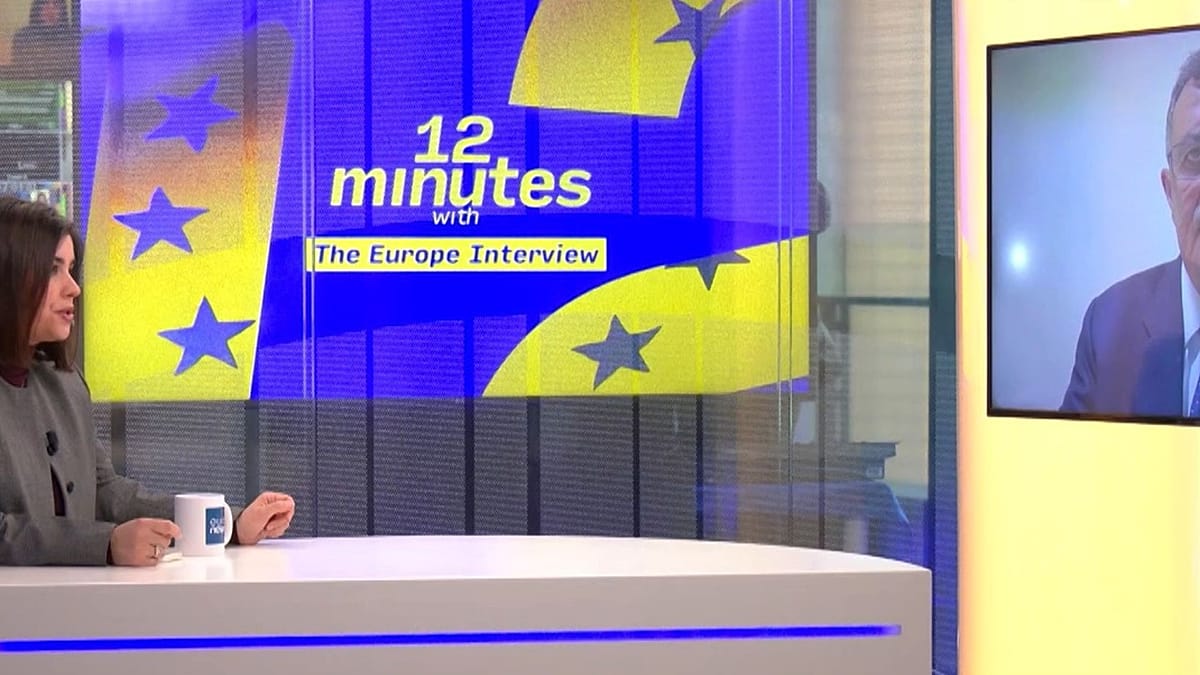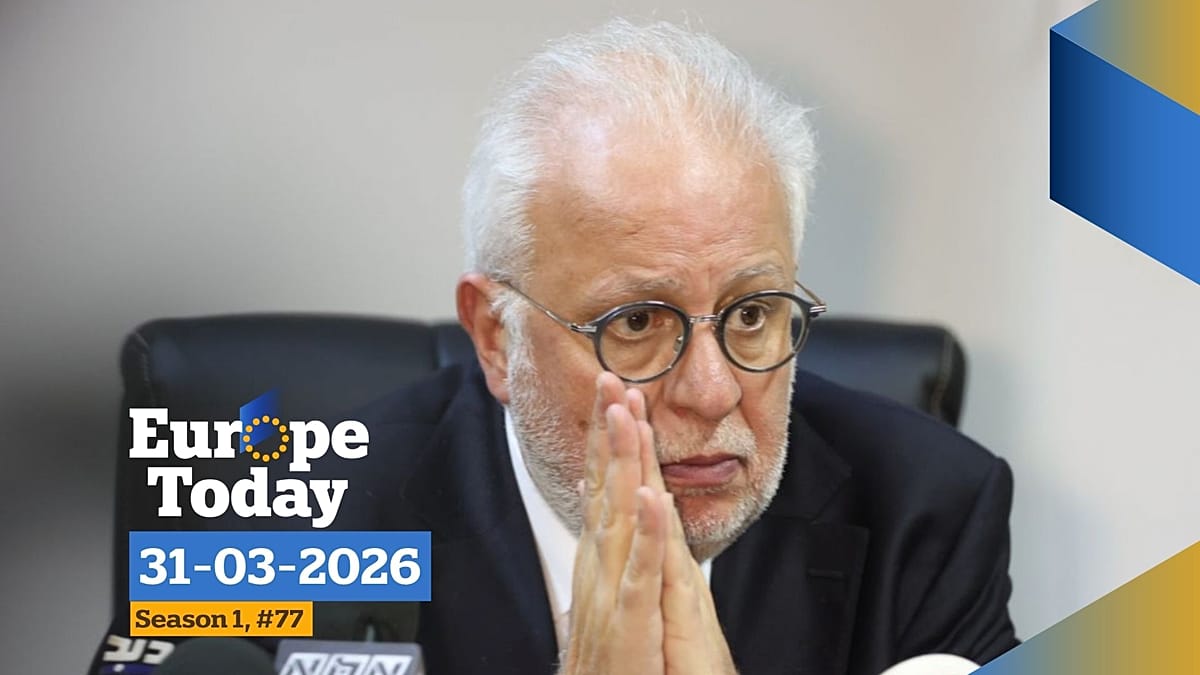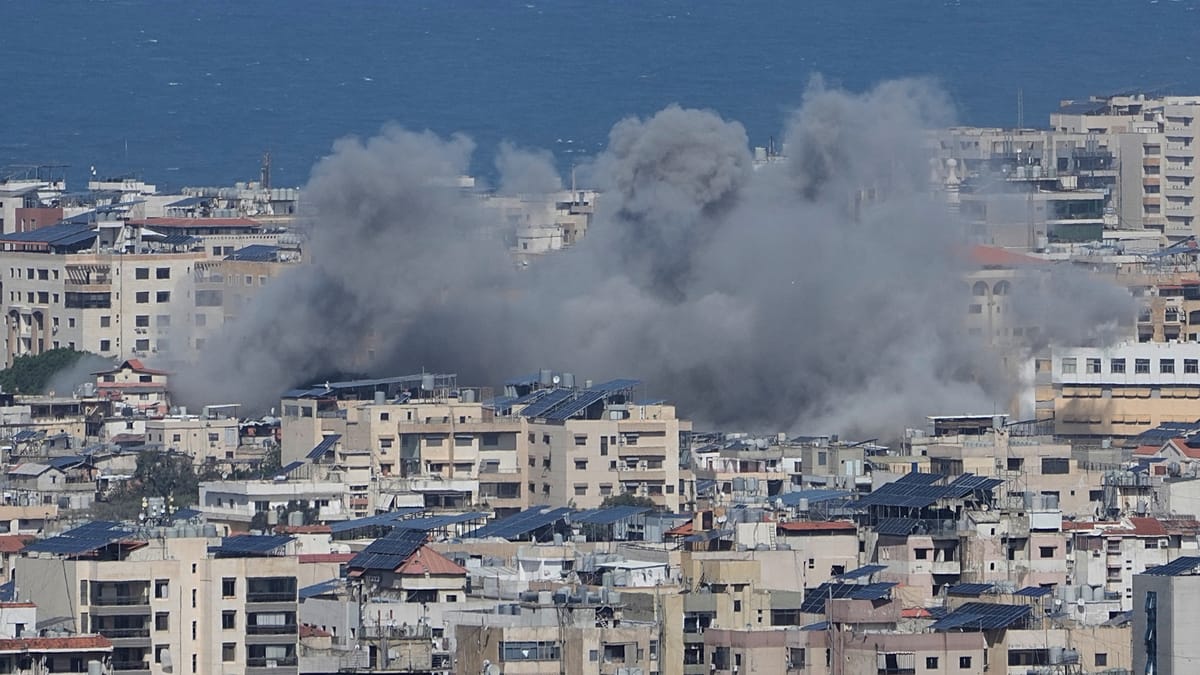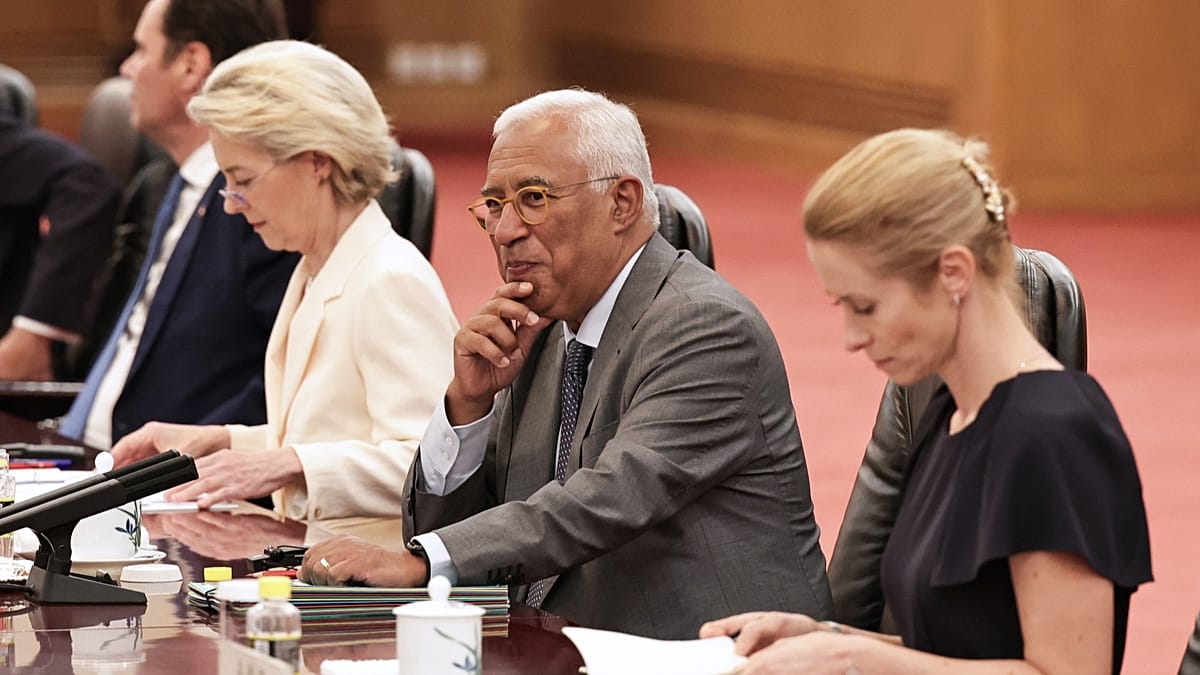


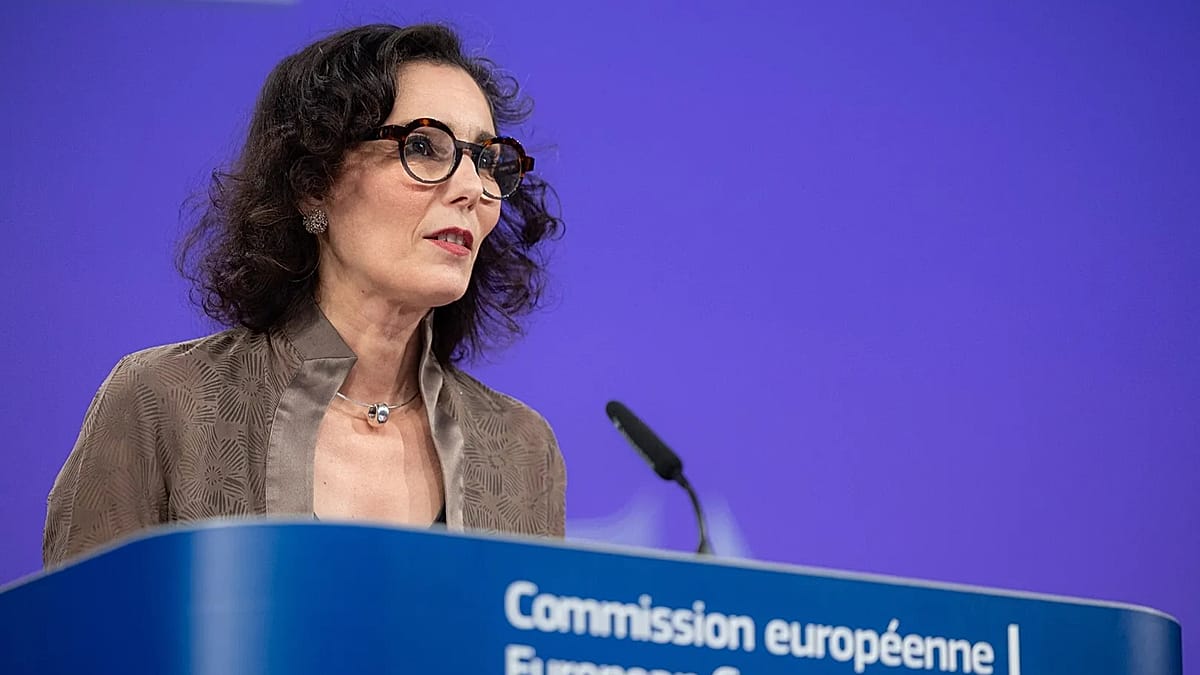
In an interview with Euronews’ flagship show Europe Today on Friday, European Commissioner for Equality, Preparedness and Crisis Management Hadja Lahbib said that the European Commission is “committed and prepared” to face the consequences of the developing tensions in the Middle East.
The “priority” for the Commission is “the repatriation” of the thousands of Europeans who are stranded in the Gulf area, she said.
According to Lahbib, Brussels has already activated the EU Civil Protection Mechanism and has helped 15 member states to repatriate both tourists who got stuck in the region and those who lived there.
So far, the EU has helped organise six repatriation flights to Bulgaria, Italy, Austria and Slovakia via the mechanism.
The Commission is also preparing for a possible humanitarian crisis by stockpiling supplies.
“We have warehouses full of sleeping bags, with tents, with medical supplies, with everything”, said Lahbib, confirming that while the attacks continue, the Commission is also “monitoring all kinds of risks”.
One of them is the “nuclear risk, because of Iran”, she said, but also “maritime pollution, massive movement of migration”.
’50 years away from equality’
The commissioner wants to increase the number of women working in STEM, science and technology.
According to data from Eurostat, in 2023, women only made up 33.5% of graduates working in STEM fields in Europe. The gender gap can also be seen across the bloc, with some EU countries registering particularly large differences, among them the Netherlands, Luxembourg, Finland, Germany and Hungary.
The goal, Lahbib says, is to have one million women working in STEM.
“If women are out of the design table, inequality goes into the system”, she said, noting that the lack of inequality has also an economic cost.
“Inequality in the labour market, costs European countries €390 billion each year. So if we want to be competitive, please let’s work on equality in the labour market first.”
“We want to transform Europe into a better place.”