
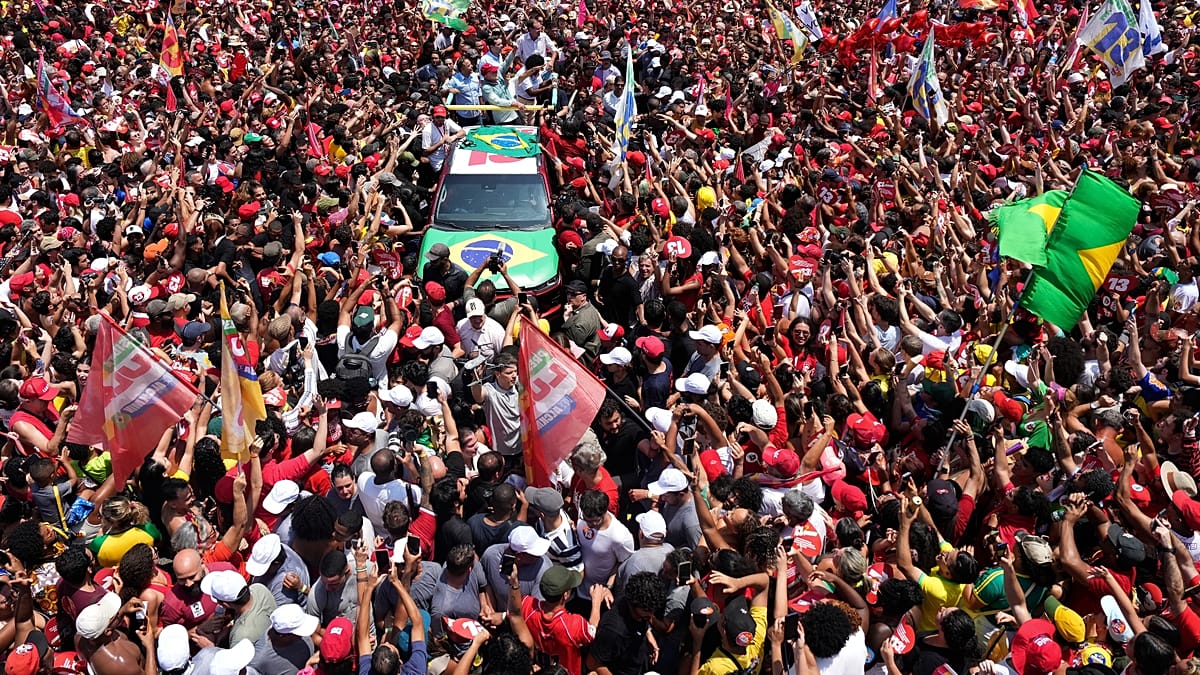
Brazilian President Luiz Inacio Lula da Silva and right-wing senator Flavio Bolsonaro rally their supporters one last time on Saturday, converging on the beaches of Rio de Janeiro and closing a fraught election campaign one day after a combative final live television debate.
In the first round of voting Bolsonaro won 47% over Lula’s 45%. But in the intervening 3 weeks of intense and acrimonious campaigning the left-wing incumbent seems to have made up some ground.
80-year-old Lula aims for historic 4th non-consecutive term
Lula, who got his start as a union worker and became the country’s first working class president, inspired a cult-like devotion during his first and second terms in office, as Brazil’s economy expanded with the help of a commodities boom and social programmes, including direct cash assistance, that lifted millions of Brazilians out of poverty.
He later spent more than a year in prison on corruption convictions that were eventually annulled before winning a third term in 2022.
Former U.S. President Barack Obama once called Lula “the world’s most popular politician,” but his approval rating have at times fallen as low as 24% this term as voters raise concerns about crimes and the cost of living.
Former lawyer Bolsonaro hopes to continue his father’s politics
Senator Bolsonaro began his political career at 21, when he became Rio’s youngest elected state lawmaker.
When his father, former President Jair Bolsonaro, barred from running as he serves a 27-year sentence under house detention for staging an attempted coup after losing to Lula in 2022, his eldest son took on the challenge to continue the right-wing agenda. He has largely embraced his father’s ultra-conservative politics, while trying to moderate his communication style to attract centrist voters.
His hard-line security policies have been a pillar of his campaign, and polls show these proposals are popular.
Sunday’s runoff will determine whether Brazil remains one of the few leftist nations in the region or joins the ranks of right-wing governments friendly with US President Donald Trump.
In their final debate on Friday night, the rivals struck a calmer tone than their first showdown, which descended into insults and was empty of policy proposals.
Lula attacked the senator’s lack of experience while Bolsonaro accused the president of leaving behind a “broken country.”
“He doesn’t know what hunger is,” Brazil’s first working-class president said of Bolsonaro, who asked the incumbent: “Why are things so expensive?”
He has promised to resolve Brazil’s crime woes, create 500,000 more spots in prisons and slash government spending.
International repercussions for the future
Brazil plays a vital role in mitigating global warming by protecting the Amazon rainforest, but deforestation a record high during Jair Bolsonaro’s presidency, and his son has likewise denied human-caused climate change, committing only to stopping illegal deforestation. This was followed by a record low in new clearances in recent years, as Lula’s government increased satellite monitoring and targeted law enforcement.
Sen. Bolsonaro’s admission that he accepted millions of dollars from disgraced banker Daniel Vorcaro to produce a film on his father’s life has cast a shadow over his campaign. He is under investigation for corrution, money-laundering and tax evasion in connection with the case.
Lula has repeatedly warned the US not to meddle in Brazil’s elections and has made defending Brazil’s sovereignty and interference by foreign social media a key campaign issue.
Trump announced 50% tariffs on Brazilian goods last year, citing — among other reasons — the trial of Jair Bolsonaro. This year, he imposed a new round of US tarrifs, citing unfair trade practices despite running a U.S. surplus. Trump also classified Brazil’s biggest drug-trafficking groups as foreign terrorist organisations, shortly after receiving Sen. Bolsonaro at the White House — a move Lula’s administration opposed as a pretext for intervention.
A victory by Bolsonaro would add Brazil to a list of Latin American countries — including Argentina, Chile, Costa Rica and Peru — that have elected Trump-friendly governments in recent years.
Additional sources • AFP