
Published on
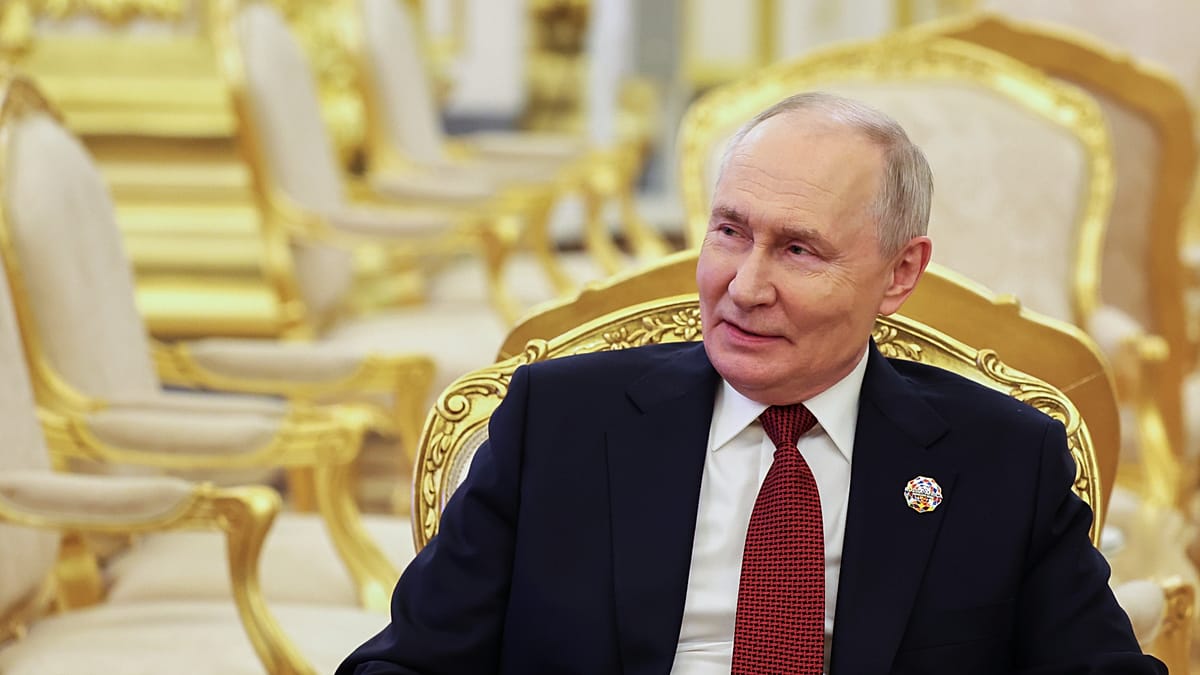
Russian President Vladimir Putin placed Japan Tobacco International’s (JTI) operations under state control on Thursday, ordering their transfer by decree to a state-linked holding company AO Promyshlennye aktivy.
The order covers JTI’s factories in St Petersburg, Rostov-on-Don, the Lipetsk region and the Leningrad region.
The company employs around 4,000 people in Russia and holds roughly 40% of the Russian cigarette market, making it the country’s largest manufacturer.
Its Russian product range includes the international brands Winston, Glamour, Camel, LD and Sobranie, and the domestic labels Pyotr I, Russky Stil and Donskoi Tabak.
JTI, whose headquarters are in Geneva, entered the Russian market in 1999 and acquired local producer Donskoi Tabak in 2018.
JT Group has invested $4.6bn in its Russian operations over more than 20 years, according to a company profile updated in November 2025.
After Russia’s full-scale invasion of Ukraine in 2022, the company did not leave the country but suspended new investment in Russian production and marketing.
The seizure follows Russia’s arrest last month of Yuki Imai, a journalist with the Japanese newspaper Hokkaido Shimbun, on espionage charges.
The Russian Foreign Ministry has accused Tokyo of systematically using journalists to gather intelligence inside the country. Japan has rejected the accusation.
Japan, which has a long-standing dispute with Russia over the Chishima Islands in the Pacific Ocean, has also joined some Western sanctions over the ongoing all-out war in Ukraine.
JTI joins a list of European companies whose Russian assets have been transferred to state management under the same mechanism, including Swiss food group Nestlé, French retailers Auchan and Leroy Merlin, and German retailer Metro.
Moscow has presented the external management process as a response to sanctions imposed after the 2022 invasion.
Restrictions introduced for companies from states deemed “unfriendly” include caps on dividend payments, which trap profits inside Russia, and substantial fees on sales of Russian business assets.
Putin said on 1 October the mechanism also gave Russia the ability to prepare retaliatory measures against any possible future nationalisation of Russian assets abroad, while leaving open the possibility of returning control to former owners if “conditions improved”.
External management involves appointing state-linked administrators to run a company’s Russian assets without the foreign owner’s consent or compensation, transferring effective control to the Russian state regardless of who retains nominal ownership.
Additional sources • AFP