


Published on
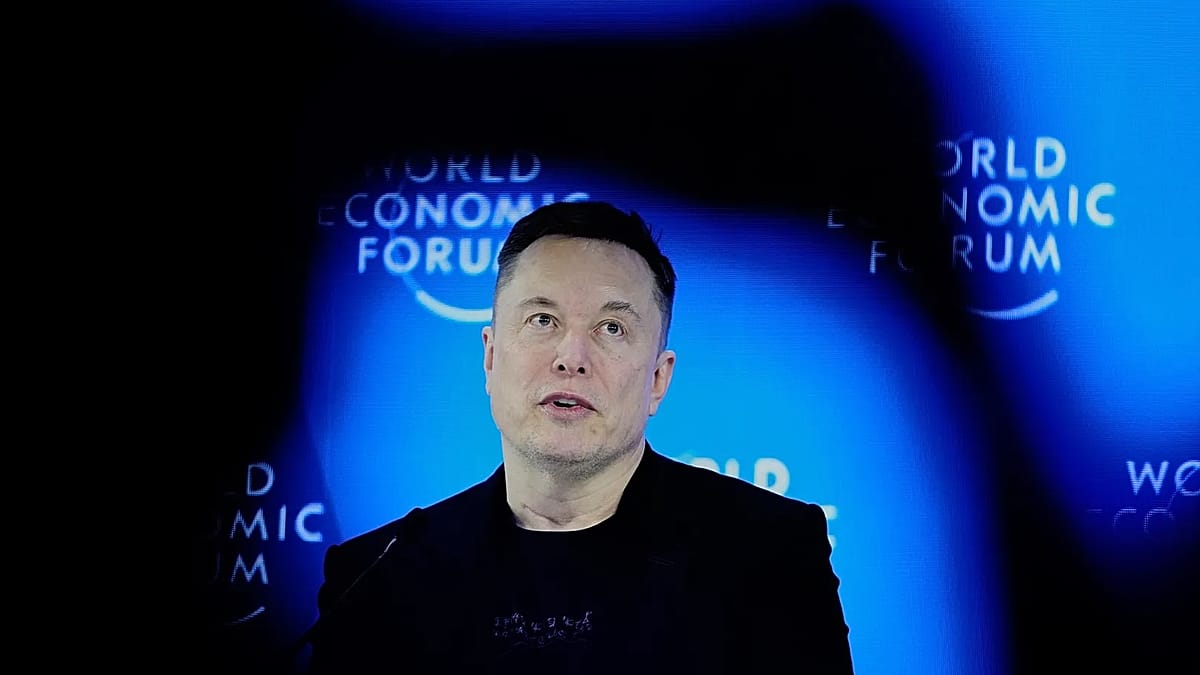
At the World Economic Forum in Davos, Elon Musk mocked US President Donald Trump’s newly founded Board of Peace with a play on words, calling the US President’s controversial project into question.
“I heard about the formation of the peace summit, and I was like, is that p-i-e-c-e? You know, a little piece of Greenland, a little piece of Venezuela,” he said, laughing during his address to the forum.
“All we want is peace,” he added to quiet chuckles from the audience.
Musk and Trump have had a visibly chequered relationship since 2025, from cooperation in the corridors of power to public mud-slinging.
In Davos, where politicians and CEOs vie for the power of interpretation, a single sentence is usually enough to create a new narrative.
What is Trump’s Board of Peace and why is it being criticised?
Trump officially announced the formation of the Board of Peace in Davos. The body is intended to address conflicts and is being discussed as a possible rival or parallel format to the UN.
Criticism has been levelled at the fact that Trump himself is at the helm and that the council has a strong presidential focus.
The planned financial architecture is also raising eyebrows internationally: countries will only be members for a limited period of time, while a payment of $1 billion could enable a permanent status. This reinforces the accusation that this is less about classic diplomacy and more about an exclusive club where access and influence also depend on the price. Moreover, many of the signatory states are run by authoritarian governments.
Precisely because Trump is selling the project as a foreign policy flagship, every public comment carries double weight, especially when it comes from Elon Musk who is not just a spectator but was himself part of the power structure during Trump’s second term in office, heading the controversial Department of Government Efficiency (DOGE).
Trump and Musk: An on-off relationship
During the presidential election campaign, Musk supported Trump with over $230 million (€196 million) as the largest single donor and at the same time used his social media platform X as a high-reach megaphone to amplify Trump’s messages.
At the beginning of the Trump administration, the tech billionaire headed DOGE, ending his work there at the end of May 2025 after his status as a “special government employee” expired.
There had already been friction before that, for example when Musk publicly insulted Trump’s trade adviser Peter Navarro in spring 2025. The big break followed shortly after Musk’s DOGE departure after Musk attacked Trump’s tax and spending law head-on, setting off a chain of escalation.
In the summer of 2025, this turned into a very public fight in which Trump even hinted at having Musk’s immigration status reviewed and at the same time brought subsidies and government contracts for Musk’s companies into play.
In the autumn of 2025, the two then indicated a relaxation of tensions again: Musk turned up at a dinner for the Saudi crown prince at the White House, where Trump demonstratively gave him a friendly pat.
Observers have recently described the relationship more as a “fragile truce” or a distrustful alliance of convenience, in which both know how much they can damage each other politically and in the media.
And yet, Musk has already signalled his willingness to mobilise massive amounts of money for Republican candidates again ahead of the mid-term congressional elections in November 2026.
Why the Davos comments carry so much weight
Against this backdrop, Musk’s Davos pun is more than just a tongue-in-cheek remark. It is a signal that although this relationship can calm down tactically at times, it could boil over again at any time. Musk is at least not afraid to publicly ridicule Trump’s prestige projects.
This is particularly tricky for Trump because the Board of Peace has to explain what it stands for, how it is legitimised and what concrete added value it should offer compared to existing institutions. For Musk, the moment is a demonstration of power of its own kind: it shows that, despite his former closeness to the government, he is not confined to the role of loyal co-player, but can become a commentator and critic at any time.