
Published on
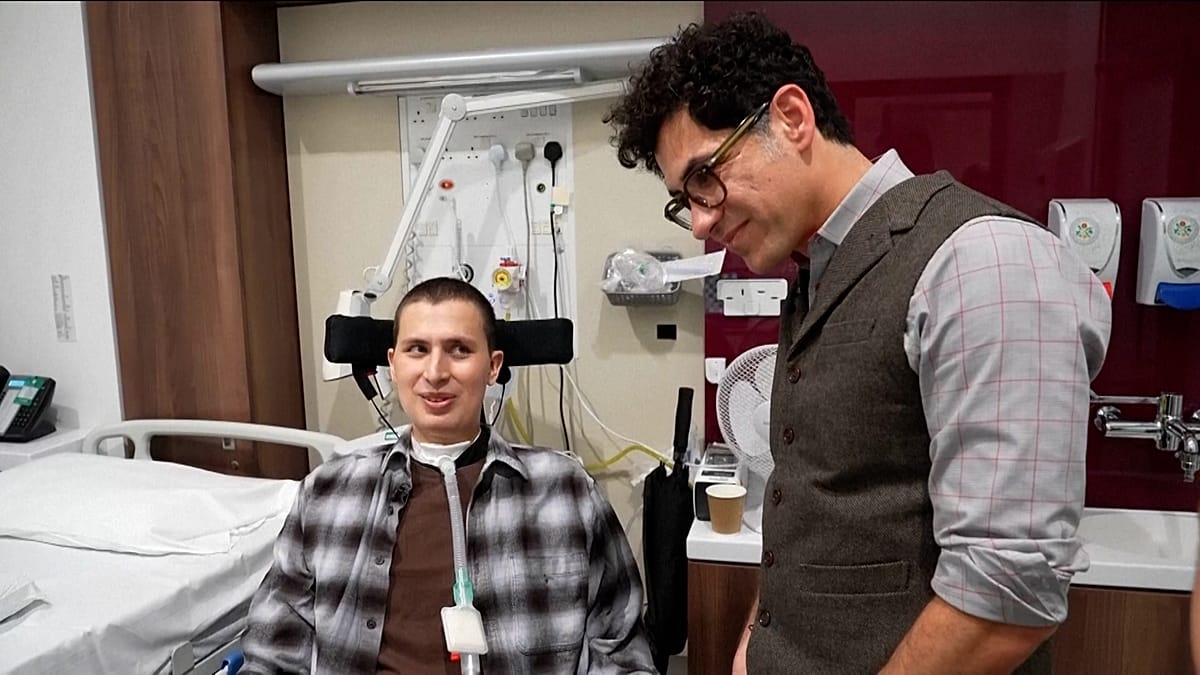
A British medical student paralysed in a diving accident has regained a degree of independence after receiving a brain implant developed by Elon Musk’s company Neuralink, as part of an early-stage clinical trial in London.
Sebastian Gomez-Peña is among the first patients in the United Kingdom to test the device, which allows users to control a computer using only their thoughts.
Implanted during a five-hour operation at University College London Hospitals (UCLH), the chip connects to the brain via microscopic threads and transmits neural signals wirelessly to a computer.
Offering hope to people living with paralysis
From a hospital room in London, Gomez-Peña can now move a cursor, open files and play chess on a laptop without touching it. The system interprets patterns of brain activity associated with intended movement and converts them into digital commands.
“It’s a massive, massive change in your life where you can suddenly no longer (use) any of your limbs, and this kind of technology kind of gives you any piece of hope,” he said.
“Everyone in my position tries to move something of the body to see if there is any form of recovery, but now I think, I’m moving my hand to the right, to the left, I’m taking my fingers, and the technology just understands what I want to do and it does it.”
Gomez-Peña was injured shortly after beginning medical school. “I dived, I hit the floor and hit my head, and alongside breaking my neck, I also broke my front two teeth and that’s how I started,” he said.
How does the brain chip work?
Carried out at UCLH, the procedure used a surgical robot designed by Neuralink to place electrodes into a precise area of the brain.
The robot inserts ultra-thin threads into the surface of the brain. Each thread is around ten times thinner than a human hair and contains multiple electrodes that can detect electrical activity from individual groups of neurons.
In Sebastian’s case, the electrodes were inserted around four millimetres into the motor cortex, the region of the brain that controls hand and finger movement.
The threads connect to a coin-sized chip that sits inside a circular opening in the skull, flush with the bone. Once implanted, the chip records patterns of brain activity and transmits that data wirelessly to an external computer.
Early results promising, but long-term effects unknown
Gomez-Peña is one of seven people taking part in the UK trial and one of 21 worldwide, including participants in the US, Canada and the United Arab Emirates.
“This technology, it is going to be a game-changer for patients with severe neurological disability, and those patients really have very little to improve their independence,” said Dr Harith Akram, the lead investigator for the UK trial at UCLH.
Doctors involved in the trial say Gomez-Peña’s control of the system is fast and precise. Elsewhere, some participants have learned to type using virtual keyboards or operate devices using thought alone.
However, the findings have yet to be published in peer-reviewed journals, and the technology has not been approved for widespread medical use.
Researchers say larger and longer trials will be needed to assess long-term safety, durability and effectiveness before regulators could consider licensing the device.