



Published on
The figures are in, and they’re not great…
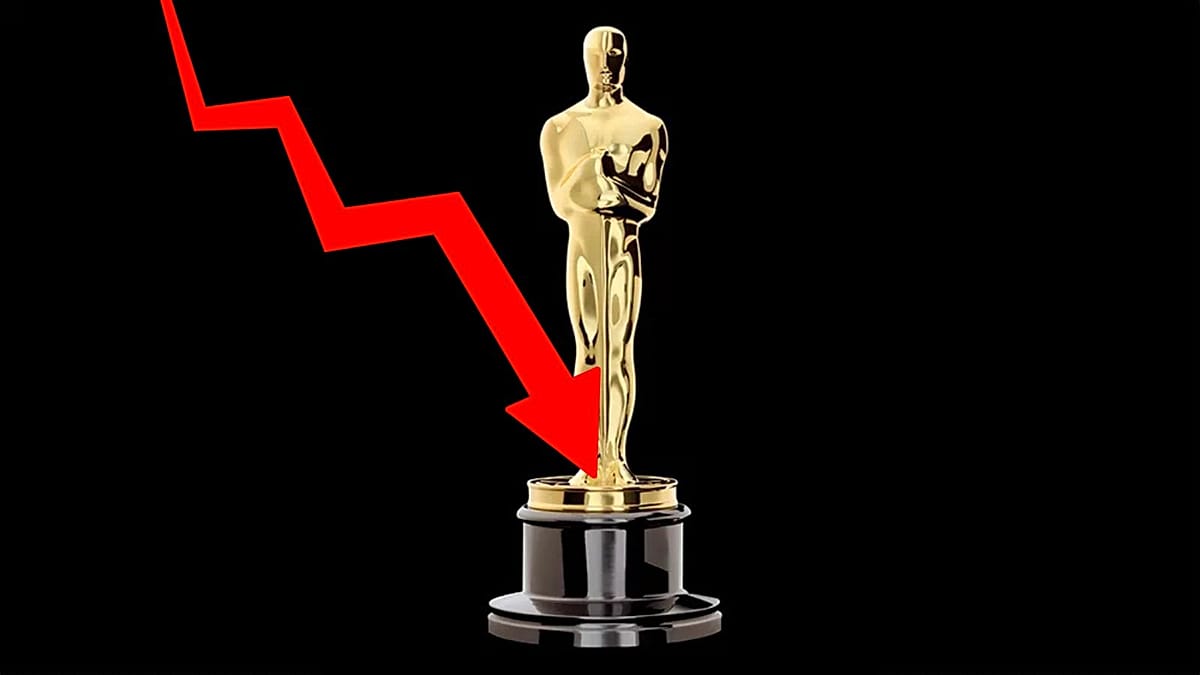
The number of people in the US who tuned in live to watch the 98th Oscars ceremony on Sunday evening dropped by nine per cent from last year, according to Nielsen.
Around 17.9 million people saw One Battle After Another take home the top prize at Hollywood’s premier awards gala on the ABC broadcast network and streamer Hulu, both of which are owned by Disney.
Despite being one of the best Academy Awards ceremonies in recent years – with Conan O’Brien acing hosting duties, Sinners bagging several major awards and One Battle After Another rightfully taking home Best Picture (one of those rare times the Academy gets it spot-on) – audiences were staying away.
The Academy Awards broadcast once routinely drew audiences of 40 million (43.7 million in 2014). Its viewership plummetted to 10.4 million in pandemic strangled 2021, and since then, it had been gradually recovering viewership.
To put this year’s 17.9 million viewers into context, 2022 saw a rise to 16.6 million; 2023 raked in 18.7 million; 2024 grew to nearly 19.5 million; and last year’s ceremony had approx. 19.7 million watch Anora sweep the board.
Somewhat reassuringly for the Oscars, it’s a widespread pattern and the show did maintain its usual spot as the most watched primetime entertainment telecast of the season.
Every major US awards ceremony has seen its viewership numbers decline this year. For instance, the Golden Globes tallied 8.6 million (compared to 9.2 million in 2025 and 9.4 million in 2024) and the Grammy Awards only managed 14.4 million this year (compared to 15.4 million last year and 17 million in 2024).
While it’s easy to brazenly declare that the Oscars have lost their cultural relevance – something disproved by the show’s social media stats which rose by 42 per cent this year to more than 181 million impressions during the telecast (according to Talkwalker’s Social Content Ratings) – there are several factors at play to explain the decline in viewership.
This year’s ceremony had competition in the form of a World Baseball Classic semifinal between the US and the Dominican Republic (a game which drew 7.37 million viewers), and the current socio-political context in the US may affect viewing habits.
Still, there’s no getting around the fact that 2026 Oscar ratings don’t look great compared to 2016, when viewership reached nearly 34.5 million viewers…
A lot has happened in the last 10 years, including the rise of content oversaturation leading to declining attention spans, and the pandemic radically changed people’s viewing habits.
The Oscars will be broadcast exclusively on YouTube starting in 2029. Whether or not that move will give viewing figures a boost or alter viewing habits remains to be seen. You can bet that many will still just opt to watch the highlights on YouTube the next day…