



Published on
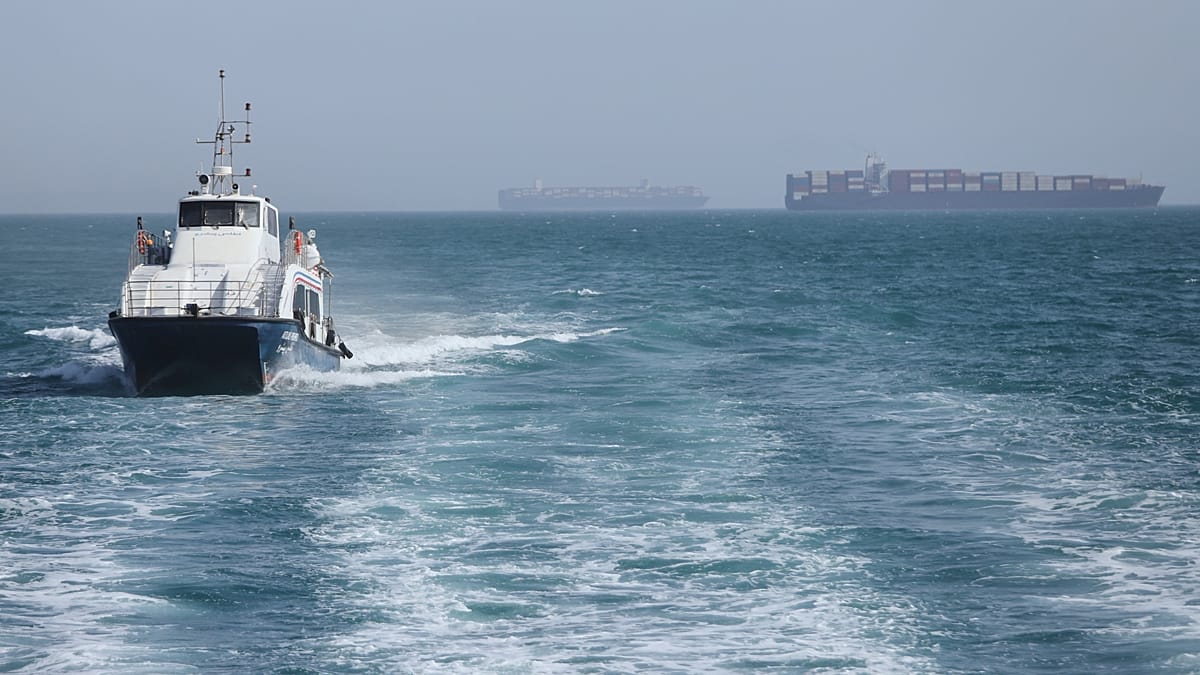
A tanker’s engine room caught fire off the coast of Oman near the Strait of Hormuz on Wednesday, a UK maritime agency said, reporting two missing and one casualty.
Earlier, British maritime security company Vanguard Tech said the Palau-flagged tanker Settebello had “transmitted a distress call stating that its engine room had been struck by a missile while operating off Sohar in the Gulf of Oman” and that there was a fire onboard.
The United Kingdom Maritime Trade Operations (UKMTO) agency later reported an incident 20 nautical miles northeast of Sohar in Oman.
“Local authorities have reported a tanker has experienced a fire in their engine room and are on the scene assisting with the evacuation of the crew,” it said.
“The vessel is reporting one casualty and two crew members missing. No environment impact reported,” it added.
It was not immediately clear who was behind the reported missile strike on the ship.
Sohar sits near the entrance to the Strait of Hormuz, in an area that has seen repeated incidents involving vessels since the Iran war began on 28 February.
Rival blockades cause string of incidents
The attack is the latest in a series of missile and drone strikes on commercial shipping in the strait, which has been under two rival blockades for months.
Tehran has put a stop to almost all cargo ship traffic through the key waterway, while the US has imposed its own blockade on all Iranian vessels and ports.
On 1 March, Iran struck a tanker north of the port of Khasab and hit the port of Duqm, both in Oman.
In late May, a UKMTO report noted an explosion on a separate tanker roughly 60 nautical miles east of Muscat.
On Monday, US Central Command fired a Hellfire missile into the engine room of the Botswana-flagged MT Lexie, which was travelling toward an Iranian port in defiance of the US naval blockade.
On the same day, a US F-18 Super Hornet from the aircraft carrier USS Abraham Lincoln hit and disabled the Palau-flagged MT Marivex in the Gulf of Oman under the same basis.
Sohar itself was struck by Iranian drones earlier in the war, while Iran has also captured a number of vessels in the Gulf of Oman, including a tanker identified as the Ocean Koi in May, saying it was attempting to disrupt oil exports and Iranian interests.
Despite this, Oman has continued to act as a mediating channel between Tehran and Washington.
The Strait of Hormuz is some 38 kilometres wide at its narrowest, meaning both Iran and Oman operate the waterway, which normally carries one-fifth of the world’s oil and LNG shipments, as well as other cargo.
Tehran has previously stated it would also introduce tolls on passing ships, implying it would collect transit fees during the two-week ceasefire with Oman, a claim Muscat quickly rejected, stating that no fees can be legally imposed because Hormuz is a natural and not man-made passage.
Iran has also published a map in late May claiming regulatory control over a stretch of the Strait of Hormuz that extends deep into the territorial waters of the UAE and Oman, prompting five Gulf states to formally warn shipping companies through the International Maritime Organisation (IMO) not to comply.
Additional sources • AFP