
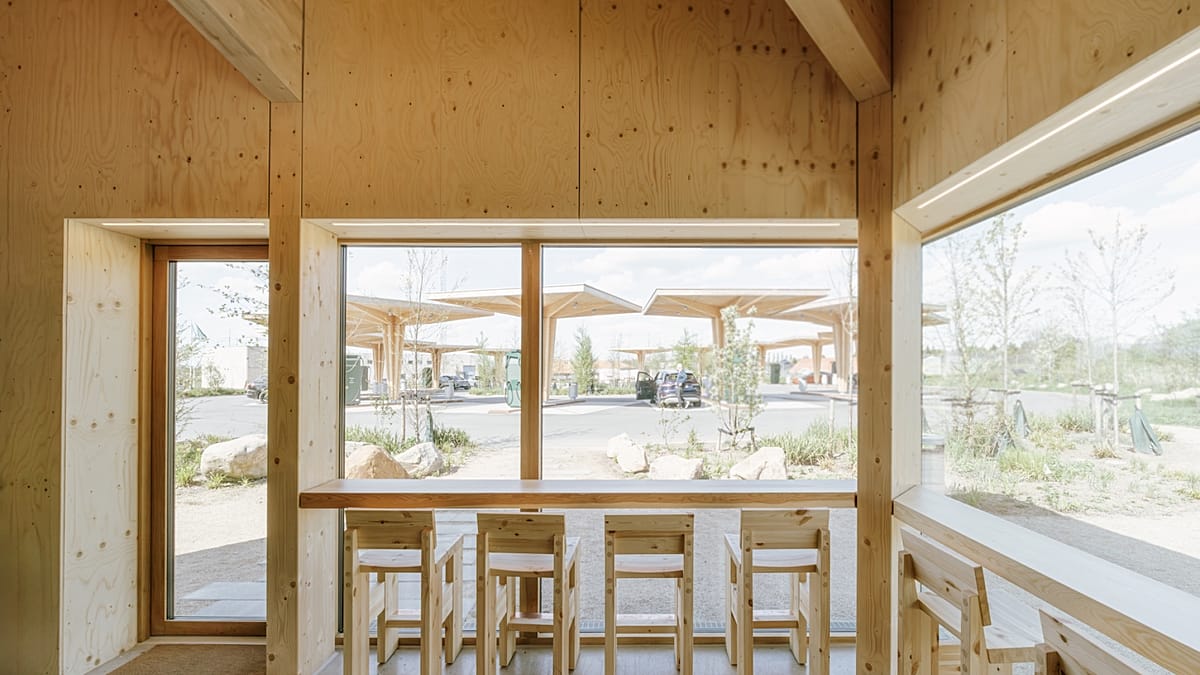
Clever, Denmark’s leading operator of EV charging stations, has scrapped the traditional management ladder altogether. There are no bosses, no middle managers and, since 2025, not even job titles that carry the word.
From its headquarters in a converted industrial quarter of Copenhagen, the firm runs on self-managed teams in which every employee shares in decisions and owns the job of seeing them through.
The architect of the experiment is co-founder Casper Kirketerp-Møller, who launched the business more than a decade ago with a handful of staff.
Denmark and its Nordic neighbours have long prided themselves on egalitarian workplaces and flat structures, but Kirketerp-Møller wanted to push the idea further.
“We could do it better than the traditional way,” he told AFP, describing a fascination with “how we humans are together” and the kind of culture a company actually needs.
From 2019, Kirketerp-Møller began peeling away layers of management, eventually eliminating his own CEO role. The central goal was to draw out the full potential of each person on the payroll, something he sees as increasingly vital in an automated world.
“In the new era where AI will do everything around efficiency, it’s the human skills, it’s the human business that will be essential for companies to thrive and innovate in the future,” he said.
There was a practical motive too. Deeply layered organisations, Kirketerp-Møller argues, struggle to act quickly because every choice has to wind through a chain of approvals.
Helge Hvid, a professor at Roskilde University who studies self-managed firms, agrees that bureaucracy can paralyse decision-making when too many managers must sign off and that flat models appeal especially to younger workers.
“People want to have a say in their work, and they want to have meaning in their work. They want to have autonomy,” Hvid told AFP.
Freedom with guardrails
Removing bosses does not mean abandoning structure.
Clever’s roughly 500 employees work in more than 50 teams of eight to twelve, each grouped around specific objectives, with clearly defined roles for tasks such as recruitment and HR.
Kirketerp-Møller is blunt about the risk of going too far, cautioning that releasing all the structure at once would tip the company into chaos. That tension is familiar to organisational theorists.
Anne-Sophie Dubey of France’s Conservatoire National des Arts et Métiers notes that while flattening a company is meant to fight bureaucracy, a degree of written rules paradoxically remains useful so everyone understands how the game is played.
For staff, the appeal is tangible.
Lykke Jeppesen, who has spent more than four years helping colleagues reach joint decisions, prizes the absence of rivalry.
“I work in a team where we’re equal […] We’re here to succeed together, so there’s no internal competition with each other,” the 37-year-old told AFP.
The model, she says, meets basic human needs for autonomy, freedom and a sense of belonging.
An internal audit in 2024 found that 92% of employees at Clever were glad to head to work each morning.
Earlier this month, Kirketerp-Møller left the firm for good, but the Danish energy distributor Andel, which has owned Clever since 2018, has pledged to leave the unconventional structure untouched, suggesting that the no-boss experiment may outlast the people who launched it.