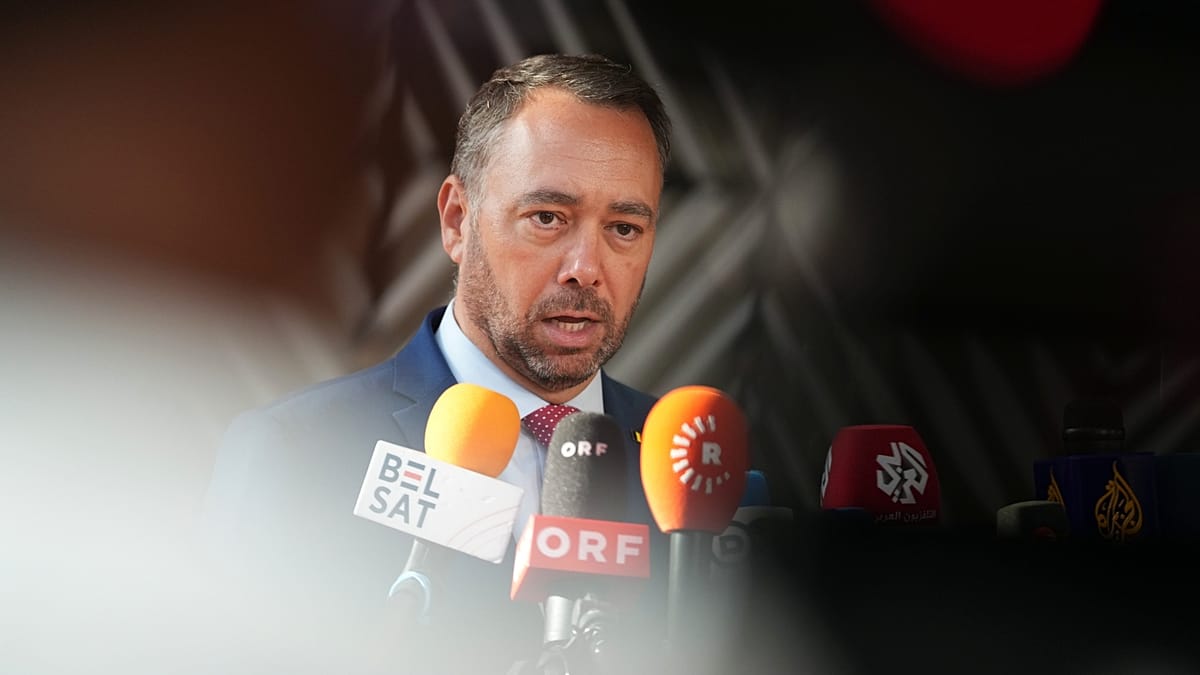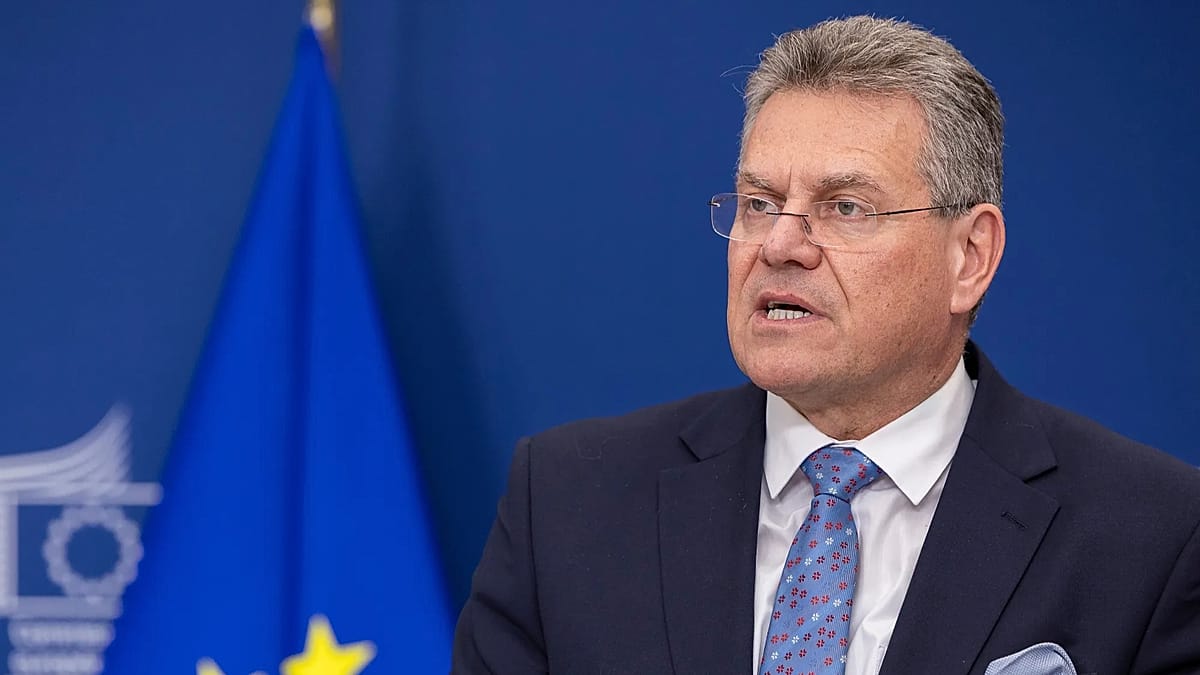

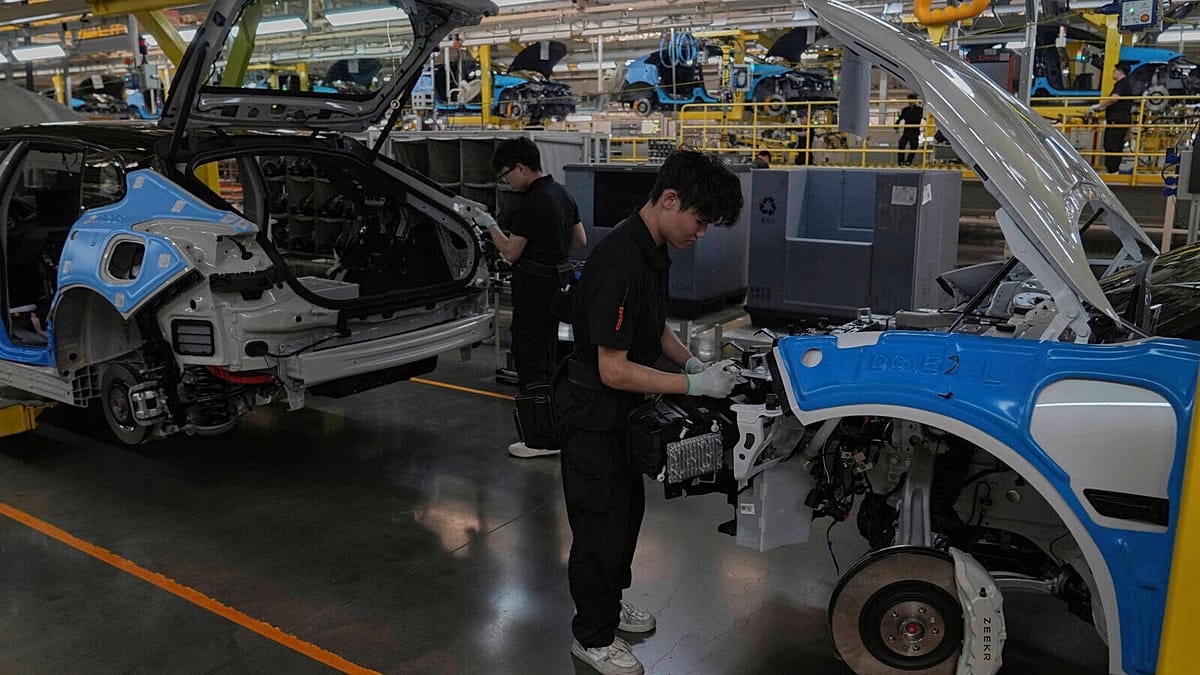
But first, just in: Mafred Weber, the chairman of the powerful centre-right European People’s Party (EPP), has just told Europe Today that unless the EU and China strike a deal to reduce trading imbalances by October, the bloc is “entering into a phase of conflict” with Beijing.
The EU’s trade chief Maroš Šefčovič said on Monday that the EU would seek a pact with China to address the ballooning trade deficit by October, as concerns mount over the impact of Chinese industrial overcapacity on Europe’s already struggling industries.
Weber called for a “fundamentally changed” approach to China. “The Chinese must understand (…) we cannot allow this. We are the continent of trade, the free market, but it must be fair and it must be a level playing field.” Watch.
From Kalimera to Maidin Mhaith: Today, Ireland takes over the rotating six-month presidency of the EU Council, succeeding Cyprus, my colleague Jorge Liboreiro reports. Can you hear the harps?
It marks the eighth time that the shamrock-loving island of 5.4 million people, which joined the bloc in 1972, has assumed the unenviable role of “honest broker”.
Under the Gaelic slogan of “Ní neart go cur le chéile” (“Strength with unity”), Ireland will steer negotiations among the other 26 member states and craft delicate, sometimes fragile, compromises that can satisfy all the disparate voices in the room.
In a sign of the central importance of Ukraine to Dublin’s work over the next six months, President Volodymyr Zelenskyy has just touched down in Ireland and will join the opening ceremony at Dublin Castle later today,
From Ukraine’s accession to the next EU budget, Jorge breaks down the five most pressing tasks for the Irish presidency.
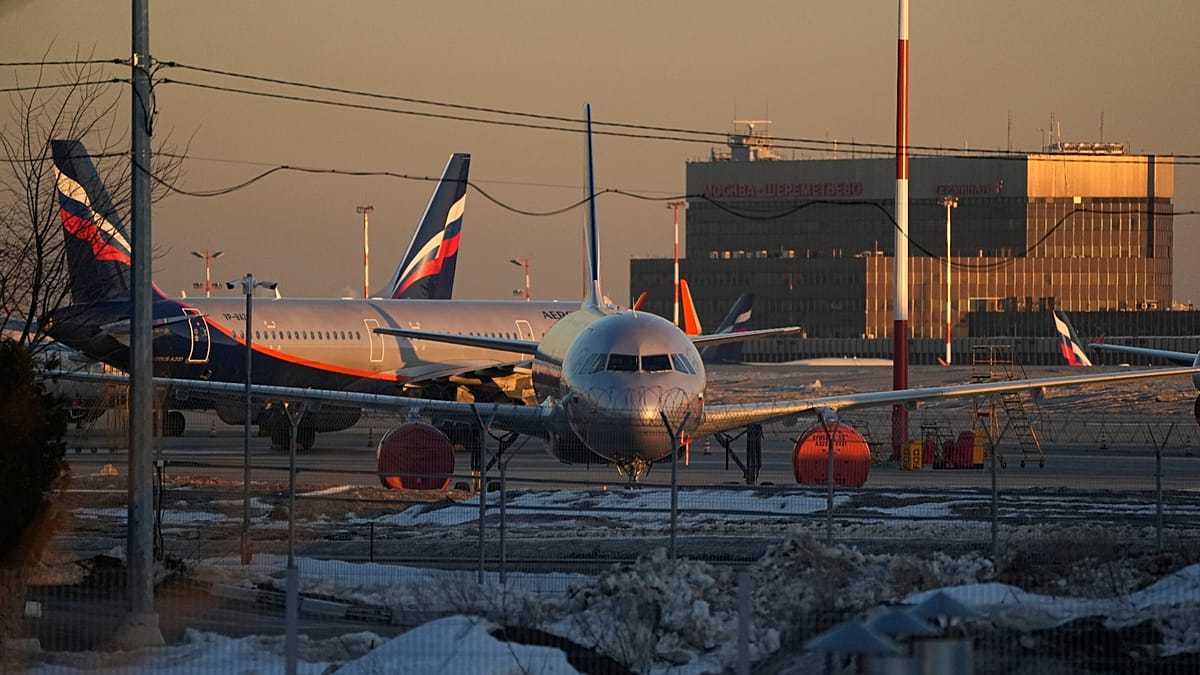
“It’ll be not just about the programme and priorities,” Jorge tells me via text before flying to Dublin. “Ireland is under intense scrutiny over its alumina sales to Russia, a terrible look for a presidency. The government has launched a probe to clarify the allegations and promised to share the findings with the European Commission. So it’s possible that, in a few months, Ireland will have to choose between sanctioning alumina and protecting local jobs.”
Keep an eye on Jorge’s reporting as he discovers the Emerald Isle.
VDL in Baku: Meanwhile, European Commission President Urusla von der Leyen will hold talks with Azerbaijan’s President Ilham Aliyev in Baku later today, before moving on to Armenia on Thursday to meet re-elected Prime Minister Nikol Pashinyan.
It’s von der Leyen’s first visit to the South Caucasus since Armenia and Azerbaijan signed their historic peace agreement, with expectations that the Commission chief will seek to build on the EU’s strategic engagement with the region formerly in Russia’s orbit, as my colleagues Nadira Tudor and Saida Rustamova explain in this preview.
EU allies clinch steel carve-outs: New steel quotas and tariffs come into force today as Brussels seeks to curb global overcapacity entering the EU market, my colleague Peggy Corlin writes in to report.
After weeks of lobbying, trading partners bound to the EU by free trade agreements secured preferential treatment: of the 18.3 million tonnes of tariff-free quotas decided by the EU, 9.15 million tonnes per year will be allocated exclusively to them, including India, the UK and Switzerland.
Only the remaining 9.15 million tonnes will be available for steel imports originating from other foreign countries, with China particularly targeted as the source of most of the global steel surplus.
Beyond the tariffs free quotas, steel import to the EU will be imposed at 50%. A protectionist move for the EU which has been pushed by the industry, as jobs cuts loom in the EU and production capacities are reduced. Peggy has the details.
Also kicking in today: a flat €3 customs duty on low-value e-commerce imports (think small packages of low-value goods). Until now, goods imported into the EU worth under €150 were exempt from customs duties.
This temporary measure means small parcels entering the bloc, largely through online shopping platforms such as Temu, SHEIN and AliExpress, will face a fixed customs charge. It addresses what the European Council describes as “unfair competition” for European retailers, as well as concerns over unsafe products, fraud and the environmental impact of vast volumes of cheap, mainly Chinese, imports.
The EU receives over two billion e-commerce packages worth under €150 annually, and allows up to 65 per cent of parcels to enter with misdeclared values or unverified safety profiles. Our XL team has this deep dive into the duty and its implications.
Ukraine to buy 16 Gripen E fighter jets from Sweden
Ukraine and Sweden have signed an agreement for the purchase of 16 Gripen E fighter jets, as part of a deal that covers equipment, maintenance and support services, Volodymyr Zelenskyy said. The delivery is scheduled for early 2029.
“In addition, under our previous agreements with Prime Minister Ulf Kristersson, the first 16 Gripen C/D aircraft will be transferred to our Air Force at the beginning of 2027,” Zelenskyy added.
Kyiv announced the deal with Sweden one day after Poland’s Defence Minister Władysław Kosiniak-Kamysz accused Kyiv of backing out of a promise to share drone technology in exchange for old Polish MiG-29 jets.
These are planes that Poland had planned to retire from service, as the country phases out the Soviet-era aircraft in favour of US-designed F-16s and F-35s.
As reported by our correspondent Sasha Vakulina, the Polish defence minister claims Ukraine promised to share its drone technology with Warsaw in exchange, but the agreement “did not follow through.”
More from our newsrooms
Almost one in three Europeans expect standard of living to decline, survey says. Almost one-third of EU citizens (29%) believe that their personal standard of living will decline over the next five years, while only 18% expect it to improve, according to a Eurobarometer poll released today. In some countries, pessimism could be linked to a negative image of the European Union. Vincenzo Genovese hasthe details.
Lawyer says Orbán should have been detained over Ukrainian cash convoy raid. A lawyer for seven Ukrainians detained in Hungary after a cash convoy raid says ex-PM Viktor Orbán and three other officials should have been held — and suggests prosecutors may be shielding Orbán from the investigation. Sandor Zsiros has more.
Starmer sets out to strengthen UK and European defence with cash for drones and AI systems. Outgoing UK Prime Minister Keir Starmer announced his vision for Britain’s long-term defence investment plan on Tuesday, which includes a £5 billion envelope for drone development, and an emphasis on shoring-up security for Europe. Big questions remain however, as to how involved exactly the bloc actually is in this plan, as our correspondent Angela Skujinsexplains.
We’re also keeping an eye on
- European Commission President Ursula von der Leyen visits Baku for talks with Azerbaijan’s President Ilham Aliyev. She moves on to Yerevan on Thursday to meet re-elected Armenian Prime Minister Nikol Pashinyan.
- European Council President António Costa meets Irish Taoiseach Micheál Martin in Ireland to mark the opening of the Irish presidency of the EU Council.
- European Central Bank (ECB) forum on central banking continues in Sintra, Portugal. Central bank governors’ policy panel takes place at 14:00 CET, followed by the closing address from ECB President Christine Lagarde.
That’s it for today. Jorge Liboreiro, Angela Skujins, Vincenzo Genovese, Eleonora Vasques, Sandor Zsiros, Peggy Corlin and Sasha Vakulina contributed to this newsletter.