
By Lilya Sergeeva with AP
Published on •Updated
Russia’s State Duma has passed a law authorising bank employees to shoot down Ukrainian drones, in a sign of the Kremlin’s growing inability to defend its territory against attacks that have been intensifying in frequency and range while Moscow continues to wage its all-out war against Ukraine, now well into its fifth year.
Under the bill adopted on Tuesday, banks will cover the cost of installing electronic warfare equipment at their facilities.
Selected employees will be authorised to jam or intercept drone control signals and destroy unmanned aerial, underwater, and ground vehicles that threaten their sites, without waiting for security services to respond.
The bill is highly unusual in granting civilians authorisation to engage in actions reserved for the military and law enforcement. Until now, comparable powers have been held only by militarised agencies such as Rosgvardiya, Russia’s National Guard.
The bill must still be approved by the upper house of the Federation Council and signed by President Vladimir Putin before it enters into force.
The original draft, first introduced in August 2024, covered only the Bank of Russia and the state cash-collection agency Rosinkas.
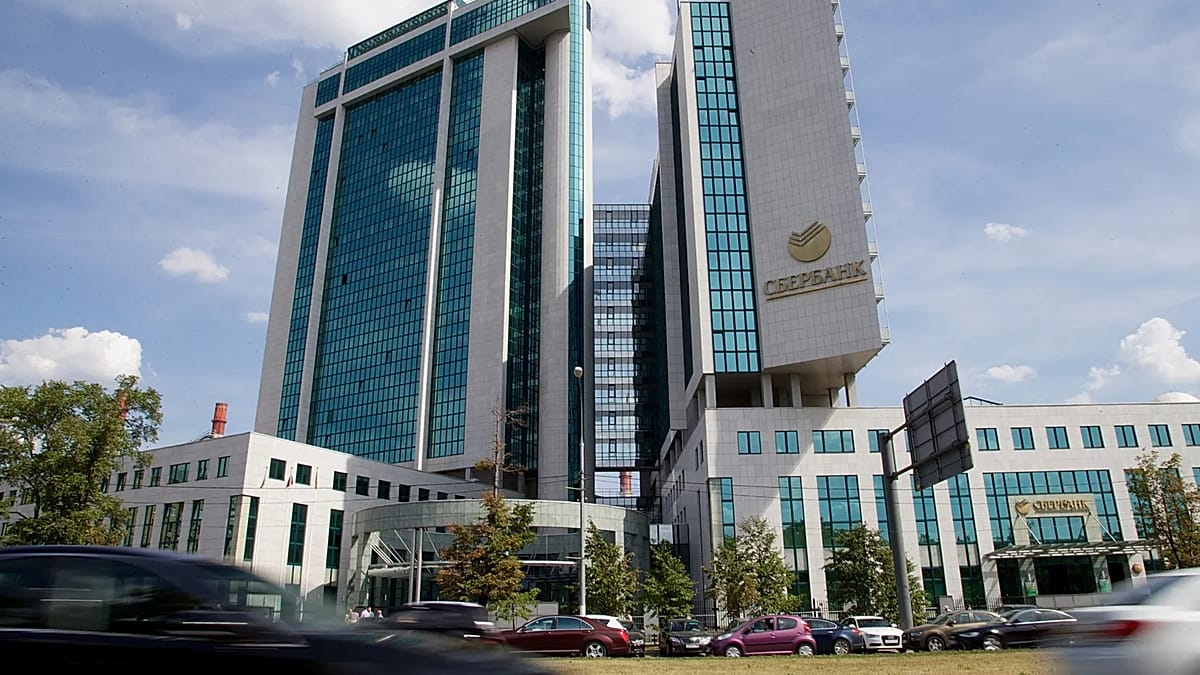
The final version extends the framework to Sberbank — Russia’s largest bank, in which the state holds a controlling stake — and the Federal State Unitary Enterprise Main Centre for Special Communications.
Thomas Withington, an associate fellow at the Royal United Services Institute in London, told AP the new measures may indicate that “military-level drone defense capabilities in Russia are failing, because if they were working you wouldn’t need to do that.”
“This situation is not improving for Russia,” he said, noting that Moscow is battling to keep up with Ukrainian drone innovations.
The measure seeks to “try and offload some of the burden of drone protection to the non-military, non-law enforcement sectors,” which are under strain, he said.
Ukrainian drone attacks on Russian territory have accelerated sharply in 2026.
By early 2026, Ukrainian drones were carrying out around four separate strikes per night against targets inside Russia, roughly double the pace of late 2025, with swarms of 100 to 200 aircraft regularly crossing into Russian airspace, according to analysis by the Kyiv Post.
Strikes have reached targets as far away as the Caspian Sea and western Siberia. In a rare step away from its projections of invincibility, the Kremlin has acknowledged it cannot reliably intercept them.
The authors of the bill said the aim was to protect valuables in transit, precious metals and classified documents. Russian banks have not been a target of Ukrainian drones during more than four years of war following Moscow’s full-scale invasion in early 2022.
The lack of detail in the bill has raised questions about how it would work in practice.
Mass installation of electronic warfare equipment and training staff to operate it would require a substantial organisational effort.
The plan could also make the consequences of Moscow’s war more visible to ordinary Russians, undermining the Kremlin’s efforts to effectively push its common narratives about its alleged military successes.