
By Toby Gregory
Published on •Updated
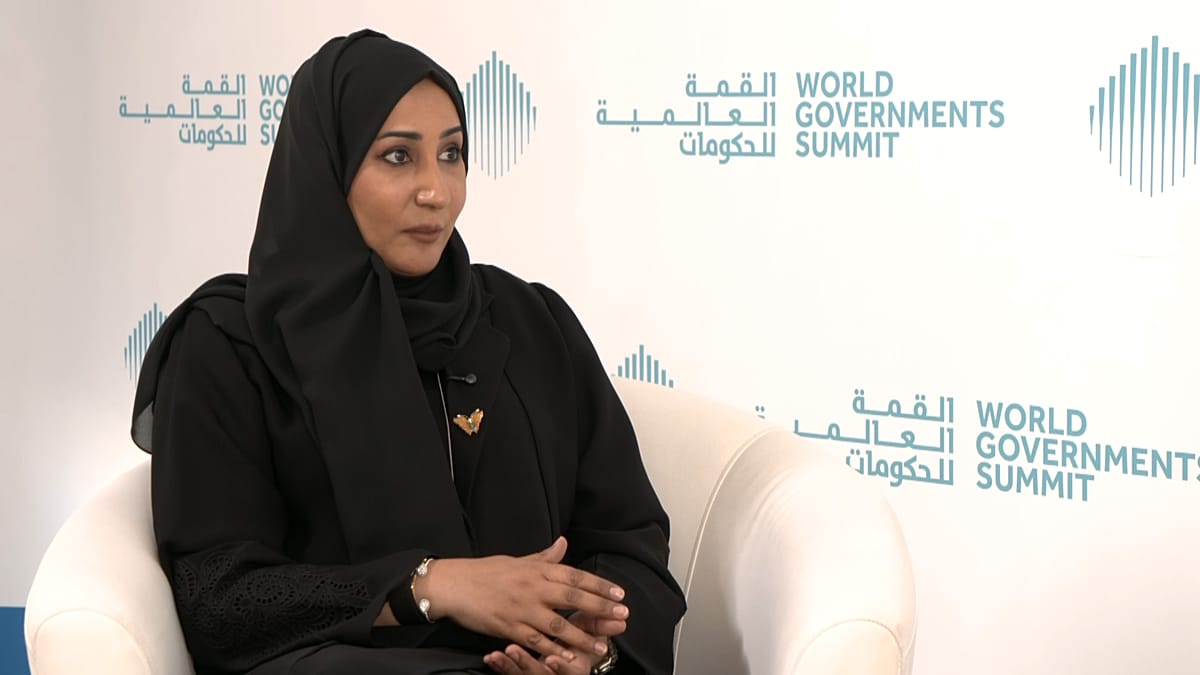
On the sidelines of the World Governments Summit, Dr. Shaikha Salem Al Dhaheri, Secretary General of the Environment Agency – Abu Dhabi, told Euronews that science-led policy and long-term regulation can reverse environmental damage to oceans and coastal ecosystems.
Asked about the scale of the challenges facing the world’s seas, Al Dhaheri said climate change and human activity are placing unprecedented pressure on coastal communities and marine biodiversity.
“Many, many cities around the world are placed in front of water, are coastal cities,” she said. “And today, we know that climate change is having unprecedented challenges for the communities that live along the coast. Sea level rise, biodiversity loss. Acidity of the water, which means that we are losing nature at a faster rate than ever.”
She added that rapid development and economic activity along coastlines have increased the strain on ecosystems that also support livelihoods and core services.
‘It’s never too late’ to pull oceans back from the brink
When asked whether the world is approaching a point of no return, Al Dhaheri rejected that assessment, pointing to Abu Dhabi’s experience as evidence that recovery is possible.
“If I answer your question from Abu Dhabi’s perspective, I would say it’s never too late,” she said. “From our experience, we did face an over-exploitation of our fisheries, which was at 8 per cent seven years back. And with that science, with the data, and also with the correct regulation, and enforcement, we were able to rebound this stock up to 100 per cent end of 2025.”
She said leadership support, combined with data-informed decision-making, had been central to that recovery, noting that global fish stocks remain under far greater pressure.
“There are many other stories that really are built around science, innovation, and decision making that make today’s nature bounce back at a faster rate than ever,” she said.
Initiatives aimed at building resilient marine ecosystems
Al Dhaheri highlighted several initiatives launched under her remit, including the Sheikh Hamdan Bin Zayed RICHEST SEAS initiative, aimed at building resilient marine ecosystems, alongside expanded protected areas, mangrove restoration, and large-scale coral reef rehabilitation.
“We were also able to plant 50 million mangrove saplings in the last five years,” she said, adding that Abu Dhabi is targeting 100 million mangroves by 2030. She also pointed to coral restoration efforts involving millions of fragments and the mobilisation of advanced marine research vessels to better comprehend climate impacts in the Arabian Gulf.
Reflecting on the role of the World Governments Summit, Al Dhaheri said the event provides a critical platform for governments to exchange knowledge and learn from one another.
“We are remarkably proud that the United Arab Emirates, and specifically Abu Dhabi, can play a leading role,” she said. “It can really serve as a beacon of hope to instil that sustainability as something that can be achieved through multiple coordination, through multiple cooperation.”
She added that innovation in governance, law and policy is as important as technology in securing long-term environmental sustainability.
Watch the full interview with Dr. Shaikha Salem Al Dhaheri from the World Governments Summit in the video above.