
Close Menu
Daily Guardian EuropeDaily Guardian Europe
  • Home
  • Europe
  • World
  • Politics
  • Business
  • Lifestyle
  • Sports
  • Travel
  • Environment
  • Culture
  • Press Release
  • Trending
What's On

Top Russian general killed in apparent car bomb explosion in Moscow

December 22, 2025

Kobyz and the Yurt: Central Asia’s living knowledge enters UNESCO’s Intangible Heritage Lists

December 22, 2025

Ukraine’s security guarantees have been put in Putin’s hands – POLITICO

December 22, 2025

Culture Digest: The best things to do, hear, see or watch in Europe this week

December 22, 2025

Q&A A lack of grid flexibility threatens to short-circuit Britain’s electrification – POLITICO

December 22, 2025
Facebook X (Twitter) Instagram
Web Stories
Facebook X (Twitter) Instagram
Daily Guardian Europe
Newsletter
  • Home
  • Europe
  • World
  • Politics
  • Business
  • Lifestyle
  • Sports
  • Travel
  • Environment
  • Culture
  • Press Release
  • Trending
Daily Guardian EuropeDaily Guardian Europe
Home»Environment
Environment

Nearly half of the world’s most destructive wildfires have occurred in the last decade, study warns

By staffOctober 3, 20253 Mins Read
Nearly half of the world’s most destructive wildfires have occurred in the last decade, study warns
Share
Facebook Twitter LinkedIn Pinterest Email

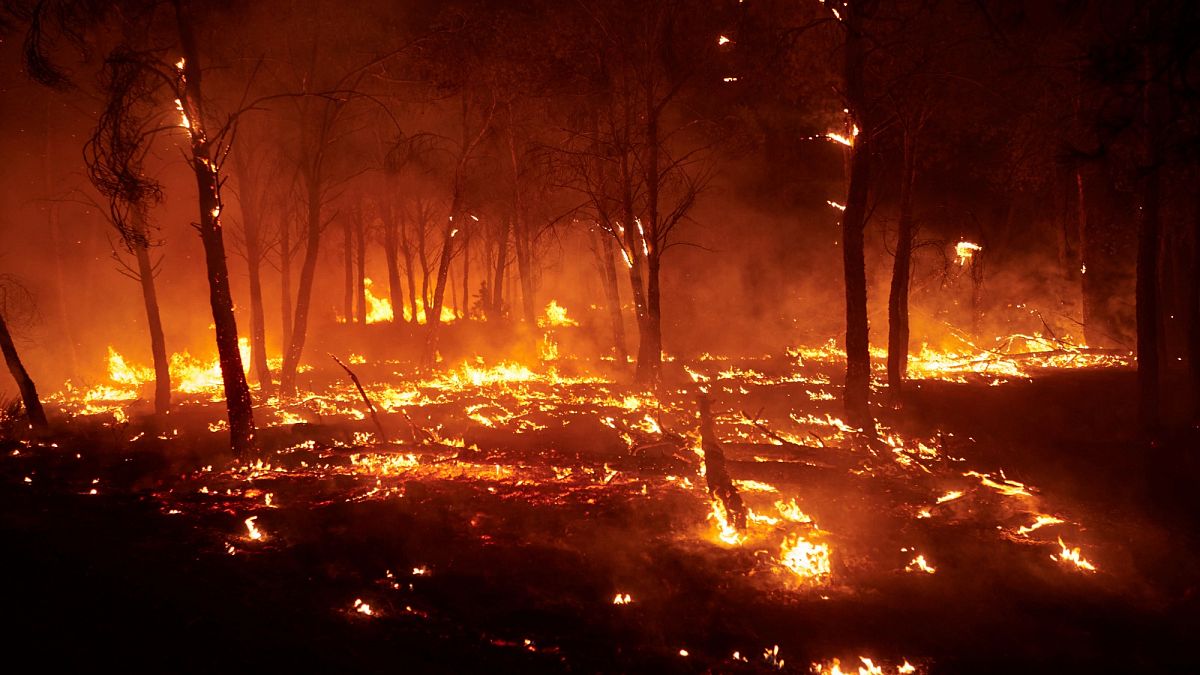
Wildfires are becoming more disastrous and costly, a new study reveals. 

Climate change makes natural environments more prone to wildfires. A new study, published in Science, shows how wildfires have become more frequent and disastrous in the past 44 years. 

Fire is a natural process that is important for the health of ecosystems. But climate change, land mismanagement, and expansion into flammable landscapes have intensified fire risks. These wildfires are becoming more lethal and expensive.

Worsening fire seasons

This summer saw a record amount of fire destruction across the European continent. Not all countries are affected equally: Spain and Portugal have recorded the worst damage, with climate change fuelling wildfires of “unprecedented intensity” 

This new study analysed global disaster databases spanning 1980 to 2023. They identified major wildfire disasters – those that caused 10 or more fatalities or were among the 200 largest wildfire-related economic losses relative to national GDP. Researchers observed distributions, trends, and conditions.

Their analysis revealed that globally, wildfires are becoming more frequent and costly over time. Nearly half of the most damaging events during the time span they looked at occurred in the past decade. This is likely attributable to increasingly extreme fire weather in vulnerable and densely populated areas.

How does Europe compare?

As with the global trend, wildfire events and damage costs increased substantially in Europe in the past decade.

Wildfire disasters also tended to be concentrated in certain areas. The study found that  Mediterranean forests were among the more fire-prone biomes. Mediterranean biomes experienced 6.7 times more disasters than expected based on their population sizes. 

While North America saw the largest increase in absolute damage costs across the time period, Europe also had its share of “billion-dollar events” – wildfires that caused over a billion USD in damage. 

How can countries prepare?

This study highlights a need for fire adaptation, especially as wildfires begin to emerge in the margins of affluent urban areas. 

The EU has  promised to strengthen its firefighting capabilities, deploying teams in the most vulnerable regions. However, as Euronews reported in September, activists and scientists claim that governments are still failing to prioritise prevention. 

The study authors highlight the importance of being proactive with fire management and managing fuels through targeted prescribed burning. They also emphasised the need for initiatives that focus on helping citizens affected by fires. 

“Mitigation must also address strategies to reduce fatalities by increasing evacuation effectiveness, especially for socially vulnerable populations who are the most likely to be killed in wildfires, as well as designing fire structures and defensible spaces where people can ‘shelter in place,’” the authors write. 

Share. Facebook Twitter Pinterest LinkedIn Tumblr Email

Keep Reading

Schools told to keep children indoors and flights cancelled as air pollution peaks in Sarajevo

Love Island for lizards: Critically endangered iguanas now thriving thanks to matchmaking project

ATP introduces new extreme heat rule to protect players during men’s tennis matches

‘Hot droughts’ could push the Amazon into a hypertropical climate by 2100 – and trees won’t survive

Economic growth has been linked to rising emissions for decades. Now, the ‘opposite is happening’

‘Sophisticated’ criminals busted as 30,000 live animals seized in wildlife trafficking crackdown

From Nike to H&M: How the fashion industry’s ‘big green plan’ is worsening microplastic pollution

‘A planet in peril’: UN calls for global climate investment to unlock €17 trillion benefit by 2070

Deep-sea mining tests impact more than a third of seabed animals, landmark study warns

Editors Picks

Kobyz and the Yurt: Central Asia’s living knowledge enters UNESCO’s Intangible Heritage Lists

December 22, 2025

Ukraine’s security guarantees have been put in Putin’s hands – POLITICO

December 22, 2025

Culture Digest: The best things to do, hear, see or watch in Europe this week

December 22, 2025

Q&A A lack of grid flexibility threatens to short-circuit Britain’s electrification – POLITICO

December 22, 2025

Subscribe to News

Get the latest Europe and world news and updates directly to your inbox.

Latest News

Exclusive: Eva Kaili doubles down on ‘Belgiangate’ after fresh wave of Brussels scandals

December 22, 2025

Two gunmen threw homemade bombs that failed to detonate at crowd celebrating Hanukkah in Sydney

December 22, 2025

US threatens European companies. Why it may not have the desired effect

December 22, 2025
Facebook X (Twitter) Pinterest TikTok Instagram
© 2025 Daily Guardian Europe. All Rights Reserved.
  • Privacy Policy
  • Terms
  • Advertise
  • Contact

Type above and press Enter to search. Press Esc to cancel.