



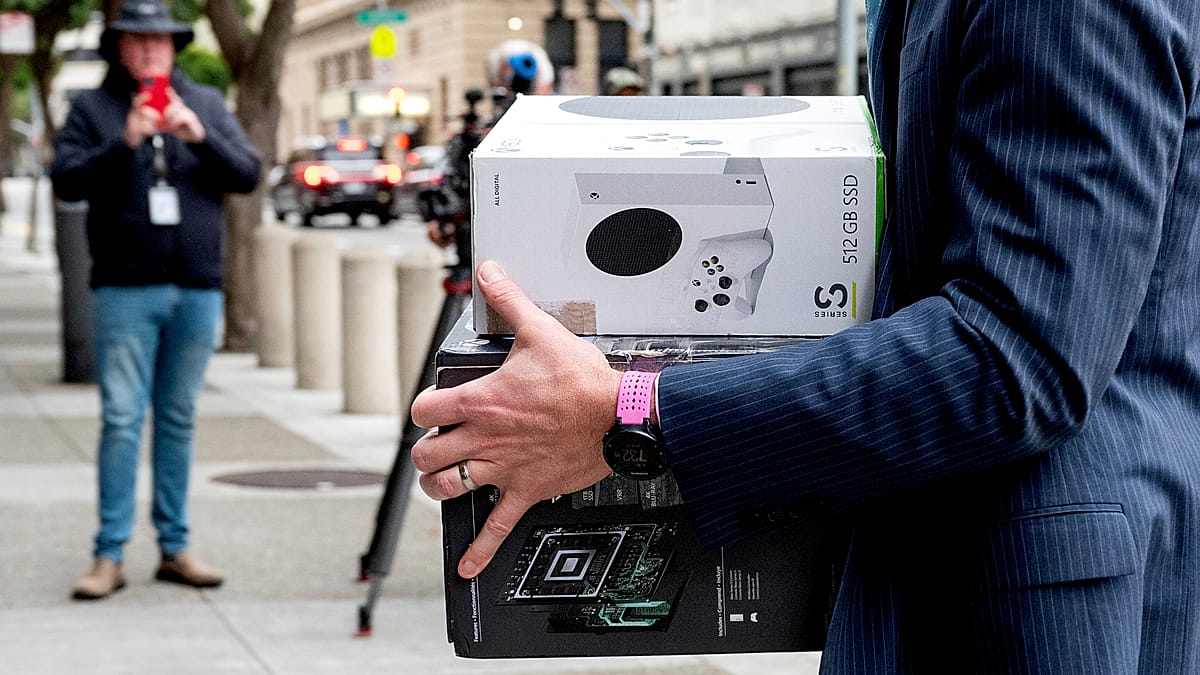
Microsoft said on Thursday it will raise the price of its Xbox video game consoles worldwide by between $100 and $150 from 1 August, blaming soaring storage and memory costs driven by AI-related demand.
Editor’s note: Euro figures are approximate conversions based on today’s exchange rate and do not reflect official pricing from the companies.
In the United States, the cheapest Xbox, the Series S, will increase to $500 (about €440) this summer, while the Series X will cost as much as $800 (about €705). The company has not yet released prices for Europe, where the Series X currently sells for about €600.
The 2TB model will be discontinued.
This is the third price increase for Xbox after a worldwide hike in May 2025 and another increase, limited to the United States, in October.
Consumer electronics manufacturers have all been affected by rising component costs. In recent months, Sony and Nintendo have also raised the prices of their game consoles, and Apple announced on Thursday substantial price increases for its Macs and iPads.
Apple begins AI-driven price rises after earlier warning
Apple on Thursday followed through on chief executive Tim Cook’s warning earlier this month that price rises had become “unavoidable”, announcing higher prices for Macs and iPads as AI-driven demand for memory chips continues to push up costs.
In Thursday’s announcement, the Cupertino-based company described the demand spike as an “unprecedented challenge” for the consumer electronics industry.
In a written statement cited by AP, Apple said: “The rapid expansion of AI data centres has created an extraordinary surge in demand for memory and storage. We have never seen a component price increase this much, this quickly.”
The new entry-level MacBook Neo will cost $100 (about €90) more, while the 512GB MacBook Air and the 256GB iPad Pro Wi-Fi will each cost an extra $200 (about €175). The 1TB MacBook Pro will become $300 (about €265) more expensive, while the 128GB iPad Air will cost an additional $150 (about €130).
Analysts expect iPhone prices to rise later this year.
IDC analyst Nabila Popal said the latest increases were larger than expected, suggesting iPhone prices could also rise more sharply than anticipated, perhaps by as much as $200 (about €175) for the iPhone Pro and Pro Max models.
“I think the days of $50 price increases are over,” she said.
Apple said in the written statement cited by AP that while it had shielded customers from the component price surge until now, “we have now reached a point where we need to begin raising prices on a number of products, including today’s increases for iPads and Macs. We know this is not welcome news, and we are working tirelessly to find solutions.”
Apple shares fell $13.29, or 4.5%, to $279.88 in afternoon trading on Thursday.
AI boom reshapes the economics of consumer electronics
The accelerated construction of data centres for AI training and applications has sent the cost of memory and storage chips soaring. These components are used in virtually all electronic devices.
This market, dominated by giants such as South Korea’s Samsung and SK Hynix and US-based Micron, has suffered major supply shortages for several months, driving prices higher.
The cost of storage and memory chips has more than doubled and is expected to double again by late 2027, Microsoft said on Thursday.
The Redmond-based company also noted that consoles, unlike phones or computers, “are typically not sold at a profit, but instead for less than they cost to make.”
Its Japanese rival Sony raised the price of its PlayStation 5 by €100 in Europe in early April, bringing the standard version to €650.
Nintendo has announced a price increase of more than 6% from 1 September for its Switch 2. On Monday, US-based company Valve launched its new Steam Machine at more than $1,000 (about €880) for the base version, making it more expensive than expected.
The third-largest console maker after Sony and Nintendo, Microsoft had previously cut the price of its Xbox Game Pass subscription in April, which players considered too expensive.
Microsoft’s gaming division, which accounted for about 8% of its revenue during fiscal year 2025, underwent a major restructuring in February amid declining revenue, particularly from Xbox sales, and the disappointing performance of new games.