
Meta and YouTube have to pay a 20-year-old woman $6 million (€5.1 million) in damages after a jury decided that the social media companies designed their platforms to addict young users.
The plaintiff, known by her initials KGM, testified at the trial that she spent up to 16 hours a day on social media platforms, specifically Meta platforms and Google’s YouTube, as a child and that it exacerbated mental health struggles.
The jury agreed and, after 40 hours of testimony, asked for $3 million (€2.54 million) in damages.
Jurors later recommended an additional $3 million in punitive damages after deciding the companies acted with malice, oppression or fraud in harming children with their platforms. The judge has final say over how much damages are awarded.
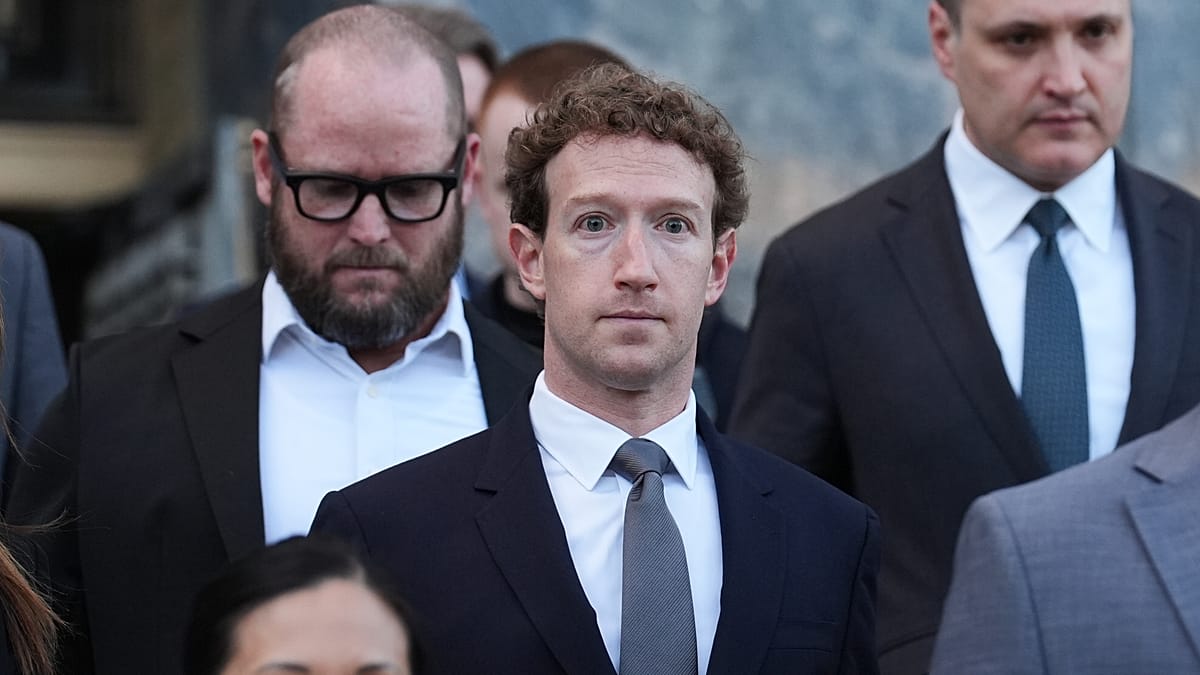
One juror told reporters after the verdict that Meta CEO Mark Zuckerberg’s testimony did not “sit well” with the jury.
The jury decided the penalty amount because they were concerned about giving one plaintiff a large lump sum, but they wanted the companies to understand that their practices were unacceptable.
The California lawsuit was a “bellwether trial” that will likely influence how thousands of other cases against social media companies that deal with deliberate harm will be tried.
Meta ‘more negligent’ than YouTube, jury says
Meta and YouTube are negligent with how they designed their responsible platforms, the jury said and that negligence caused harm to KGM.
Each company knew its platforms could be dangerous when used by a minor, yet the companies did not adequately warn of this danger, the jury added.
Meta is more responsible for harm against KGM, shouldering 70 percent of the $6 million and YouTube pays the remaining 30 percent.
During the six-week trial, jurors listened to lawyers’ arguments, evidence, and testimony from Zuckerberg and Adam Mosseri, the head of Instagram.
KGM’s lawyers argued that specific design features, such as “infinite scroll,” which lets users continuously scroll and watch videos that start because of autoplay.
The verdict misrepresents YouTube, “which is a responsibly built streaming platform, not a social media site,” according to its parent company, Google’s spokesperson Jose Castañeda.
Teen mental health is “profoundly complex and cannot be linked to a single app,” Meta said in a statement to the Associated Press.
Meta argued during the lawsuit that KGM’s mental health struggles were due to a turbulent life at home, not their social media use.
YouTube’s arguments focused more on the nature of the platform, which is equivalent to television rather than a social media platform. Lawyers for YouTube also noted that KGM’s YouTube use went down as she aged.
Lawyers representing both platforms also pointed to their safety features and guardrails for users to monitor and customise their use.
Thousands of cases pending could be influenced by verdict
Sarah Kreps, a professor and director of Cornell University’s Tech Policy Institute, said that the verdict could guide the resolution of “thousands” of other pending cases throughout the United States.
“So the concern if you’re a social media platform is, as this case goes, so might these others,” she said. ‘Once you have this type of verdict in one case, it just opens the floodgates for so much more.”
Peter Ormerod, an associate professor of law at Villanova University, called the verdict “a momentous development”.
However, he noted that the public shouldn’t expect to see changes to the platforms immediately because this case is “one step in a much longer saga.”
“I don’t think it is an unequivocal victory and I think there’s a long way to go before you see something akin to the master settlement that this is often analogised to in the tobacco and opioid litigation,” he said.
To see significant change, Ormerod said Meta and Google would likely have to lose their legal arguments on appeal and other test cases like this one.
It’s the second ruling for Meta in a week, after a jury in New Mexico issued the company a $375 million (€317 million) penalty after determining that the platform knowingly harmed children’s mental health and concealed information about child sexual exploitation.
The decision, issued Tuesday, is that Meta engaged in “unconscionable” trade practices that unfairly took advantage of the vulnerabilities and the inexperience of children.
More than 40 state attorneys general have filed lawsuits against Meta, claiming it’s contributing to a mental health crisis among young people by deliberately designing Instagram and Facebook features that are addictive.