



Mauritius has long been a prime destination for beach holidays and dreamy coastal resorts.
But the island nation located off the southeastern coast of East Africa is keen to broaden travellers’ perspectives.
It’s luring visitors to its inland natural paradise through sports and outdoor adventure tourism, while encouraging hotel guests to visit its towns to discover its multicultural identity.
“Mauritius is a tropical island destination, so we’re very well known for our beautiful beaches and turquoise Indian Ocean,” Dinesh Burrenchobay, chairman of the Mauritius Tourism Promotion Authority, tells Euronews Travel at the ITB Berlin travel trade fair.
But he emphasises that there are far more experiences to explore on the island. He encourages visitors to go hiking with a guide to the 7 Coloured Earth Geopark, a multicoloured geological formation in the Chamarel plain.
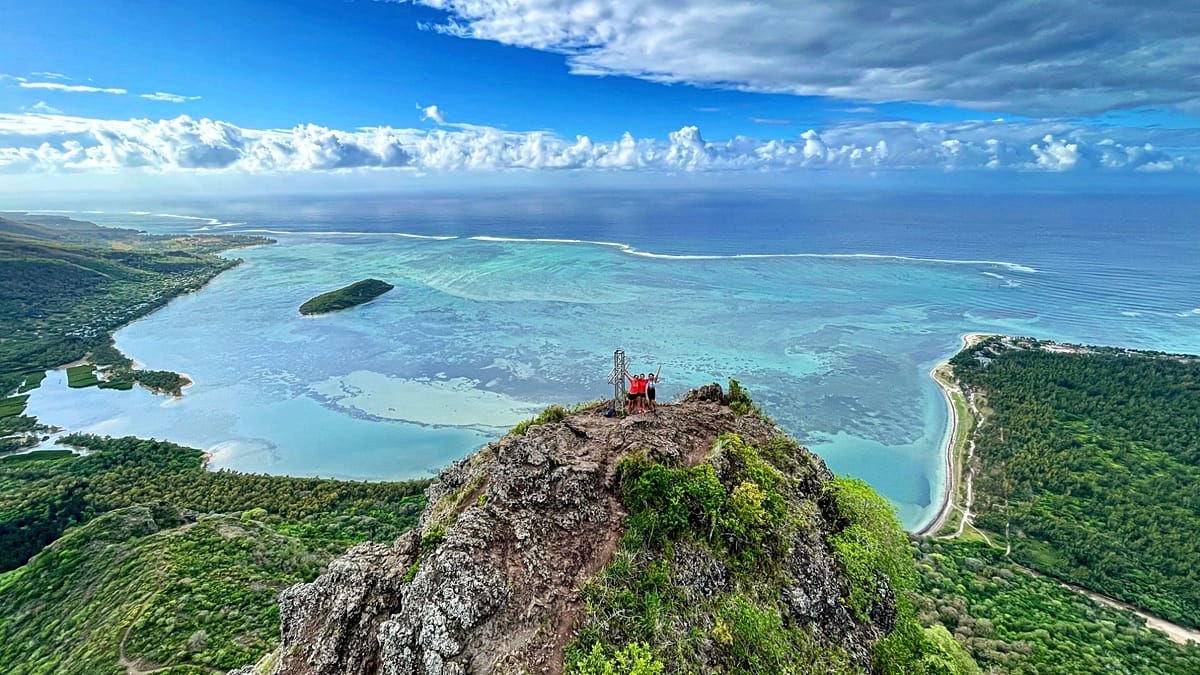
On the southwestern tip of Mauritius is Le Morne Brabant, a UNESCO World Heritage site featuring a 556-metre basaltic mountain. Hikers can also find more than 50 kilometres of trails within the Black River Gorges National Park, Mauritius’ largest protected national park.
Burrenchobay also recommends heading to the west coast for dolphin and whale watching, and taking a boat from the north coast to find little islets with peaceful swimming spots.
He says the island is already seeing travellers becoming more adventurous and spending time outside their hotels.
“Some hotels are also encouraging people to go outside, which is great obviously,” he says. “In 10 days, you can do much more than just being on the lounger.”
A multicultural island
Spending time outside your resort also means connecting with the island’s rich multicultural identity. “I like to say we’re one island but also several continents on one island,” says Burrenchobay.
One key way to delve into this cultural mix is through food. He recommends heading to the capital Port Louis, where you’ll find Chinese cuisine in Chinatown, which has been revived by the local Chinese population, as well as Indian and Creole restaurants.
Then there’s Mauritian food, which pairs rice with sauces like rougaille, a spiced tomato stew, lentils and traditional deer curry.
Visitors can also explore the various heritage sites. While in Port Louis, stop at Marie Reine de la Paix, a Roman Catholic shrine located on the slopes above the town, and Jummah Mosque, one of the oldest mosques in the Indian Ocean.
In the centre of the island is Ganga Talao, a sacred crater lake surrounded by temples and shrines, which is considered the most holy Hindu site on the island.
“I think a lot of tourists who come to Mauritius are always a bit blown away by the fact that it’s such a small country with these people living side by side and very peacefully,” says Burrenchobay.
Regenerative tourism
While there is plenty to experience on the island, Mauritius’ beaches and coastline remain a key draw.
Burrenchobay emphasises that authorities are focusing on combating the effects of climate change on these areas, such as introducing protections against coastal erosion and switching increasingly to renewable energy sources.
The island would also like to explore regenerative tourism more. “I think we should involve tourists in actions that help the local community around hotels,” he says.
“It’s already being done, but I think we can do more and, importantly, do things that make us a better place.”
He wants to see tourists “make a difference” so that they leave the island in a way that makes them “want to come back again”.