



Two injured in Iranian attacks on UAE capital Abu Dhabi
The capital of the United Arab Emirates came under Iranian attack on Monday, with two people sustaining wounds by shrapnel from interceptions in Abu Dhabi, authorities reported.
Seoul to cap oil prices to stabilise soaring fuel costs
South Korea says it will cap oil prices for the first time since 1997 to stabilise soaring fuel costs driven by the Iran War.
Kim Yong-beom, the presidential policy chief of staff, said in a briefing on Monday that Seoul plans to introduce the caps sometime this week.
The government did not immediately provide details on how the caps would be structured and operated.
The move will help make fuel prices more predictable and prevent refineries and gas stations from raising prices “abnormally,” said Kim.
The Korea National Oil Corporation says it is holding several months’ worth of strategic oil reserves at nine storage facilities across South Korea, a stockpile that exceeds the International Energy Agency’s recommendation of 90 days.
South Korea last released its strategic reserves, which are used to address serious supply disruptions, in 2022 when Russia’s invasion of Ukraine shocked global energy markets.
Turkey deploys jets, air defence systems in northern Cyprus
Ankara has deployed six F-16 fighter jets and multiple air defence systems to the Turkish-Cypriot part of the divided island of Cyprus to bolster its security, according to an announcement by the defence ministry.
A ministry statement released on Monday noted that additional measures would be taken if deemed necessary.
The move comes after a British air base on Cyprus’ southern coastline was hit by an Iranian drone last week.
Ankara maintains some 30,000 troops in northern Cyprus, which broke away from the Greek south in 1974. Turkey is the only country to recognise the northern administration.
Iran’s judiciary threatens asset seizures
Iran’s judiciary reiterated that it can order the assets of “enemies” abroad to be seized in the country.
It made the announcement on Monday on the judiciary’s Mizan news agency.
Reporters for Farsi-language media outlets abroad have seen their assets seized over the years, in what they described as politically-motivated attacks aiming to limit dissent.
The report also said “any intelligence or espionage activity conducted” abroad for the Israeli or US governments “could lead to the confiscation of all assets and even the death penalty.”
Drone barrage fired towards Saudi Arabia
A barrage of drones was fired toward Saudi Arabia early on Monday, just hours after an attack killed two Bangladeshi nationals in the Gulf nation.
The Saudi Defence Ministry said it intercepted drones in the northern Jawf region, as well as the vast Shaybah oil field.
An attack late on Sunday evening killed the two Bangladeshi citizens and wounded 12 others in the central city of Kharj. All but one of the victims was from Bangladesh.
Israel’s military warns of new missile fire from Iran
Israel’s military warned on Monday that it has detected a new incoming missile barrage fired from Iran.
Residents reported sirens sounding in several parts of northern Israel, as authorities urged people to seek shelter and exercise caution.
Bahrain’s state oil company declares force majeure on shipments
Bahrain’s state oil company declared force majeure on Monday for its shipments after an Iranian attack set its refinery ablaze.
The state-run Bahrain News Agency carried the announcement of the force majeure, a legal manoeuvre that releases a company of its contractual obligations because of extraordinary circumstances.
It said the company’s operations “have been affected by the ongoing regional conflict in the Middle East and the recent attack on its refinery complex.”
UAE says air defences working to intercept drones and missiles from Iran
The United Arab Emirates said on Monday its air defences were working to intercept drones and missiles incoming from Iran, the second time in the day it faced an attack.
Iranian attack sparks fire at Bahrain’s sole oil refinery
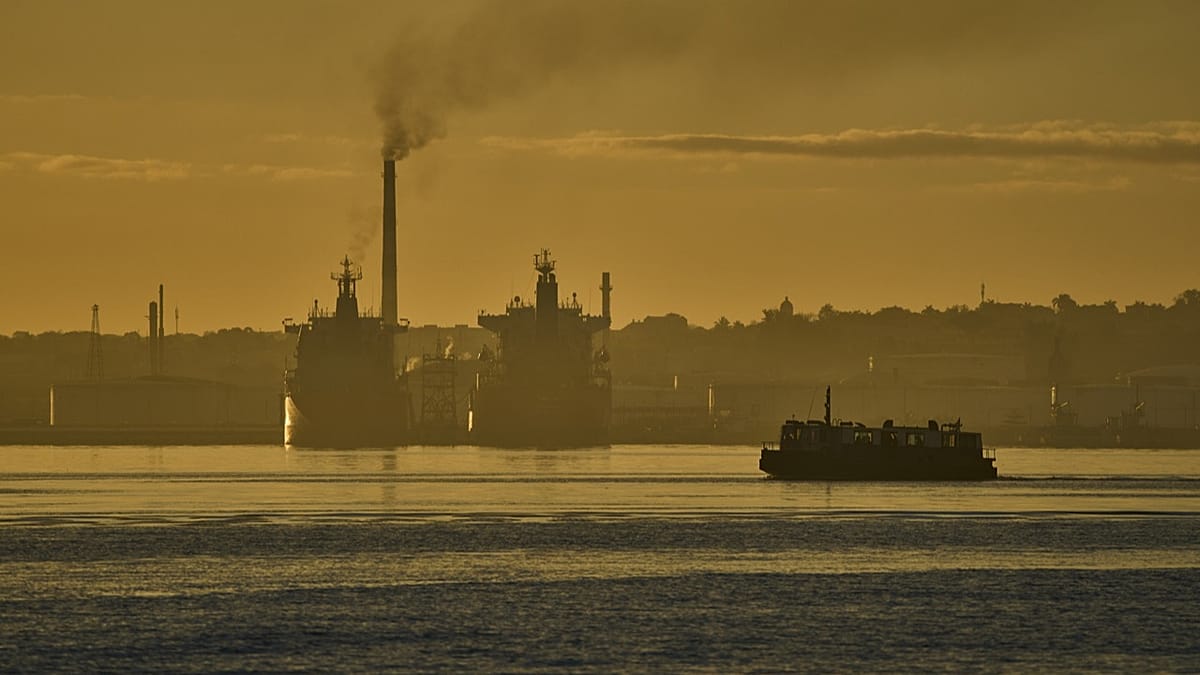
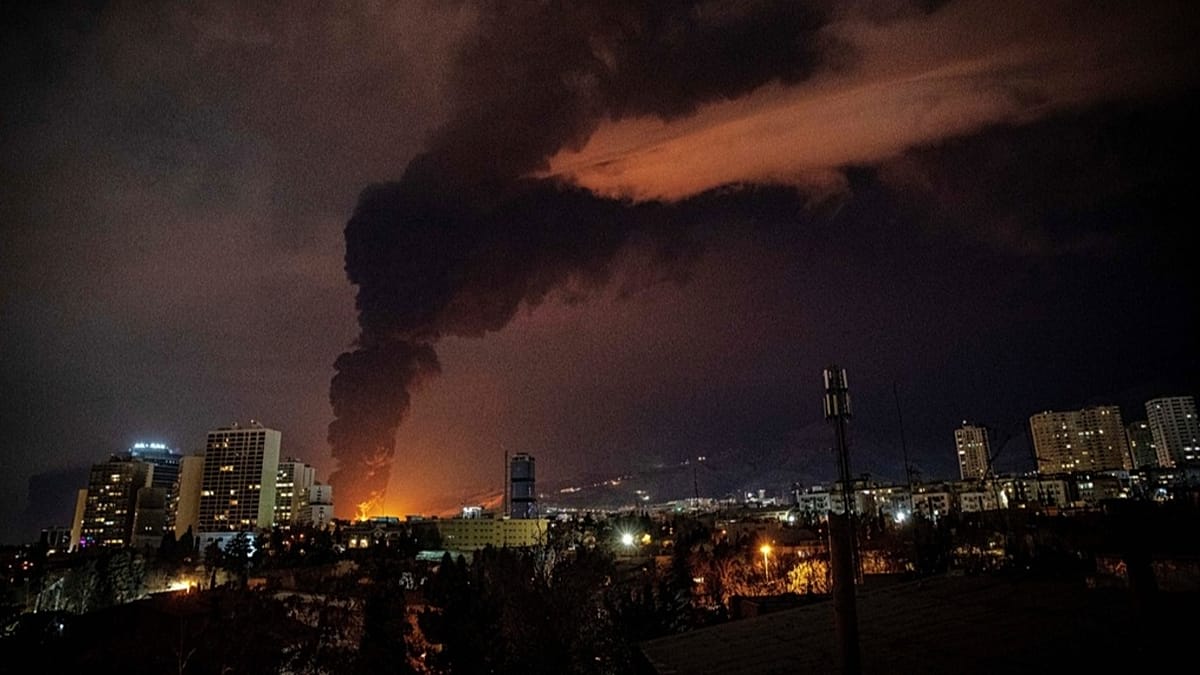
An Iranian attack on Monday on Bahrain sparked a fire apparently at the island kingdom’s sole oil refinery, sending thick plumes of smoke into the air.
Online videos show fires raging at the Sitra refinery.
The state-run Bahrain News Agency later published a report saying “a fire broke out due to the Iranian aggression targeting a facility in Maameer, with material damage but no loss of life.”
Maameer is a Bahraini village adjacent to the refinery.
Bahrain’s government did not immediately identify the refinery itself as being hit, though it has been a target of repeated Iranian attacks since the war began.
Israeli military claims strikes on Isfahan
The Israeli military claimed strikes on Monday on targets in Iran’s city of Isfahan targeting security forces there.
The Israelis described hitting command centres for Iran’s paramilitary Revolutionary Guard and its all-volunteer Basij force there.
The military also said it hit a rocket engine production facility and missile launch sites.
Iran did not immediately acknowledge the strikes. Iran has not provided any details on its materiel losses since the war started on 28 February.
China envoy urges end to fighting
A Chinese envoy to the Middle East has called on all sides to stop their military actions and said attacks on non-military targets and civilians should be condemned.
Special Envoy Zhai Jun, meeting in Saudi Arabia with Foreign Minister Prince Faisal bin Farhan, said Sunday that the sovereignty, security and territorial integrity of all Gulf countries must not be violated, a Chinese Foreign Ministry statement said.
China is a major importer of oil and natural gas from the region.
Zhai also met Jassim Mohammed al-Budaiwi, the secretary-general of the Gulf Cooperation Council, the Foreign Ministry said.
South Korea’s president urges officials to diversify oil trade routes
South Korean President Lee Jae Myung on Monday warned that a steep rise in fuel prices could rattle the country’s economy and called on officials to accelerate efforts to diversify fuel routes away from the Strait of Hormuz.
Lee spoke at a Cabinet meeting after the country’s stock market opened with an 8% plunge, as concerns grew about how the spiralling war in the Middle East could affect an economy heavily dependent on trade and imported fuel.
Lee called on officials to aggressively use a 100 trillion won (€58 billion) market stabilization fund activated last week to reduce volatility in stock markets and strengthen monitoring of disruptive market activities, such as fuel price collusion or hoarding.
Foreign Minister Cho Hyun said Seoul was also negotiating with Gulf states to find alternative trade routes to reduce reliance on the Strait of Hormuz, including the possible use of alternative ports in the UAE.