
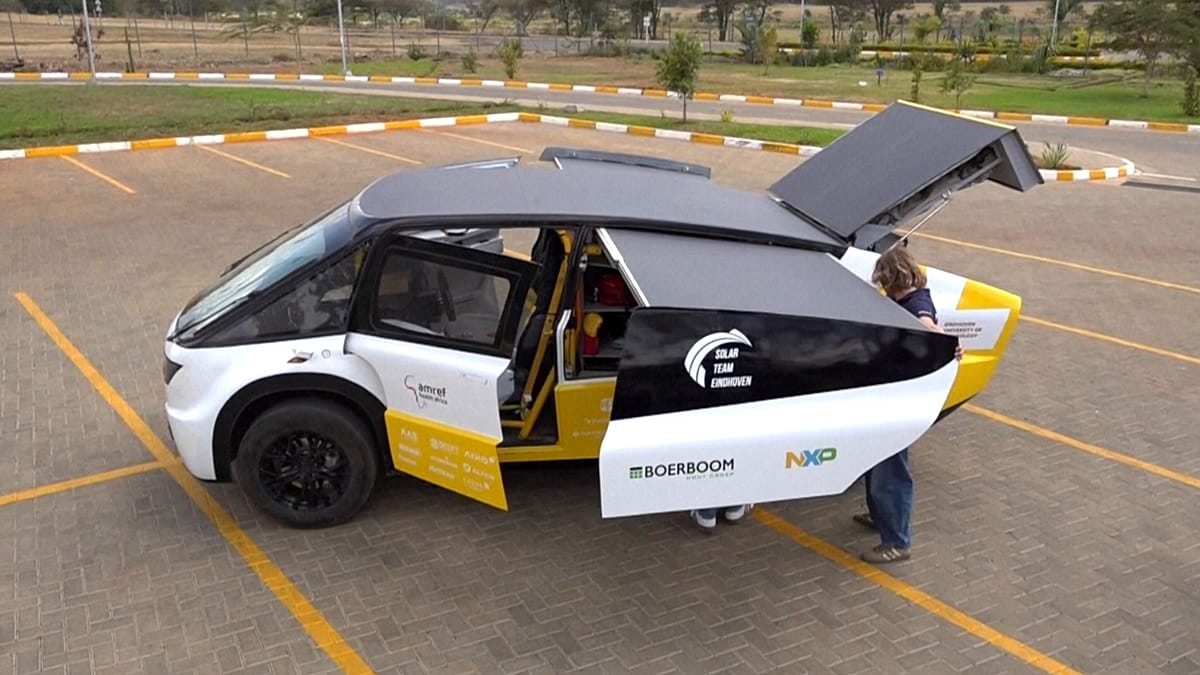
Known as Stella Juva, the vehicle was developed by students at Eindhoven University of Technology in the Netherlands. It is designed to reduce reliance on fossil fuels and electricity grids, which can be unreliable in some remote areas.
Yarno Basten, one of the innovators behind the project, said the idea came after discussions with NGOs working in Africa. They told the team that dependence on fuel and grid electricity could sometimes limit their ability to deliver healthcare.
A mobile clinic on wheels
Stella Juva is designed to function as more than an ambulance. It can carry medical equipment including an ultrasound scanner, portable X-ray equipment, a defibrillator and refrigeration for medical supplies.
Solar panels provide energy for both the vehicle and its medical equipment. But the amount of available energy means the team has had to carefully choose what equipment can be carried.
“It is very important to take the right equipment for the right use case because you can only use so much energy,” Basten said.
The vehicle can travel up to 715km on a single charge under favourable conditions and has a top speed of 120km/h.
The prototype is being tested on Kenyan roads, including dusty and uneven routes in Narok County.
Taking healthcare to patients
The project is being developed with input from healthcare professionals working in the communities it is intended to serve.
Geoffery Sadera, a project officer at Amref Health Africa, said the vehicle could help health workers carry out diagnostic screening in areas with limited access to electricity.
“It will enable us to go and screen mothers and babies, catch complications early and refer them in real time,” he said.
The vehicle could also support referrals between community health facilities and larger medical centres.
The World Health Organization estimates that hundreds of millions of people worldwide are served by health facilities with either no electricity or an unreliable supply.
For Stella Juva’s developers, the challenge is to see whether mobile renewable energy can help address both access to healthcare and access to reliable power.
The project remains at the testing stage as the team assesses how the vehicle performs in real-world conditions.
Video editor • Yolaine De Kerchove Dexaerde