
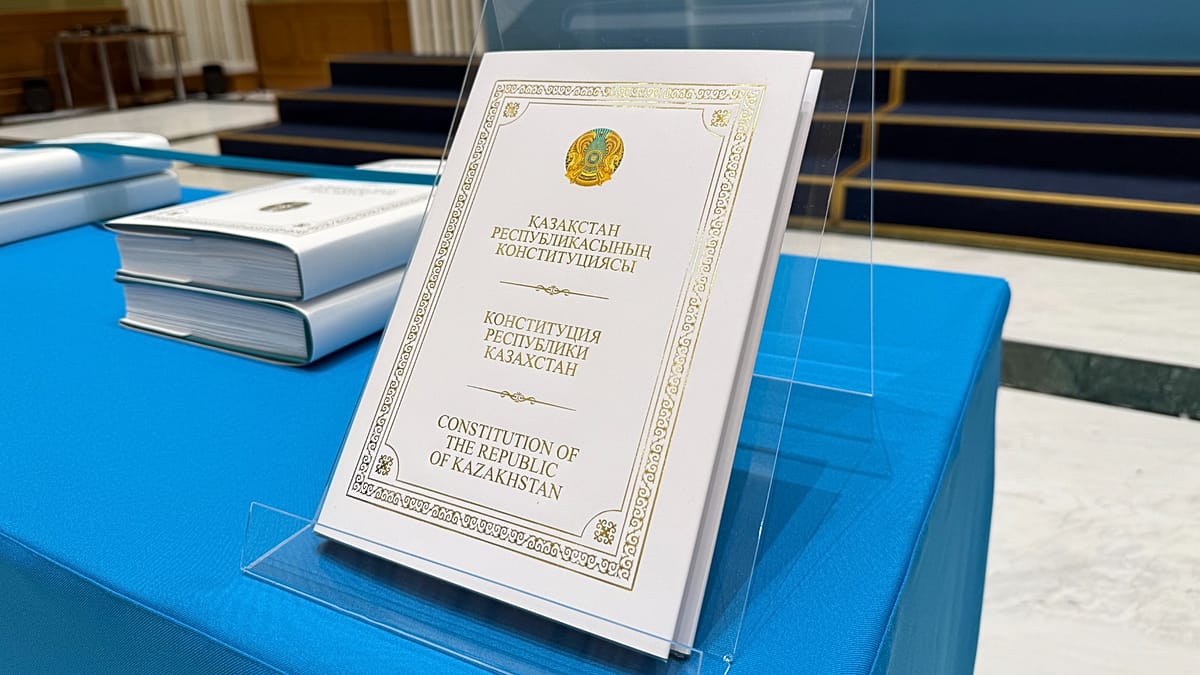
Kazakhstan’s new Constitution, which was adopted during March 15 nationwide referendum, entered into force on July 1, replacing the country’s bicameral legislature with a unicameral parliament.
Shortly after the new Basic Law took effect, Kazakh President Kassym-Jomart Tokayev signed a decree setting parliamentary elections for August 23.
The Central Election Commission will accept candidate nominations from July 2 to July 13, while the official campaign period will begin on July 23 and conclude on August 22, the day of electoral silence. The newly elected parliament is expected to begin work before the start of the political season on September 1.
Last session of the old parliament
The outgoing Mazhilis and Senate held their final joint session on June 30, marking the end of Kazakhstan’s bicameral parliament after three decades.
Addressing lawmakers, Tokayev described the session as historic, saying the outgoing parliament had overseen one of the country’s most significant periods of institutional transformation.
“Together, we have launched an irreversible process of transformation in the country, affecting absolutely every area of life, from the economic model to the system of social values,” he said.
The president said more than 300 laws had been adopted during the current convocation, including major constitutional legislation and new tax and budget codes. He said the next parliament would focus on maintaining economic growth, reducing inflation, improving public administration, cutting bureaucracy and attracting investment.
“Our main goal is to increase prosperity, ensure security, and improve the quality of life of citizens, making this indicator and the trend itself irreversible,” he added.
A new political party
Separately, Tokayev welcomed the merger of the biggest Amanat party into the newly established Adilet party.
Formed in April with the goal of supporting the implementation of the new Constitution, Adilet (Kazakh for justice) initially had around 120,000 members. Following the merger, their number will likely reach one million, making it the most influential party in the country.
Amanat has been the ruling party in Kazakhstan for almost 30 years. Formerly named Nur Otan, the party was created in 1999 from the electoral campaign headquarters, which supported ex-president Nursultan Nazarbayev in presidential elections of 1999.
It is yet unclear whether this political manoeuvre represents a broader political realignment or a rebranding of the country’s dominant political force. Experts say it will become clearer when parliamentary candidates will be announced.
Constitutional Court conference
Kazakhstan’s Constitutional Court marked the Constitution’s entry into force with a scientific conference on June 30. Chairperson Elvira Azimova said the new Basic Law for the first time enshrines such principles as the protection of sovereignty, the rule of law, human rights, national unity and the development of education, science and innovation as constitutional priorities.
The Constitution replaces the 1995 Basic Law, which had been amended six times, most recently in the 2022 referendum.
According to the member of the Constitutional Commission Zhaksybek Kulekeyev, unlike previous amendments that largely focused on presidential powers, the new document represents a comprehensive redesign of Kazakhstan’s political and constitutional system.
“This time, when it was announced that we would make changes to the constitution, people were suspicious. They wondered if our current president was also trying to extend his term. Now, we can say that all such suspicions are gone,” Kulekeyev explained.
President Tokayev did not change the conditions of his term, which will end in 2029, but emphasised that the country remains a presidential state with the president at the core of its decision-making processes.