
In April 2025, the European Union and Central Asian countries, Kazakhstan, Uzbekistan, Kyrgyzstan, Tajikistan and Turkmenistan, met in the historic city of Samarkand in Uzbekistan and pledged a new boost in cooperation, joint projects, investment and interconnectivity.
For the EU the event was especially important as the transportation routes through the five countries of Central Asia, connecting Europe with China are a valuable alternative for the now defunct corridors through Russia.
Just over a year later, Kazakhstan’s President Kassym-Jomart Tokayev arrives in Brussels to visit the Belgian government and to assess the delivery of the promises made to the EU in Samarkand.
He will meet the leaders of the EU who were present in the historic Kazakh city, European Commission President Ursula von der Leyen and the European Council President Antonio Kosta.
Ahead of the visit, several ministers of the government of Kazakhstan have been engaged in what can be described as “days of business opportunities in Kazakhstan” series of events in Brussels.
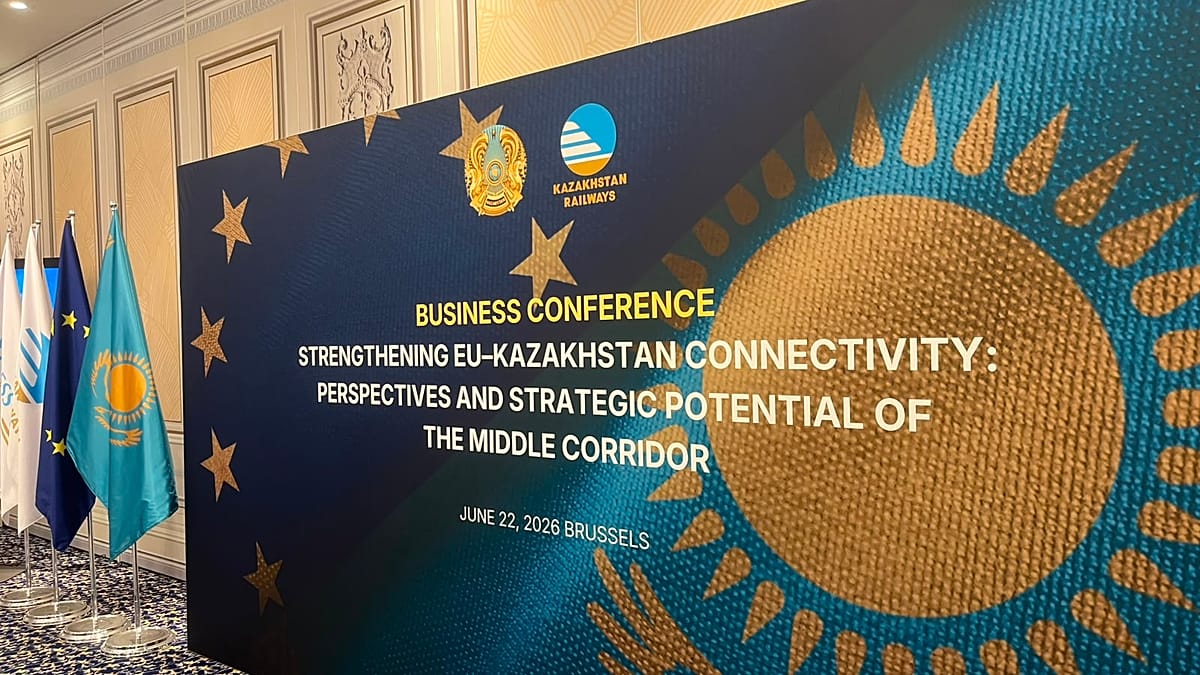
The main event that prepared Brussels for President Tokayev’s visit, organised by his administration, was the presentation of the so-called Middle Corridor, its development, and its business potential.
It is considered the most strategic project from the perspective of Europe and its economic supply chains.
What is the Middle Corridor?
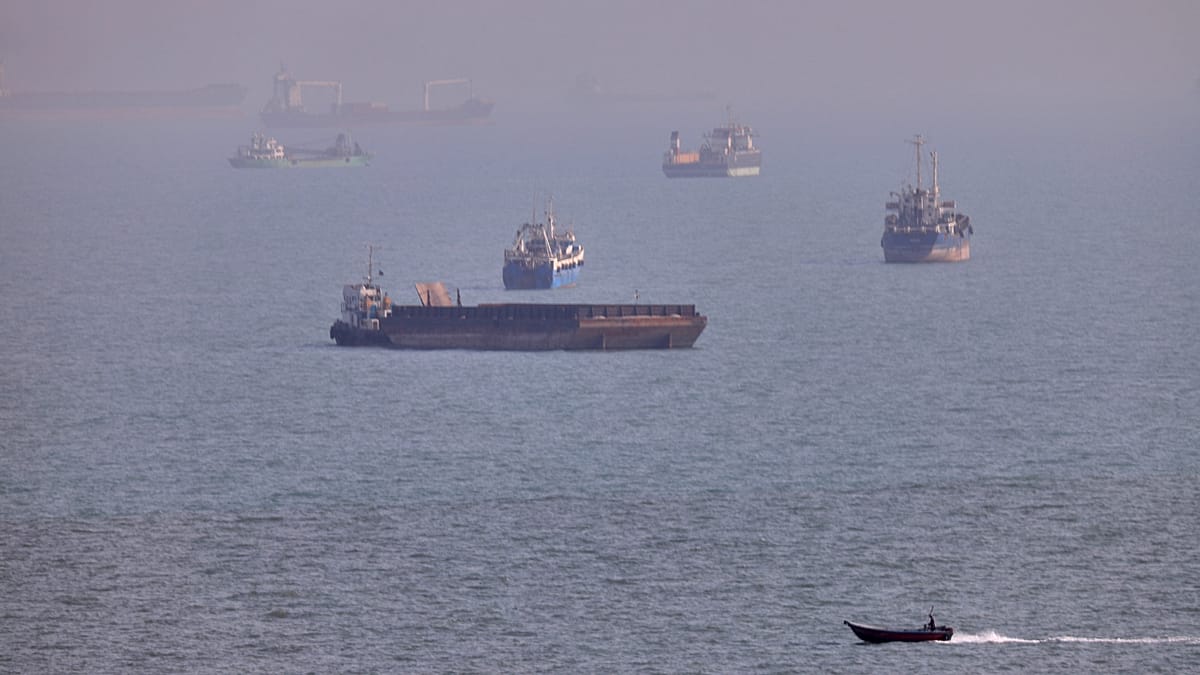
The Middle Corridor is envisioned as a modern version of the ancient Silk Road, a network of different roadways, railroads and maritime routes that connects China with the ports of the Black Sea.
It starts on the eastern Chinese coast, at the port of Lianyungang, runs through China, with the main hub in the city of Xi’an, and then enters Kazakhstan, from where it branches towards Uzbekistan to the South and the Caspian Sea to the west.
Then it turns maritime, connecting to ports in Azerbaijan and Georgia before ending at hubs in Romania, Hungary and Poland.
Under the current geopolitical circumstances, it is a vital transit route for goods transport between China and Europe. The Middle Corridor is also about 3,000 kilometres shorter than the Northern Corridor through Russia.
There are 13 international transit corridors through Kazakhstan, and the country has a highly developed railway system. With 100,000 employees, it is among the 10 largest railways in the world.
The event in Brussels brought together all the major stakeholders in this corridor to discuss the achievements, as well as the remaining challenges, bottlenecks, and potential added value to the project.
Kazakhstan’s Transport Minister Nurlan Sauranbayev and Railways of Kazakhstan Talgat CEO Aldybergenov introduced the achievements.
Kazakhstan pledged an investment of $50 billion in the corridor’s infrastructure by 2030. Almost $40 billion has already been utilised. More than 5,000 kilometres of railroads have either been thoroughly modernised or newly built.
As a result, what used to be a 55-day journey of goods from Xi’an to Georgia three years ago is now done within 18 days.
“It is ambitious task, to provide speedy, safe transport with maximum of transparency in tariffs and easy procedures. It should help both our exporters and importers and should enhance trade between Europe and Asia,” Aldybergenov said.
Listening were representatives of major global shipping companies, freight forwarders, investment banks such as the European Investment Bank and the European Bank for Reconstruction and Development, and representatives of EU institutions.
“Kazakhstan has already invested billions of dollars into infrastructure. So, we shall provide infrastructure, secure the digitalisation of all the processes, including the digitalisation of the capacity of transportation,” said Aldybergenov.
“We claim that this particular route is the most reliable and transparent for our European partners,” he added.
Kazakhstan aims to connect European and Chinese stakeholders in order to make supply chains more reliable. Recently, Kazakhstan’s railway company signed a major deal with the Chinese CGCT railroad administration to oversee the shipment of goods from China.
Several other aspects of the corridor development were discussed, namely the resolution of the maritime bottleneck on the Caspian shore, created by limited port capacity, the number of vessels, and the low profile of air cargo.
Kazakhstan has already bought two additional ships for the Caspian section of the corridor, with four more to be announced by the end of next year, and the port of Aktau has undergone major water-depth reconstruction.
“We also work on air transport, and it is our three-year plan to reconstruct and modernize all the runways of all the airports in the country. We have 27 airports and all of them are under reconstruction,” Sauranbayev said.
“We also work very hard on establishing cargo air traffic. We shall provide green corridor for all the companies that are interested in developing this line of business,” he added.
European Commission representatives welcomed the development achievements.
“The Middle Corridor has gone from a concept to something that is more than a concept, it is reality, it is moving forward and is the central pillar of our shared connectivity agenda,” said Charlotte Adriaen, Head of the Unit for Central Asia in the Directorate-General for International Partnerships (DG INTPA).
“It has also become, for us in the EU, what we call “the global gateway flagship”. It is, should be, and we want it to be a diversified, reliable and efficient transport link,” she added.
“Considering the geopolitical and geostrategic situation, it is more important than ever.”
Much of the discussion focused on aspects of the corridor development that are as important as the hard infrastructure, such as the digitalisation of processes using AI to reduce waiting times at the borders, highlighting the importance of transparency and predictability.
“Physical backbone still requires investment. I have talked to partners, and we expect to sign an important road project to Aktobe that is valued at $230 million, yet another important step towards increasing the corridor’s capacity,” said Husseyin Ozhan, Managing Director of EBRD for Central Asia and Mongolia.
Predictability is the key to investment. Shippers, freight forwarders and investors need consistent transport conditions, transparent border rules, tariffs, fee structures, and stable regulatory frameworks,” Ozhan said.
“Government and investment banks can build the corridor but it will only be successful when stakeholders see it is a first option for their business,” he explained.
Elsewhere in Brussels, two other ministers of Kazakhstan, Minister of Artificial Intelligence and Digital Development Jaslan Madiyev and Minister of Science and Higher Education Sayasat Nurbek, were discussing global trends in the development of artificial intelligence infrastructure, modern approaches to financing digital projects, as well as prospects for the implementation of large-scale initiatives in the field of data centres and high-performance computing in Kazakhstan.
Their aim was to promote the development of the Kazakhstan Data Center Valley project and the creation of conditions for attracting international investment in a new generation of AI infrastructure.