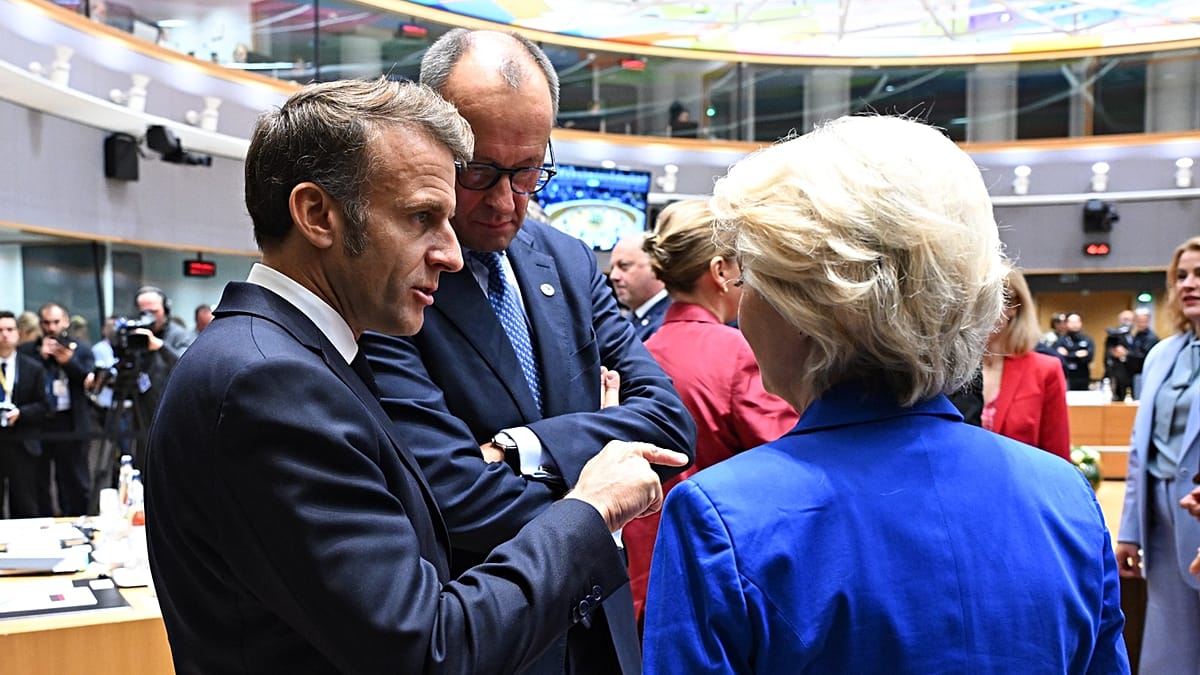


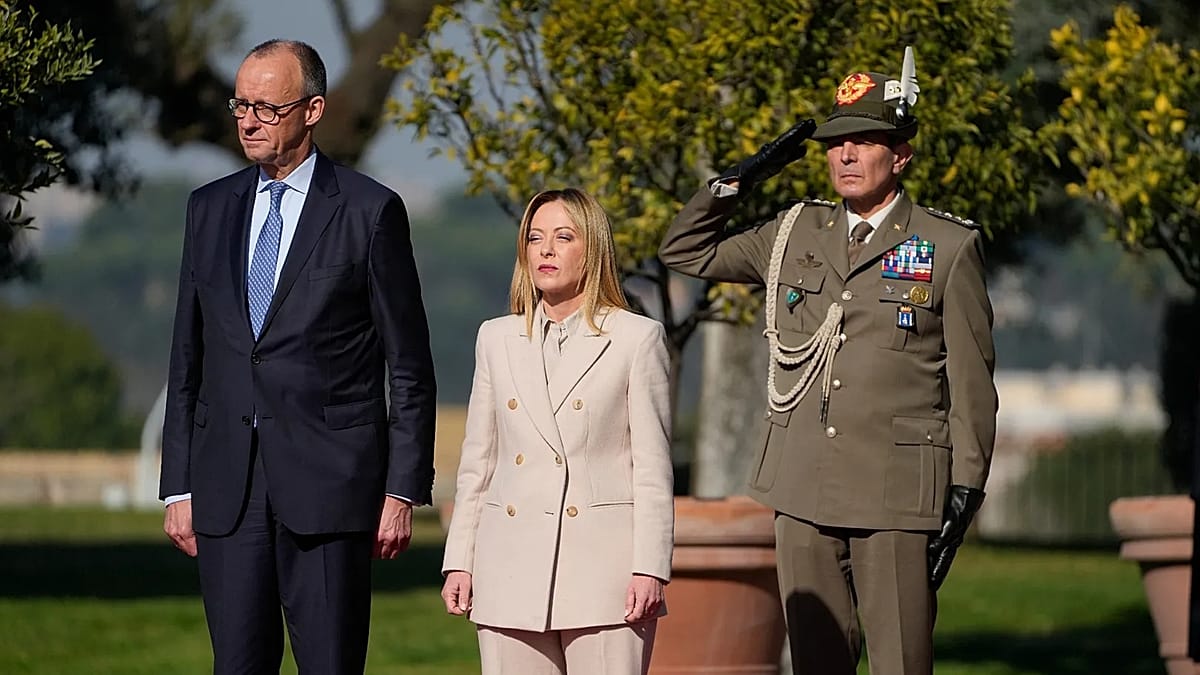
The summit focused on strengthening EU strategic autonomy, boosting industrial competitiveness – particularly the automotive sector – and deepening cooperation on defence, energy and migration.
“We must build an authoritative, competitive Europe with its own strategic autonomy,” said Meloni at a press conference following morning talks at Villa Doria Pamphili, “Italy and Germany have a special responsibility in this phase of history: the EU must choose whether to be the protagonist of its destiny”.
Following 75 years of diplomatic relations, “Italy and Germany are closer than ever before” Merz said, “We want to strengthen industrial competitiveness and enhance security”.
The German chancellor added that Europe must focus on key issues, including Ukraine, energy and “a strong NATO in an era of great power” that “does more for the Arctic”.
In a joint statement published earlier, the two heads of government reaffirmed the fundamental importance of the transatlantic link between Europe and the United States, based on shared values and common interests, while reiterating their commitment to international law, including the principles of territorial integrity and sovereignty, with reference to Ukraine and Greenland.
Under theGerman-Italian Action Plan, Rome and Berlin pledged to support US efforts “to end the conflict in Gaza” and to coordinate a response to “Russia’s war of aggression against Ukraine, including sanctions, support for Ukraine’s resilience and reconstruction, and initiatives to achieve a just and lasting peace”.
What is in the German-Italian Action Plan?
During the summit, the two governments signed seven bilateral understandings, including in fields of agriculture, culture, mining, technology and universities, as well as two agreements. The first was a non-binding political declaration aimed at strengthening cooperation in the areas of security, defence, and cybersecurity.
The second was the long-awaited update of the 2023 German–Italian Action Plan for bilateral and EU strategic cooperation. The document notes that Europe is facing challenges that require the EU to enhance its ability to act as a strong geopolitical player and to admit new members while preserving its capacity to function effectively.
European defence and security
The agreement further states that Italy and Germany “remain fully committed to strengthening NATO’s deterrence and defence and to promoting the EU’s defence readiness,” including through consultations with “international organisations and fora of which they are members, such as the United Nations, OSCE and the G7” and a new “joint consultation mechanism between the respective defence and foreign ministers on an annual basis”.
Meloni and Merz also called on the EU to “make its structures, policies, and decision-making processes fit for the future.” The bloc’s economy and competitiveness were at the centre of the summit, which was concluded with meetings between Italian and German business leaders at the Hotel Parco dei Principi later on Friday.
Competitiveness and protection of the automotive sector
According to the plan, the two countries will work together “advance the European Council’s indications for a competitive green transition” and to “achieve of the EU’s climate objectives”.
Italy and Germany will work together “to future-proof companies and jobs and will pay particular attention to the automotive, traditional and energy-intensive sectors.”
“We support a competitive transition,” the two leaders write, “towards a decarbonised economy, while respecting the principle of technological neutrality with respect to national choices,” referring to the reduction of pollutant emissions demanded by Brussels but without a switch to exclusively electric motors in which Germany, Italy and Europe lag behind China.
Migrations and the Mattei Plan for Africa
In the Action Plan, Italy and Germany commit to joint initiatives to foster “the stability and prosperity of the African continent as an integral part of European and Mediterranean security”.
These efforts build on Italy’s Mattei Plan for Africa, launched in January 2024, and Germany’s updated African Policy Guidelines issued a year later. The plan highlights key sectors for development, including digital technology, energy, transport, health, culture, and education.
According to the document, the initiatives adopt “a comprehensive and innovative approach to migration combining enhanced external action and internal aspects, mutually beneficial global partnerships with countries of origin and transit, more effective protection of the EU’s external borders and intensified returns, while respecting international and EU law”.