


Scientists have highlighted just how high the stakes are as human-made climate change continues to rapidly warm Antarctica.
A new study published in the journal Frontiers in Environmental Science, models the best- and worst-case scenarios for global warming on the Antarctic Peninsula, the northernmost part of the mainland.
Researchers warn that the continent’s future “depends on the choices we make today”, arguing that cutting emissions could avoid the most “important and detrimental” impacts of the climate crisis.
“Though Antarctica is far away, changes here will impact the rest of the world through changes in sea level, oceanic and atmospheric connections and circulation changes,” says Professor Bethan Davies of Newcastle University, lead author of the study.
“Changes in the Antarctic do not stay in the Antarctic.”
What’s the ‘worst case scenario’ for Antarctica?
Scientists used scenarios where future emissions remain low (1.8°C temperature rise compared to preindustrial levels by 2100), medium-high emissions (3.6°C) and very high emissions (4.4°C).
They looked at eight different aspects of the Peninsula’s environment affected by rising temperatures. These include marine and terrestrial ecosystems, land and sea ice, ice shelves, the Southern Ocean, the atmosphere, and extreme events like heatwaves.
In higher emissions scenarios, researchers concluded that the Southern Ocean will get hotter faster. Warmer ocean waters will erode ice both on land and at sea, increasing the risk of ice shelves collapsing and driving sea level rise.
Rising sea levels have long been linked to increased coastal flooding and accelerated shoreline erosion. For every centimetre of sea level rise, around six million people on the planet are exposed to coastal flooding.
Under the highest emissions scenario, sea ice coverage could fall by 20 per cent. This will have huge impacts on species that rely on it, such as krill, which are an important prey for whales and penguins.
Higher ocean warming could also stress ecosystems and contribute to extreme weather. Multiple extreme weather events in recent years have been linked to the burning of fossil fuels, including the deadly Valencia floods of 2024 and last year’s monsoon storms in Asia.
Researchers acknowledged that it can be difficult to predict how these environmental changes would combine to impact animals, but it is likely that many species will try to move south to escape higher temperatures.
“Warm-blooded predators may cope with temperature change, but if their prey can’t they will starve,” the report states.
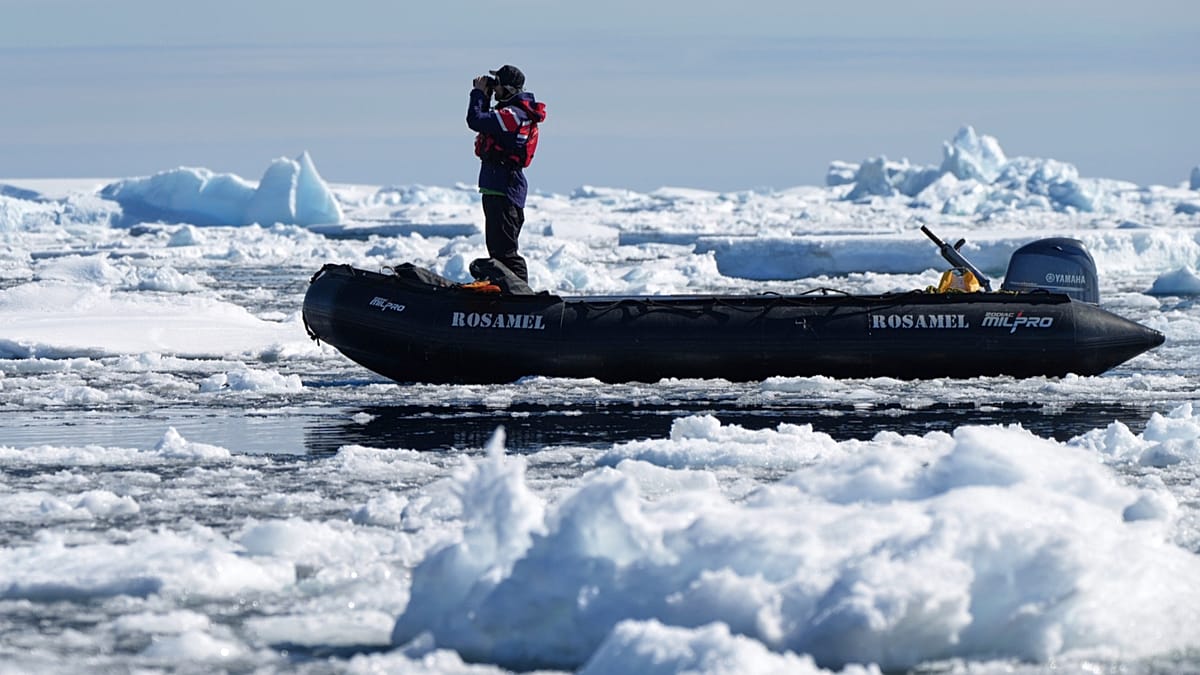
Climate change also poses a risk to research itself in Antarctica. Damage to infrastructure from rising sea levels, extreme weather and melting ice will make it harder for scientists to collect the data they need to forecast future impacts of rising temperatures.
Research in Antarctica has been ramping up in recent years, with scientists even attempting to build a 150-metre wall to prevent the ‘Doomsday Glacier’ from flooding.
Can cutting emissions save Antarctica?
“At the moment, we’re on track for a medium to medium-high emissions future,” says Davies.
“A lower emissions scenario would mean that although the current trends of ice loss and extreme events would continue, they would be much more muted than under a high scenario.”
Davies adds that volumes of winter sea ice would shrink “only slightly smaller” than they are today, which means sea level rise would be limited to a few millimetres. Most of the glaciers would also be recognisable and supporting ice shelves would be retained.
“What concerns me most about the higher emissions scenario is just how permanent the changes could be,” Davies says.
“It would be very hard to regrow the glaciers and bring back the wildlife that makes Antarctica special. If we don’t make changes now, our great-grandchildren will have to live with the consequences.”