
By Euronews Persian
Published on
Iran has executed at least two people in connection with the January protests and the ongoing war, while a Tehran court has sentenced four others to death over the killing of a Basij-affiliated student during the 2022 protests.
A man identified by the judiciary-affiliated Mizan News Agency as Abbas Akbari Feyzabadi was hanged after being convicted of charges including moharebeh or “enmity against God,” destruction of public property, collusion against national security and related offences.
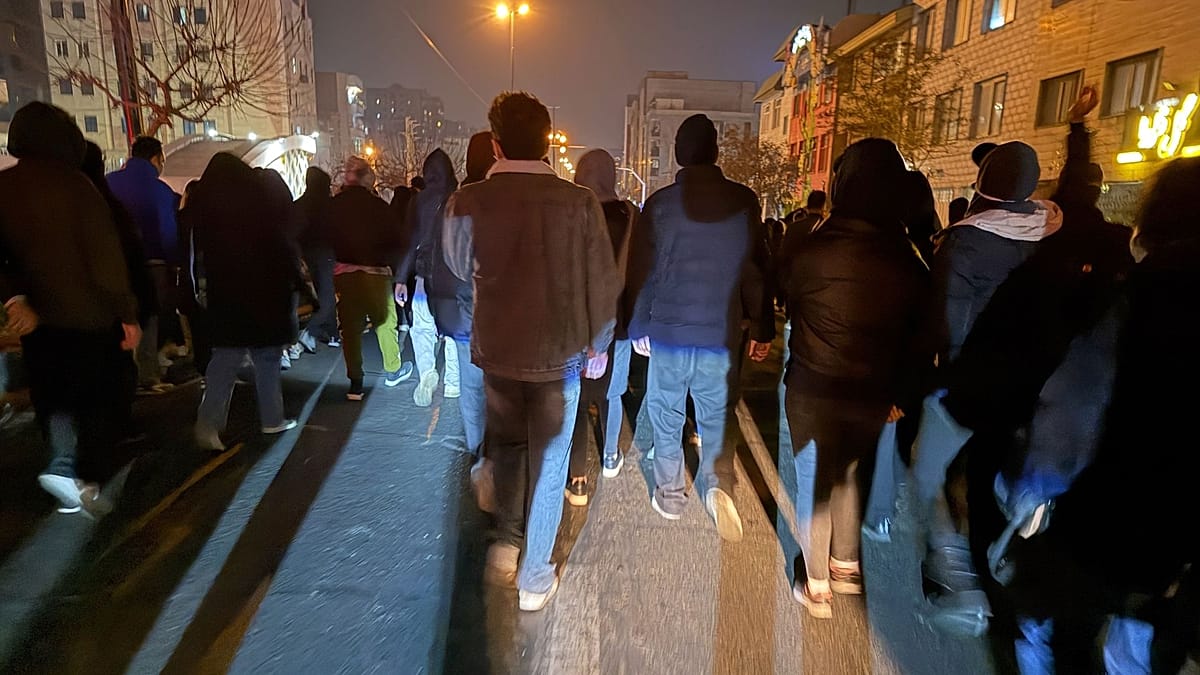
Iranian authorities said he took part in attacks on the governor’s office in the city of Naein during protests on 8 and 9 January in Isfahan province — part of nationwide protests sparked by persistent hyperinflation and a spike in cost of living in December 2025 — and opened fire on security forces with a handgun.
Officials said the case rested on evidence, images and confessions, and that Iran’s Supreme Court upheld the sentence before it was carried out.
No independent information was made available about the conduct of the trial, access to legal representation, or the circumstances under which confessions were obtained.
Separately, Mojtaba Kian was executed on Sunday on charges of “espionage” for Israel and the US.
The judiciary said he had passed information about Iran’s defence industries to foreign intelligence. Iran Human Rights said Kian was the first person arrested during the war that began with US-Israeli strikes on 28 February to be executed — less than 50 days after his arrest.
Four defendants in the so-called Ekbatan Town case, linked to the 2022 nationwide protests triggered by the death of Mahsa Amini, were sentenced to death by Branch 15 of Tehran’s Revolutionary Court on charges of efsad-e fel-arz, or “corruption on Earth”. Judge Salavati presided over the case.
Those sentenced to death were identified as Milad Armoon, Navid Najjaran, Mehdi Imani and Seyed Mohammadmehdi Hosseini.
Four other defendants received five-year prison terms for assembly and collusion, two years for propaganda against the state, and a two-year ban on social media use and residency restrictions in Tehran and Alborz provinces.
According to Iran Human Rights, the verdicts were communicated verbally to the defendants without their lawyers present or prior notification.
The case centres on the killing of Arman Aliverdi, a Basij-affiliated seminary student wounded during protests in November 2022 who died two days later. The verdicts can be appealed before Iran’s Supreme Court.
UN High Commissioner for Human Rights Volker Türk said he was alarmed by the new wave of executions. “The rights of the people of Iran are still being harshly and violently stripped away by the authorities,” he said.
Human rights organisations have repeatedly said political detainees in Iran are denied fair trials and that confessions used as evidence in capital cases are frequently extracted under coercion.
Iran’s judiciary chief Gholamhossein Mohseni Ejei rejected the criticism. “We certainly do not neglect in the trial and legal punishment of that criminal whose hand is smeared with the blood of our people,” he said.
Amnesty International has said it was concerned about what it described as “grossly unfair trials” in a number of recent cases.