




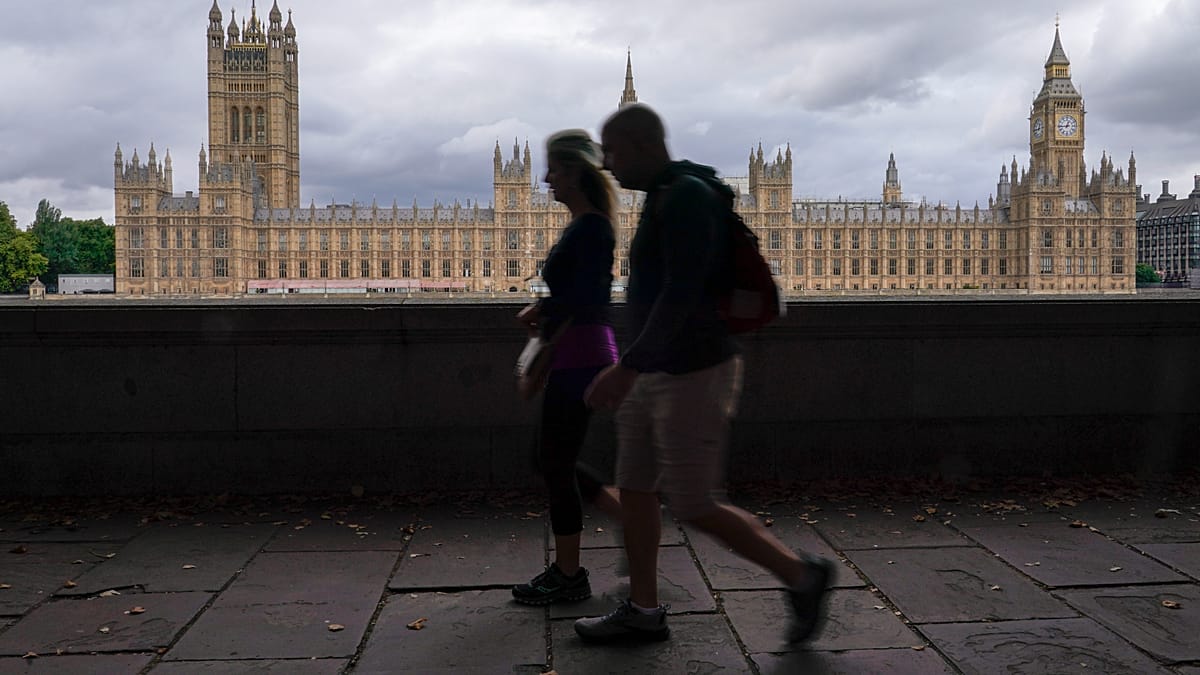
The UK bond market is currently experiencing a period of intense volatility, with the yield on 30-year government bonds, known as gilts, climbing to its highest point since 1998.
On Tuesday, 30-year gilt yields rose as much as 0.14% to 5.79%, their highest level this century, before dipping slightly to around 5.6% at the time of writing.
The yield on the 10-year gilt also climbed as much as 0.15% to 5.11%, very close to the 18-year high of 5.12% hit earlier in the Iran war. It has since lowered somewhat to roughly 4.93% on Thursday.
Bond prices and yields have an inverse relationship. Bond yields rise when prices fall in order to increase investment attractiveness as demand for the debt weakens.
The surge in gilt yields indicates that investors currently perceive UK debt as a riskier prospect than other lending options, requiring a larger premium to commit their capital over the long term.
Presently, there are several reasons for this evident but abnormal lack of confidence.
The primary catalyst is the fear that the Bank of England may be forced to keep interest rates higher for longer to mitigate the chance that inflation will remain “sticky” and not return to the 2% target as quickly as previously hoped.
This estimation has been fuelled by surging energy prices due to the disruption caused by the Iran war. Gilts have continuously sold off during the conflict.
Speaking to Euronews, Richard Carter, head of fixed interest research at Quilter Cheviot, added that “the UK is expected to be the worst hit developed economy by events in the Middle East due to its reliance on energy imports, so the longer energy prices remain elevated, the deeper the pain the country is likely to experience.”
Beyond geopolitics and global energy markets, there are many domestic factors currently contributing to the exceptional distrust in UK debt.
Keir Starmer, fiscal policy and local elections
Political uncertainty and fiscal policy are also playing a central role in the recent and severe gilts sell-off.
In 2024, after Keir Starmer’s election, the Labour party pledged “fiscal discipline” and established a long-term framework in the Autumn Budget to distinguish the new government’s approach from the former.
The plan introduced the “Stability Rule” mandating that the current budget, which covers day-to-day costs such as public sector salaries and welfare, must be in surplus by the end of 2029/30. This effectively prohibits borrowing to fund the ongoing operations of the British state.
Additionally, the “Investment Rule” was also put forward to target the national balance sheet. This norm requires Public Sector Net Financial Liabilities (PSNFL) to be falling as a percentage of GDP within the same timeframe as the “Stability Rule”.
By using PSNFL rather than the traditional measure of net debt, the UK Treasury has more room to borrow for long-term capital projects like infrastructure and green energy, which are technically classified as “investments” rather than “spending”.
Finally, the Budget Responsibility Act 2024established a “fiscal lock”, legally preventing any significant tax or spending changes from being introduced without an independent assessment from the Office for Budget Responsibility (OBR).
Despite all these rigid guardrails, bond markets are now sceptical because investors fear political necessity will eventually override fiscal prudence.
Recent scrutiny of Starmer has intensified as he faces a mounting challenge from the left of his party, where dissenting voices are calling for a shift away from “fiscal conservatism” to address funding crises in the NHS and local government.
On top of that, the disastrous appointment of Peter Mandelson as Britain’s ambassador to Washington, and the revelations of his past friendship with Jeffrey Epstein, have severely damaged Starmer’s administration over the last few months.
The problems have culminated in the local elections taking place in 136 authorities for more than 5,000 council seats on Thursday. More than half of the seats up for grabs this week are being defended by Starmer’s party.
Analysts project that Labour will suffer a massive loss and potentially end up over 1,000 councillors down. Any major setback will certainly increase internal pressure to oust Keir Starmer as the leader in which case snap elections could be triggered.
The head of markets at AJ Bell, Dan Coatsworth, explained to Euronews that “investors will be watching bond markets like a hawk over the coming days as the results of the UK local elections are released. Any major setback to Labour will fuel calls for Keir Starmer to be replaced as prime minister and if that happens, bond markets will want to know who is taking over.”
“The obvious challengers, Angela Rayner and Andy Burnham, are seen as candidates who might push for greater government borrowing and spending, which could take gilt yields even higher. Fundamentally, there is a real risk of gilt yields soaring if Labour experiences a wipeout in the local elections,” Coatsworth added.
Speaking to Euronews, the head of fixed interest research at Quilter Cheviot, Richard Carter, conveyed the same sentiment.
“The uncertain UK political backdrop has played a role ahead of the local elections with gilt investors concerned about a Labour Party lurch to the left should Keir Starmer either be replaced or have little choice but to appease his backbenchers in the wake of challenging results.”
Effectively, these local results are no longer just a measure of regional popularity, but a high-stakes verdict of political viability that could determine the long-term stability of British borrowing costs.
The cost to the UK Treasury, businesses and households
For the British government, the consequences of the ongoing bond market shift are measured in billions of pounds as the UK’s debt-interest bill is highly sensitive to fluctuations in gilt yields.
According to estimates from fiscal watchdogs, every 0.25% rise in government borrowing costs adds approximately £2.5 billion (€2.9bn) to the annual debt-servicing cost. A 0.5% increase, which has already been observed this spring, therefore requires the UK Treasury to find an extra £5 billion (€5.8bn) every year just to pay interest.
The rise in gilt yields also has a direct and immediate impact on the real economy as they serve as the benchmark for pricing a vast array of financial products, most notably fixed-rate mortgages.
As yields climb, lenders adjust their swap rates, which inevitably leads to higher monthly repayments for millions of homeowners looking to refinance.
Businesses also feel the squeeze. The cost of corporate loans and commercial credit is often tied to the yield curve. When the state has to pay more to borrow, the private sector follows suit, potentially stifling investment and slowing economic growth.
“A gilt yield shock might be called a stealth tax, but it is not an intentional one. It would be the knock-on effects of bond prices falling and yields going up, which can negatively affect asset prices and tighten financial conditions,” Coatsworth told Euronews.
“Consumers would experience higher mortgage costs and potentially spend less money, particularly if companies scale back hiring if their borrowing costs rise from higher gilt yields, as the two are intertwined. It could also lead to lower public spending and pave the way for tax rises,” Coatsworth added.
Every increase in the cost of debt limits the amount of capital available for private innovation and reduces the disposable income of households already struggling with the cost of living.