By ELODIE MANDEL-BRIEFER, ROMAIN LEFÈVRE with AP
Published on
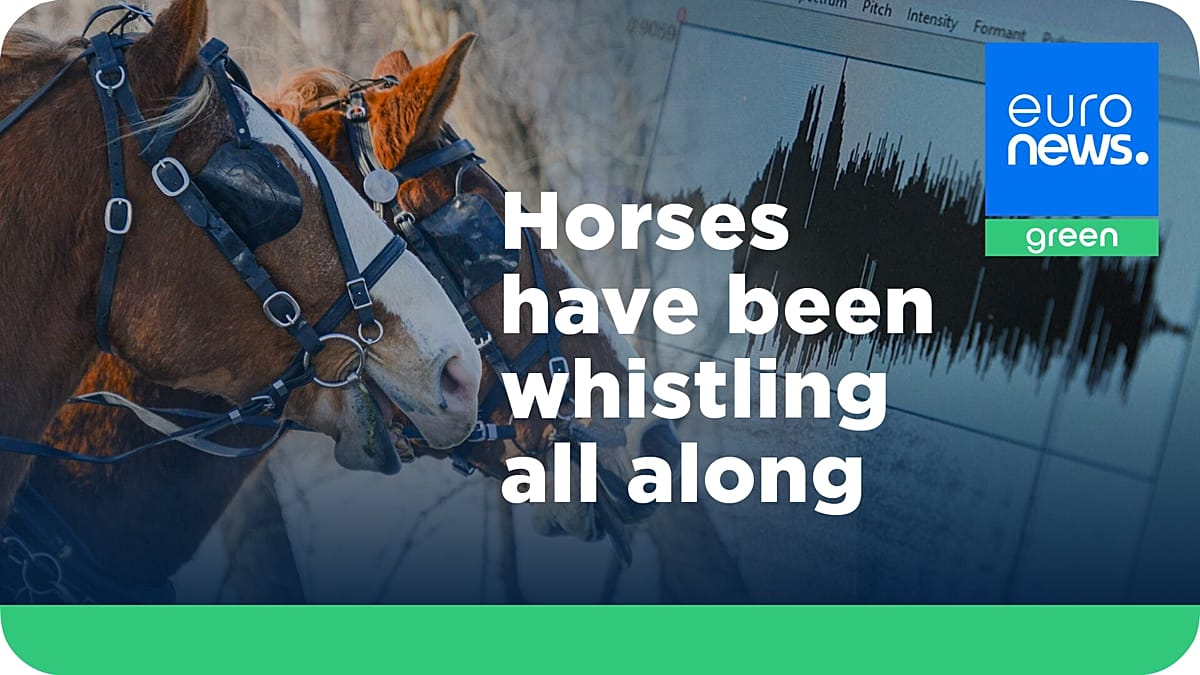
Horses ‘whinny’ to find new friends, greet old ones and celebrate happy moments, like feeding time. But how exactly they produce the distinctive sound – also called a ‘neigh’ – has long eluded scientists.
At Vordingborg Sportsride Club in Denmark’s southern Zealand, horses grunt, sigh and – whinny.
“If they feel left alone, they will do it. If they’re calling for food in the morning, they will very often do it,” says riding instructor Sigrid Bjørg.
“When we take them out, when they’re going out to the field, the ones that are left behind will call for the others, and when take them back in, they would also call.
“Some make very comforting noises, like ho ho ho, like quiet noises, and some are screamers. They would just scream out, ‘I’m left alone, I am left alone.’ They would go, wah!”
How do horses make a ‘neigh’ sound?
The whinny is an unusual combination of both high and low pitched sounds, like a cross between a grunt and a squeal – but at the same time.
The low-pitched part wasn’t much of a mystery. It comes from air passing over bands of tissue in the voice box that sound when they vibrate. It’s a technique similar to how humans speak and sing. But the high-pitched piece is more puzzling.
With some exceptions, larger animals have larger vocal systems and typically make lower sounds. So how do horses do it?
According to a new study, they whistle. Researchers slid a small camera through horses’ noses to film what happened inside while they whinnied and made another common horse sound, the softer, subtler ‘nicker’.
They also conducted detailed scans and blew air through isolated voice boxes of dead horses.
The whinny’s mysterious high-pitched tones, they discovered, are a kind of whistling that starts in the horse’s voice box.
Air vibrates the tissues in the voice box while the area right above contracts, leaving a small opening for the whistle to escape. That’s different from human whistling, which we do with our mouths.
“When they could produce the high-pitch sound, then this high pitch shifted up in frequencies, which is a very strong suggestion that this high pitch is actually a whistle,” explains University of Copenhagen associate professor Elodie Mandel-Briefer, who authored the study published in February in the journal Current Biology together with scientists in France, Austria and Switzerland.
“Everything is closed down, that leaves only a small opening, and then that produces a whistle, like when we whistle with our lips.”
Horses are one of the only animal species that whistles
A few small rodents like rats and mice whistle like this, but horses are the first known large mammal to have a knack for it, says Mandel-Briefer.
“Some people, humans, also can activate their vestibular vocal folds situated below the vocal folds, so that’s how we make throat singing,” the expert adds. “And then we can also talk at the same time, as we whistle, if I do… Then I make two frequencies. But otherwise, in other species, it’s very uncommon, and the only two species we know where the biphonation is present all the time is whinnies of horses and buggles of wapiti or elks.”
Horses are the only animals known to be able to whistle through their voice box while they sing. Wild Przewalski’s horses can do something similar, as can elks, but this has not yet been studied.
But more distant horse relatives like donkeys and zebras can’t make the high-pitched sounds.
Mandel-Briefer believes the two-toned whinnies could help horses convey multiple messages at the same time. The differently-pitched neighs may help them express a more complex range of feelings when socialising, she says.
“By these two frequencies, they can really express the whole range of emotions possible because they can express emotions in these two dimensions,” she adds.
Video editor • Denis Loctier