


Published on •Updated
G7 finance ministers discussed a coordinated release of emergency oil reserves on Monday but failed to reach agreement, with France’s Roland Lescure saying the group was “not there yet” on a deal.
The G7 was exploring a coordinated release of emergency oil reserves to tamp down fears of an impending shortage but stopped short of a deal.
Japan’s finance minister, Satsuki Katayama, said the International Energy Agency (IEA) explicitly requested the coordinated release during the G7 meeting, according to Bloomberg.
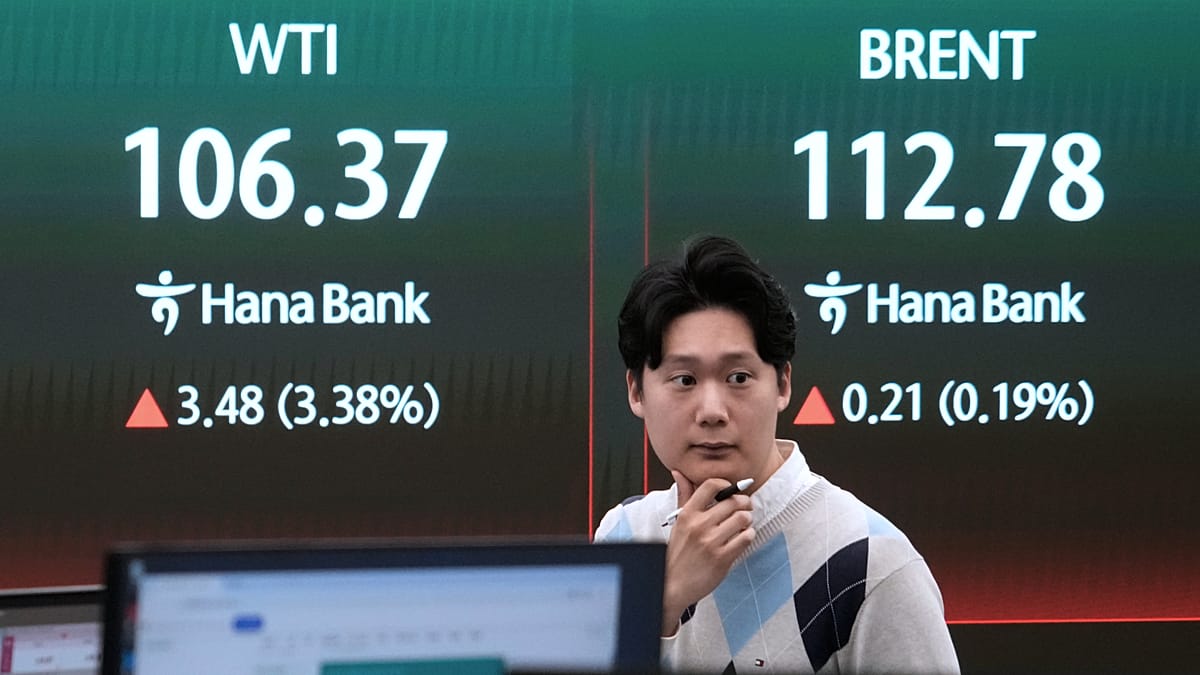
Brent crude briefly hit $119.50 a barrel on Monday morning, its highest level since 2022, having jumped roughly 25% since Friday as the Iran war intensified, raising fears over global production and shipping.
At the time of writing, oil prices pared gains and are trading slightly below $100 a barrel, as markets remain highly volatile.
Stock markets fell worldwide on concerns the global economy would not be able to absorb a sustained oil price shock.
Equity markets drop over uncertainty
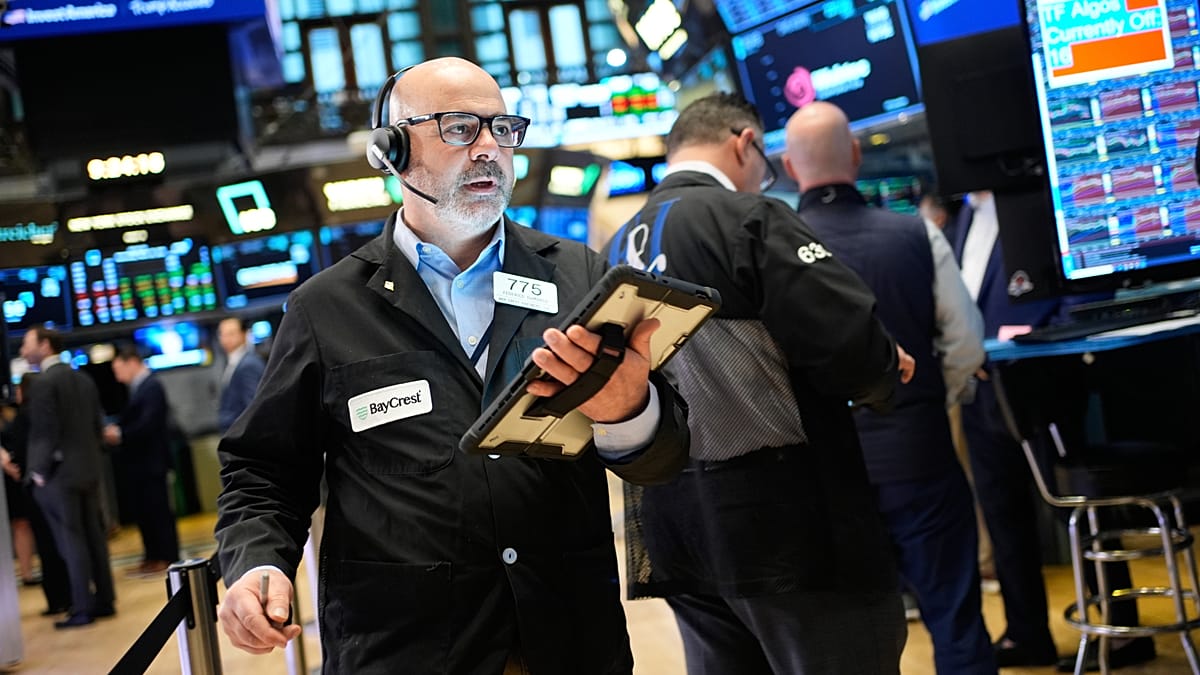
At the open on Monday, the S&P 500 fell 1.3%, coming off its worst week since October. The Dow Jones Industrial Average was down 1.5% and the Nasdaq composite 1.2% lower.
The most immediate pain on Wall Street is hitting companies with large fuel bills. Carnival lost 7.3%, United Airlines sank 6.9% and Old Dominion Freight fell 3.8%.
Retailers dependent on long-haul shipping, whose customers are also facing higher petrol costs, also struggled. Best Buy fell 4.4% and Williams-Sonoma dropped 4%.
The moves followed steeper losses in European and Asian markets, where economies are more exposed to imported oil and gas. South Korea’s Kospi sank 6%, Japan’s Nikkei 225 dropped 5.2% and Europe’s Euro Stoxx 50 tumbled 1%.
Potential stagflation scenario
Since the war with Iran began, the central worry for financial markets has been how high oil prices will go and how long they will stay there.
If prices stay very high for very long, household budgets already stretched by high inflation could break under the pressure.
Meanwhile, companies would see their own bills jump for key items such as fuel and stock items, as well as for powering their data centres.
It all raises the possibility of a worst-case scenario for the global economy: stagflation, or a period when economic growth stagnates and inflation remains persistently high.
Late on Sunday, President Donald Trump countered this narrative by assuring that high oil prices at the moment are both worth the cost and only temporary.
“Short term oil prices, which will drop rapidly when the destruction of the Iran nuclear threat is over, is a very small price to pay for U.S.A., and world, safety and peace,” he said in a post on Truth Social.
In the bond market, the yield on the 10-year Treasury held at 4.15%, where it ended Friday.
Worries about high inflation and oil prices are applying upward pressure on Treasury yields, while risks of a slowing economy are pulling in the opposite direction.
Concerns about stagflation deepened on Friday following a surprisingly weak US jobs report showing that employers cut more jobs last month than they added.