
By Euronews with AP
Published on
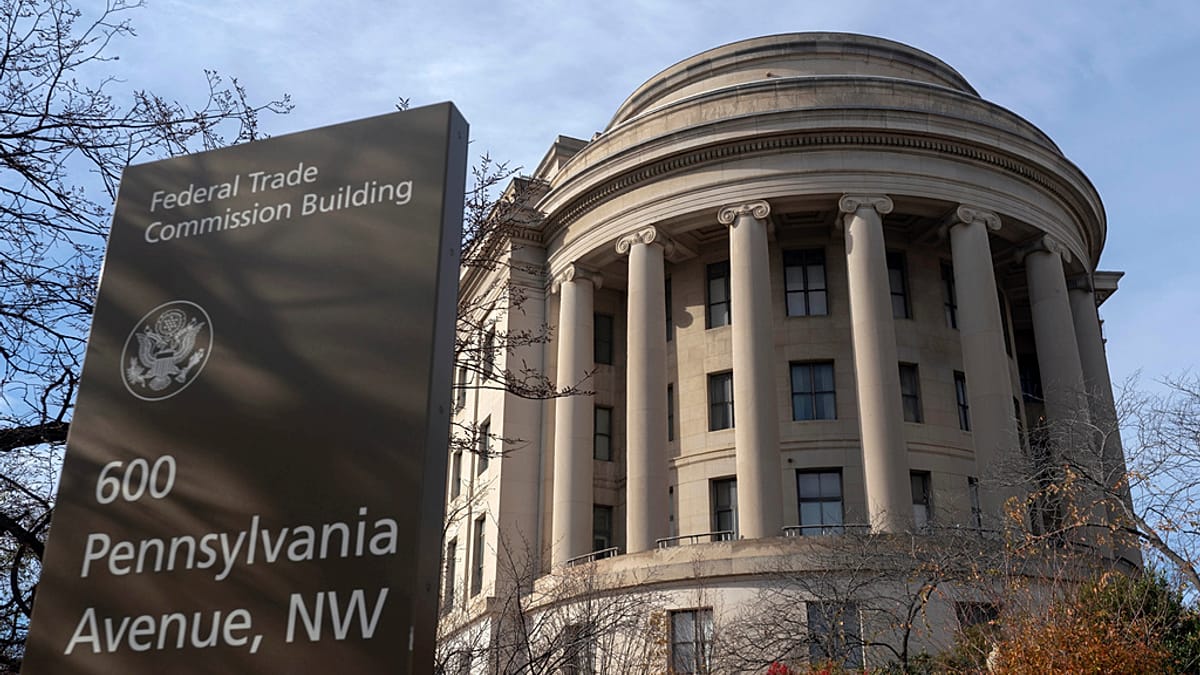
The Federal Trade Commission (FTC) said on Tuesday it will appeal a November court ruling in favour of Meta in its long-running antitrust battle with the social media giant.
The appeal keeps alive a high-stakes legal fight over whether Meta unlawfully maintained monopoly power in social networking by acquiring competitors such as Instagram and WhatsApp.
In a press release, the FTC reiterated its argument that, for more than a decade, Meta has “illegally maintained a monopoly” by buying “the significant competitive threats it identified in Instagram and WhatsApp.”
The regulator insists that these acquisitions harmed competition and consumers by neutralising rivals instead of competing with them on merit.
Meta had won a major victory in November when US District Judge James Boasberg ruled that the FTC had failed to prove Meta currently holds monopoly power in personal social networking services.
The court concluded that platforms like TikTok and YouTube provide real competition, undermining the FTC’s claim that Meta holds an illegal monopoly.
Meta welcomed the decision at the time, asserting that the ruling was “correct” and reflected the “fierce competition” the company faces. It noted that it would remain focused on innovation and investment in the United States.
Major US antitrust case
The FTC’s appeal marks a fresh chapter in one of the most closely watched antitrust disputes involving Big Tech companies or platforms that exercise both major control over technology, social media platforms, or tech-adjacent services.
The case began in December 2020, when the FTC — joined by 46 US states — filed suit against Meta, formerly Facebook, under Section 2 of the Sherman Act, alleging that its acquisitions of Instagram in 2012 and WhatsApp in 2014 were part of an anticompetitive “buy-or-bury” strategy.
The original complaint was dismissed in June 2021 but was revived in amended form later that year and ultimately survived pre-trial motions, leading to a full bench trial in 2025, during which CEO Mark Zuckerberg testified.
Judge Boasberg’s November 2025 decision was a setback for regulators seeking to use antitrust law to roll back past tech mergers — an effort that has also surfaced in cases against other major firms.
For example, US courts have branded Google an illegal monopoly in separate antitrust suits over search and online advertising, although courts have typically been reluctant to order structural breakups.
Internationally, antitrust authorities have also pursued parallel scrutiny of Meta’s behaviour.
In the EU, the Digital Markets Act (DMA) imposes obligations on gatekeepers to give consumers choices about data sharing and interoperability — rules that have put pressure on Meta’s data integration practices across its platforms, particularly for EU users.
The appeal now moves to the US Court of Appeals for the District of Columbia, where a new judge will reconsider whether the FTC’s evidence and legal theories are sufficient to overturn the lower court’s dismissal.