


Every spring, Spain is transformed as its streets fill with incense, silence, drums and emotion. Whether you are a believer or not, Spanish Holy Week is a cultural phenomenon: a blend of art, tradition, spirituality and spectacle that spans generations. From the austere solemnity of Castile to the passion of Andalusia, via the unique traditions of the Mediterranean and the north, the country offers a diversity that is hard to match.
Travelling through Spain at this time of year also means travelling through its history. Every city and town stages the Passion in its own way, adding unique nuances that reflect its character and heritage. And it is precisely in this diversity that the true greatness of Spanish Holy Week lies.
Seville: The emotional heart of Holy Week
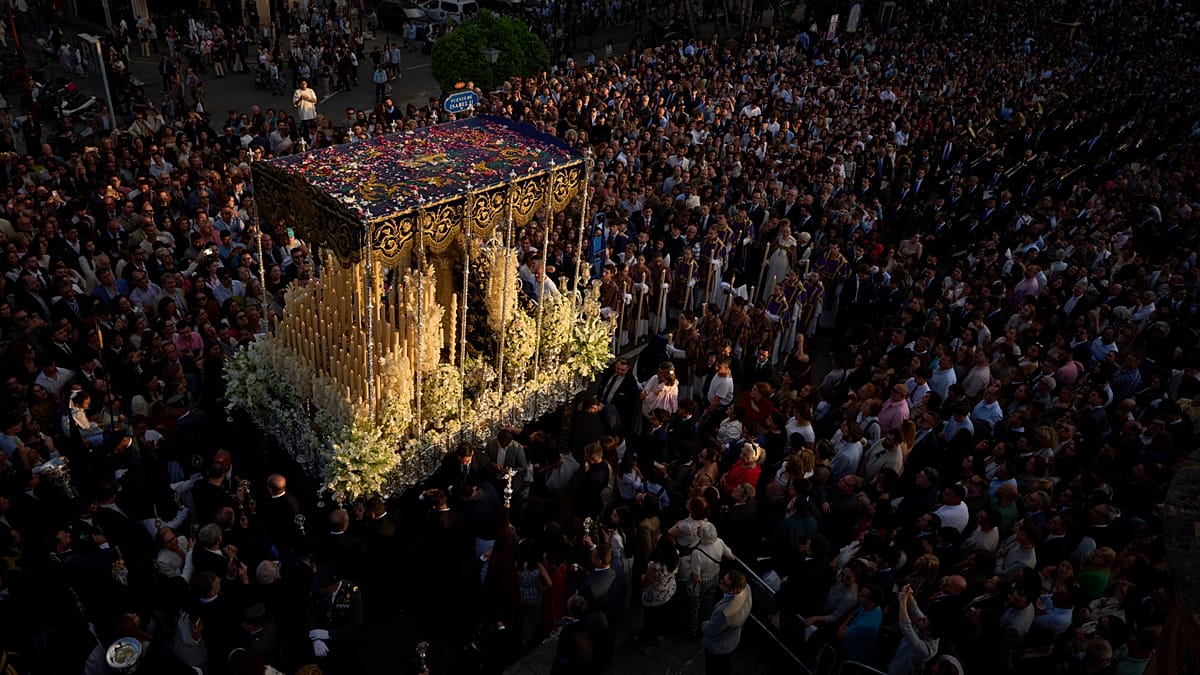
If there is one place where Holy Week reaches its most intense emotional expression, it is Seville. The so-called ‘Madrugá’, the night between Maundy Thursday and Good Friday, is one of the most powerful moments in the Spanish festive calendar.
For hours on end, six brotherhoods process through the city in an atmosphere heavy with symbolism. The Virgin of Hope Macarena and Jesús del Gran Poder draw thousands of people who keep an absolute silence, broken only by spontaneous saetas sung from the balconies.
Here Holy Week is not something you watch: it is something you feel. The combination of crowds, tradition and fervour turns every procession into an almost hypnotic experience.
Zamora: The power of silence
Holy Week in Zamora, one of the oldest in Spain, is defined by its austerity and profound solemnity. The procession of the Capas Pardas is particularly striking: at night, by lantern light and wearing traditional brown cloaks, the members of the brotherhood advance slowly in almost total silence.
There is no spectacle here in the conventional sense. What there is, is restrained emotion, history and a spirituality that can be felt in every step.
Valladolid: An open-air Baroque museum
In contrast with the Andalusian version, Valladolid offers a Holy Week marked by silence, order and artistic value. Here the processional floats are genuine masterpieces of Baroque sculpture, many of them on loan from the National Sculpture Museum.
The General Procession on Good Friday stands out for its complete depiction of the Passion of Christ, with dozens of images parading in perfect coordination. The effect is overwhelming: a city turned into a living museum, where sacred art takes on an almost theatrical dimension.
Málaga: Popular devotion… and familiar faces
Málaga shows another side of Holy Week: monumental spectacle, massive popular participation… and the involvement of well-known faces. Chief among them is Málaga-born actor Antonio Banderas, whose presence has become one of the most recognisable images of these days.
Far from simply watching from the sidelines, Banderas takes an active role as a member of the Brotherhood of Our Lady of Tears and Favours, one of the city’s most emblematic confraternities. Every Palm Sunday he returns to Málaga, even breaking off his international commitments, to join the procession and take on responsibilities within the cortege.
The city throbs with music, applause and an intensity that is hard to put into words. It is a Holy Week experienced with all the senses.
San Vicente de la Sonsierra: The most harrowing penance
In San Vicente de la Sonsierra, in northern Spain, Holy Week is marked by a unique and deeply affecting tradition led by the ‘picaos’, disciplinants who practise an ancient form of public penance.
Unlike other, more crowded celebrations, the focus here is on these brotherhood members, who walk the streets scourging their backs as an act of sacrifice and purification in a ritual with deep roots in the community.
Far from being a spectacle, the ceremony unfolds in an atmosphere of silence and respect, preserving intact a centuries-old tradition recognised as an Asset of Cultural Interest. For those who witness it, it is a powerful experience not only because of its harshness but because of what it represents: one of the most intense and authentic expressions of popular spirituality in Spain.