
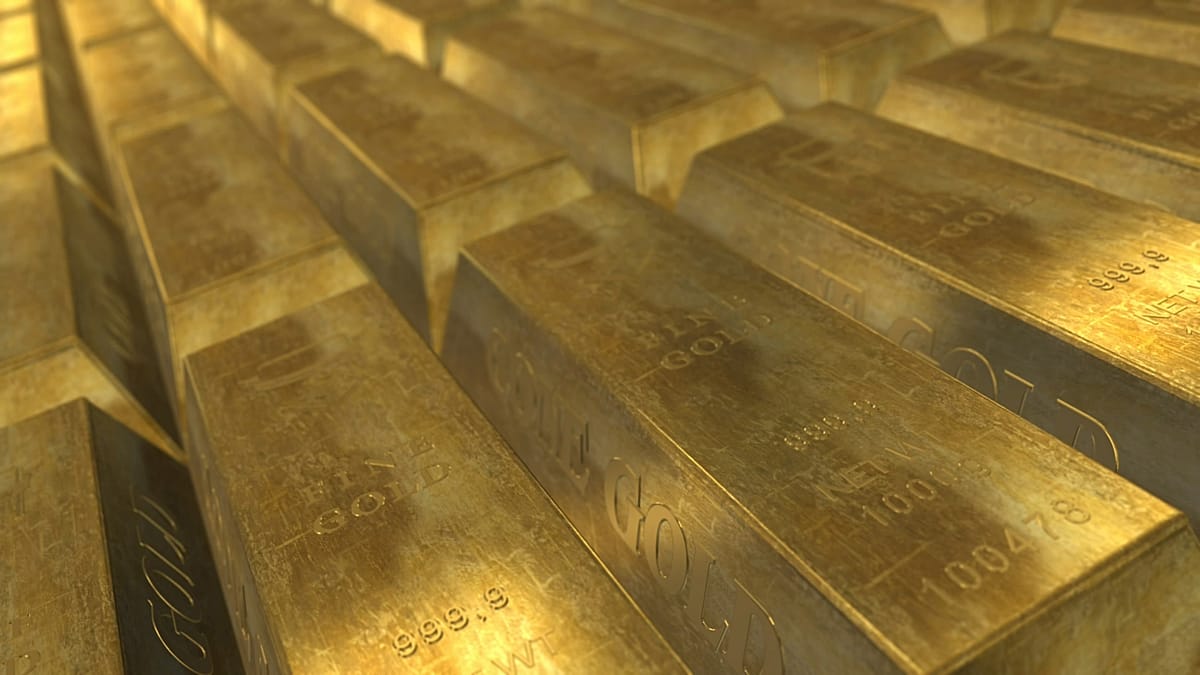
At the end of 2025, the Banco de España recorded gold and foreign exchange reserves were valued at nearly €94 billion, the highest figure since comparable statistics became available.
The increase reflects, above all, the rising demand for gold on the international market — recent dips aside — as a safe-haven asset in a year marked by geopolitical and financial uncertainty.
But in Spain, gold is never just an accounting figure. It is also a matter of historical memory. And few expressions are as charged as those referring to so-called “Moscow gold,” one of the most controversial episodes in Spain’s 20th-century economic and political history.
Gold to finance the revolution
Before 1936, Spain’s gold reserves were not exceptional by international standards, but they were sufficient to place the country on the global financial map.
According to historian Magdalena Garrido Caballero, Professor of Contemporary History at the University of Murcia, this gold gave Spain a degree of room for certain international manoeuvres albeit far removed from those of major economic powers.
That margin, however, evaporated with the outbreak of the Spanish Civil War. The diplomatic isolation of the Second Republic, reinforced by the Non-Intervention Committee, left the Republican government with few options for financing the purchase of arms and supplies.
In this extreme context, the Republican government decided to transfer most of the Banco de España’s gold reserves abroad, primarily to the Soviet Union. The aim was clear: to pay for arms, supplies and military assistance to sustain the war effort.
The transfer was real and well documented. In October 1936, some 510 tonnes of gold left the Algameca depot in Cartagena.
It was not an improvised or clandestine operation, but a conscious decision made by the Republic’s legitimate authorities in a context of total war.
Return the gold?
Contemporary historiography has dismantled many of the myths constructed in later decades. Garrido Caballero stresses that the central misconception is the idea that the gold could — or should — have been returned.
Studies by historians such as Ángel Luis Viñas and Pablo Martín Aceña show that the gold was spent during the war, through verified and documented payments, enabling the Republic to resist the military uprising for almost three years.
From this perspective, the “Moscow gold” did not constitute either theft or plunder by the Soviet Union, but a financing operation carried out under exceptional circumstances.
Some of the gold was also sold to France for the same purpose, although this episode never acquired the same symbolic weight.
‘Fascist’ talking point
After the war, Franco’s regime turned the “Moscow gold” into a powerful propaganda tool.
According to Garrido Caballero, the regime exploited the episode to justify the severity of the post-war period, to reinforce the image of an exploitative Soviet enemy and to delegitimise the Second Republic.
The issue appeared repeatedly in diplomatic reports, the national and international press, and official speeches for decades.
Internationally, however, the matter gained little traction. The United Kingdom viewed it as a bilateral issue between states, while Soviet authorities consistently maintained that there were no outstanding reserves of the gold sent by the Republic.
Where is Spanish gold held today?
Almost 90 years on, the question still resurfaces: where is Spain’s gold?
The answer is much less dramatic than the persistent myth. Spain today holds around 281 tonnes of gold, divided between the Bank of Spain and deposits in the United States, the United Kingdom and Switzerland, according to data from the World Gold Council.
This gold is not tied to the amounts sent to the USSR, but a result of decades of monetary policy, European integration and asset management within the Eurosystem.
From historical trauma to financial asset
The 2025 record does not mean Spain has recovered its lost gold.
Rather, it reflects the rise in the metal’s price on international markets. Today, gold no longer fully backs a national currency or it is not used to finance wars. Instead, it functions as an asset of stability, leverage and confidence in a globalised financial system.
A comparison between 1936 and 2025 reveals a profound shift. During the Civil War, gold was a tangible resource on which a government’s survival depended. This is no longer the case.