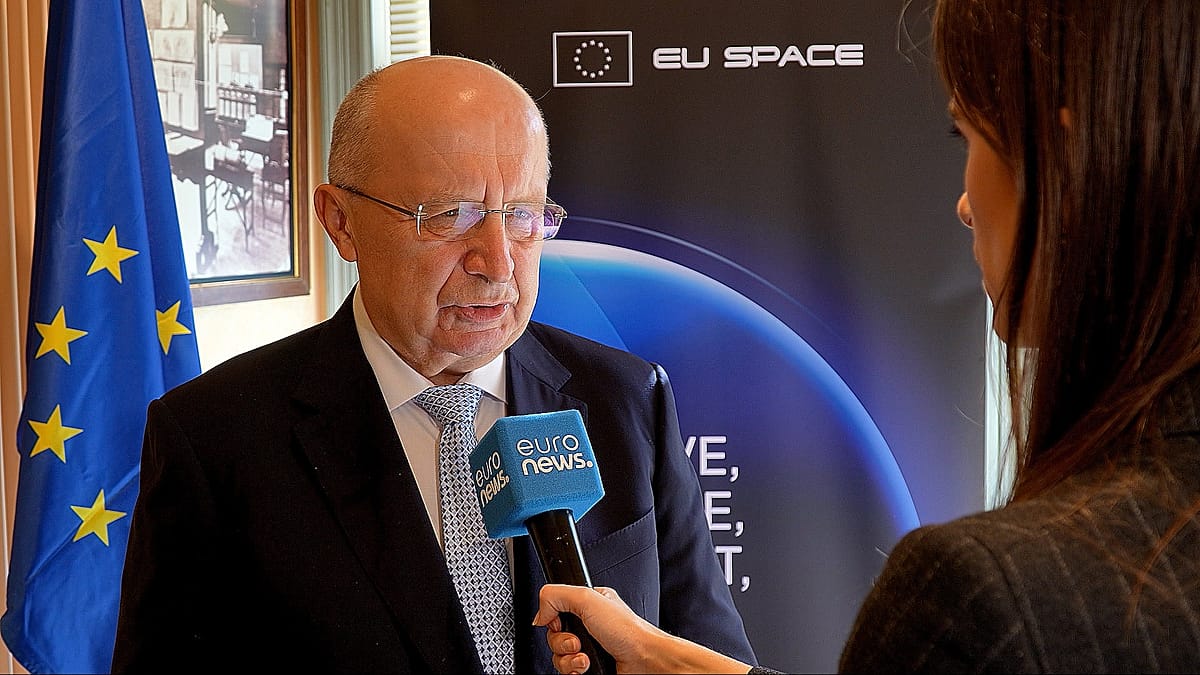



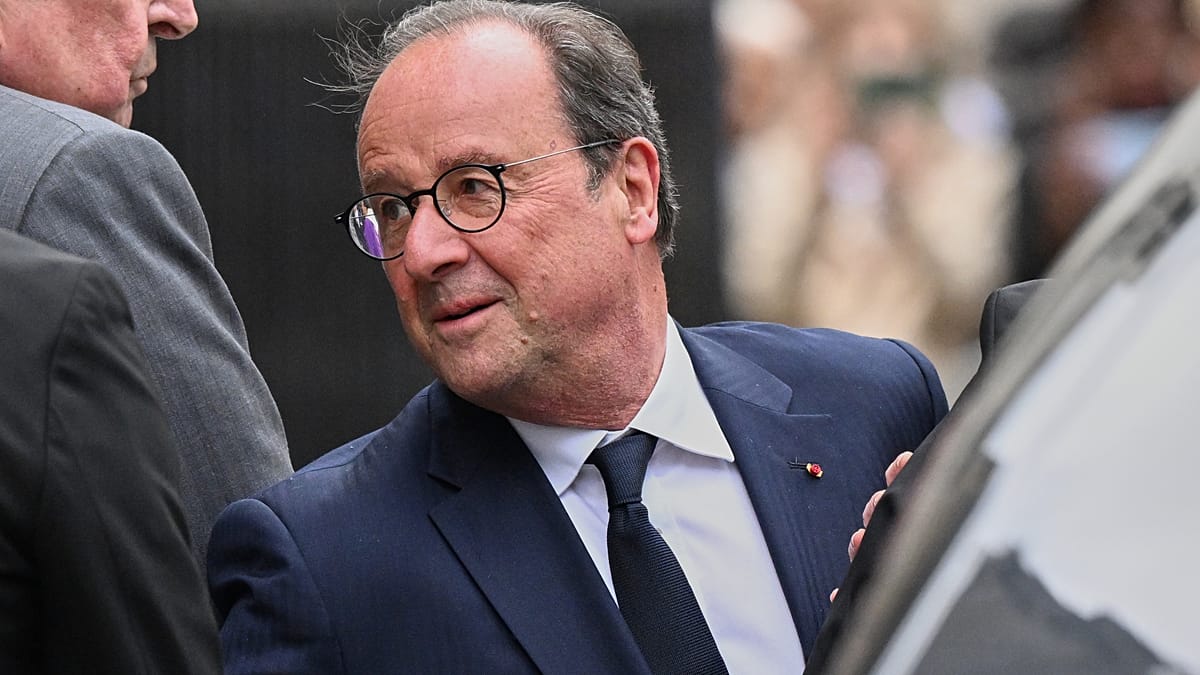
Former French socialist President François Hollande published his newest book on Thursday entitled “Unite. New World, New Left”, in which he outlined a series of 80 proposals for France’s political future — a move widely seen as an effort to appeal to centrist voters.
Although his book may read like a manifesto, Hollande is keeping his cards close to his chest: stating that he will wait until December before announcing his decision about whether he will run for the country’s highest office or not.
For now, Hollande will not participate in the left-wing primary set to take place in October, instead declaring that he will assess whether a serious candidate emerges — and only then decide whether he wants to run.
The former president decided not to seek a second term in 2017, in light of very low approval ratings at the end of his five-year term. Almost a decade on, his new book states that France needs to change its methods, outlook and “level of ambition”.
Hollande told French public radio France Inter on Wednesday that the current “challenge is to bring the French together”, in light of the polarisation across society between “extremists who thrive on division” and a tense international situation in which France must assert its independence from the United States and Russia.
Social and economic proposals at odds with the Socialist Party
According to recent comments made by Hollande on the sidelines of the French Socialist party’s (PS) summer conference, the only way to achieve this goal, is to go “beyond political parties.”
Several of the proposals outlined in his book distinguish themselves from the positions held by the PS, notably with regards the Zucman tax (a plan to tax the wealth of the ultra-rich), which he dismisses as “a slogan, not a solution”, as well as on pensions.
While France’s Socialist party wants to restore the legal retirement age to 62, he argues in favour of setting it at 63 and then gradually increasing the required contribution period, in his book.
“The reference age has to take account of rising life expectancy and be adjusted constantly”, he writes. The former head of state also wants to “cap pension indexation at 1% for five years, which would deliver savings equivalent to pushing back the retirement age by one year”, and to “add a funded component”, which would be overseen by the social partners.
Another new idea on the economic front, aimed at boosting take-home pay, is Hollande’s proposal to “increase net wages by cutting employee social contributions”.
The resulting loss of revenue for the social security system would be offset by a levy on capital, through “a more progressive tax on financial income” and “a gradual increase in the standard VAT rate from 20% to 24%.” According to the former president, this new system would “raise wages by around 10% for everyone”.
To offset the impact of the VAT increase, he proposes abolishing the reduced 5.5% VAT rate, which applies to food and energy renovation work, and doing the same, though on a temporary basis, for fuel. He also wants to cut production taxes by reducing aid to businesses, as conservative presidential candidate Édouard Philippe has proposed.
What role should Europe play?
In his book, Hollande paints an alarming picture of the political status quo in the world.
“Democracies are being buffeted by turmoil, struck by the eruption of wars, planetary warming, soaring inequalities, the abuses of drug trafficking and the AI revolution. Fears feed anger, which extremists harness by sowing division.”
According to the former president, “The coming year will determine more than our future. It will decide the fate of our continent and our place in the world.”
On Europe, he defends France’s role within the European Union while calling for the bloc’s strategic autonomy to be strengthened in an increasingly fragmented international context.
In April, at the Printemps du Souffle breton event organised by the political movement of Brittany’s regional president, Loïg Chesnais-Girard, he warned: “We must not imagine that once Donald Trump is no longer president, the United States will return to Europe as before. That era is over.”
He has also advocated a multi-speed European Union, with a small group of six to eight member states steering the “industries of the future, from digital technology to artificial intelligence”, as well as defence.
Enough to win over centrists?
In an interview with Radio J, François Bayrou, president of the centrist MoDem party, said that François Hollande was putting forward “ideas that are more compatible than they used to be” with the centre.
A senior figure in the Horizons party, led by presidential candidate Édouard Philippe told AFP that Hollande “gives the impression of being a centre-right candidate. It’s an interesting positioning”, while another presidential hopeful observed that he “still sounds very right-wing for a candidate of the left”.
But the former president insists that he is “a socialist” and retains left-wing principles, stating in his book that he plans to “tax large inheritances and estates worth more than €10 million before tax”, raise employee representation on company boards to 30%, and introduce a €10,000 grant dubbed “entrée dans la vie” for young people doing civic service.