
Warning: This article contains references to suicide, drug use, and descriptions of crime scenes.
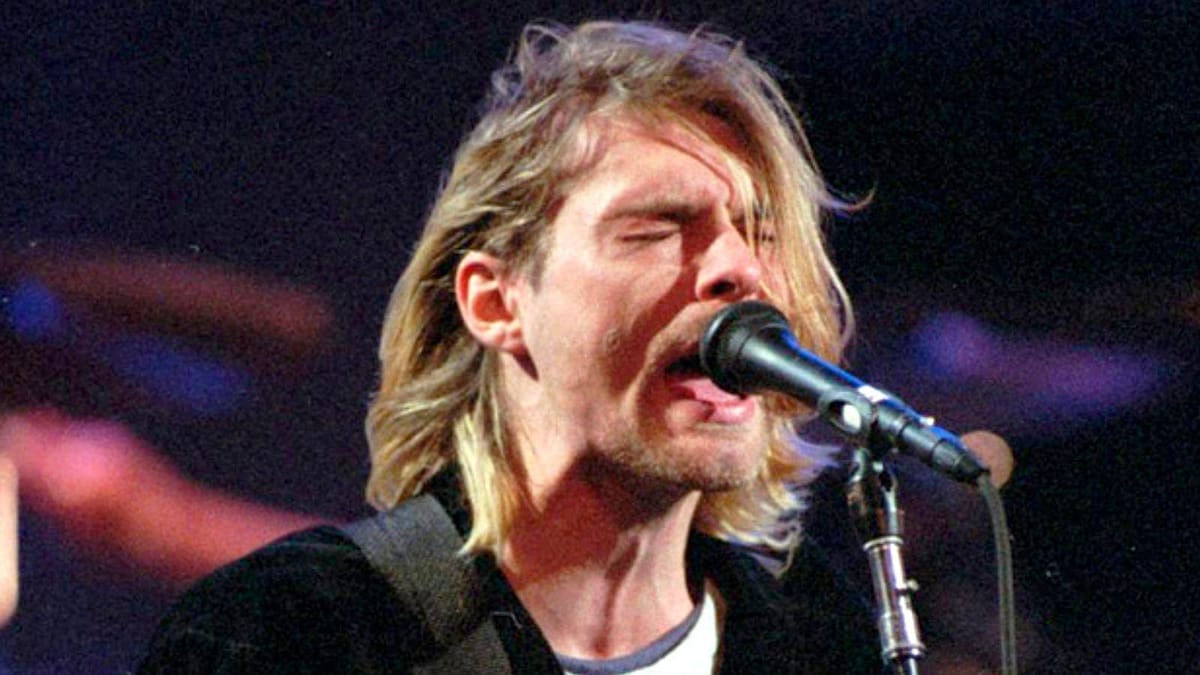
When Nirvana frontman and grunge legend Kurt Cobain died on 5 April 1997 at the age of 27, the music world mourned the death of a beloved rock star and a Generation X icon.
His body was found at his Seattle apartment and his cause of death was ruled to be a self-inflicted shotgun wound to the face, as Cobain has been wrestling with drug abuse and depression for years.
There was persistent conjecture that Cobain had been murdered – with conspiracy theories citing his supposedly tampered suicide note and growing suspicion surrounding his tumultuous marriage to rock star Courtney Love. A 1998 documentary by Nick Broomfield titled Kurt & Courtney ran with these theories, investigating the tragic death and claiming that murder could not be ruled out.
Now, almost three decades since Cobain’s tragic death, a new independent investigation is reigniting debate over what truly happened, challenging the suicide ruling, and citing evidence of forced heroin overdose and how the suicide could be a staged homicide.
The forensic team has presented a peer-reviewed paper with evidence claiming that Cobain may have been confronted by one or more assailants, forcibly given a heroin overdose to “incapacitate him,” and then shot in the head. They also claimed that the shotgun found in his hands was allegedly placed in his arms.
Independent researcher Michelle Wilkins, who worked with the team, told UK outlet the Daily Mail that forensic specialist Brian Burnett reviewed the crime scene evidence and the autopsy, and concluded that Cobain’s death was a homicide.
“There are things in the autopsy that go, well, wait, this person didn’t die very quickly of a gunshot blast,” said Wilkins. “He’s dying of an overdose, and so he can barely breathe, his blood isn’t pumping very much (…) I mean, he’s in a coma, and he’s holding this up to be able to reach the trigger to get it in his mouth. It’s crazy.”
She pointed to organ damage associated with oxygen deprivation. “The necrosis of the brain and liver happens in an overdose. It doesn’t happen in a shotgun death.”
The team’s findings highlight other key discrepancies in the original autopsy and crime scene materials, including the “eerily clean” area around Cobain’s body and that Cobain’s hand – which was found gripping the barrel of the shotgun – had no blood spatter.
“If you ever look at photos of shotgun suicides, they are brutal. There is no universe where that hand is not covered in blood,” Wilkins stated. “Suicides are messy, and this was a very clean scene.”
The team also highlighted Cobain’s heroin kit, which was found neatly arranged. Wilkins questioned the plausibility of someone with ten times the lethal limit of heroin in their system carefully packing away their equipment before shooting themselves.
“We’re supposed to believe he capped the needles and put everything back in order after shooting up three times, because that’s what someone does while they’re dying,” she said to Newsweek.
“To me, it looks like someone staged a movie and wanted you to be absolutely certain this was a suicide.”
The team of investigators has asked for the investigation to be reopened, but despite the new claims, the King County Medical Examiner’s Office and the Seattle Police Department have said that the case will remain closed.
“Our detective concluded that he died by suicide, and this continues to be the position held by this department,” Seattle Police Department spokesperson told Daily Mail.
“Our office is always open to revisiting its conclusions if new evidence comes to light,” a spokesperson from King County Public Health told Newsweek. “But we’ve seen nothing to date that would warrant re-opening of this case and our previous determination of death.”
“If we’re wrong, just prove it to us,” said Wilkins. “That’s all we asked them to do.”
As of February 2026, Kurt Cobain’s death remains classified as a suicide.