
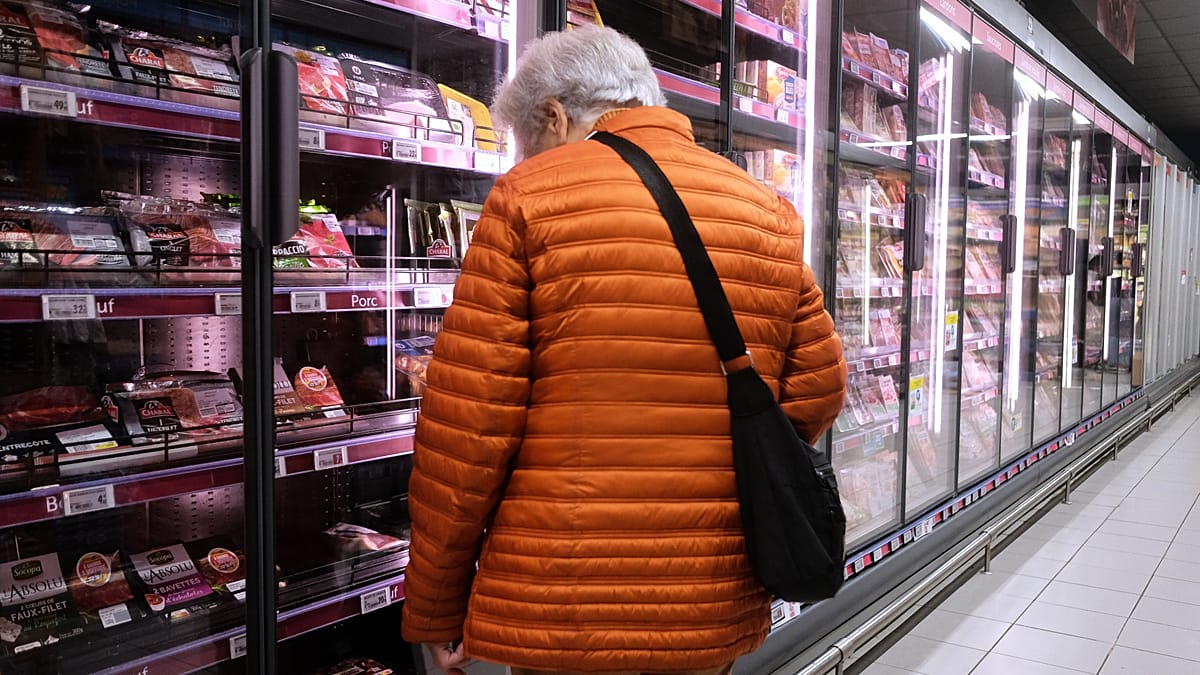
Anyone who walked into a supermarket in Naples or anywhere else in southern Italy in late October may have found the fruit aisle half empty.
For about two weeks, lorry drivers, angry about the cost of diesel, blocked roads and ports across southern Italy.
Warehouses stopped loading, and shelves of meat, fresh milk, fruit and bottled water in Campania, Puglia and Calabria emptied, in some small shops within a day.
In October, unprocessed food in Italy cost 7.5% more than a year earlier, up from 5.5% in September, according to preliminary figures from the national statistics office Istat. Prices for the typical shopping basket of food, household and personal care goods rose 2.5%, up from 1.5%.
Italy is an extreme case. But it points to something happening across Europe: after a quiet year, the weekly shop is starting to get more expensive again.
Energy took the headlines while food stayed modest
Inflation in the eurozone reached 4% in October, the highest in more than three years, according to preliminary figures released by Eurostat on Wednesday.
Energy was the main driver. Fuel, electricity and heating were 20.8% more expensive than a year earlier.
Food prices, by comparison, have risen much more slowly.
Prices of food, alcohol and tobacco rose 1.6% in the eurozone in October compared with a year earlier. Across the EU as a whole, food and soft drinks were just 0.6% dearer in September, the latest month with figures for every country.
Look closer, though, and the picture is uneven. Prices of processed food, alcohol and tobacco rose only 0.5% in October compared with a year earlier.
Unprocessed food prices, covering items such as fruit, vegetables, meat and fish, rose 4.6%, up from 2.7% in August.
“Energy and food drove the increase in prices, while core inflation remains broadly stable despite the ongoing energy shock,” Nicola Nobile, chief Italy economist at Oxford Economics, said in emailed comments.
It makes sense when you think about how food reaches the shelf.
Tractors run on diesel, greenhouses need heating, and almost everything travels by lorry.
When those costs jump, fresh produce, which cannot sit in a warehouse for months, can be particularly exposed.
Big economies show the same split
In France, food prices overall rose 1.2% in October. Fresh products, however, were 8% more expensive than a year earlier, according to the statistics office INSEE, down from 9.5% in September.
In Germany, food was only 0.4% dearer. In Portugal, unprocessed food prices rose 3.7%, the same as in September.
In Spain, food prices were still rising in October, though more slowly than a year earlier.
Cyprus at the top, Sweden at the bottom
The September figures, the latest that include every EU country, show where shoppers have been hit hardest.
Cyprus had the steepest rise, with food and soft drinks 4% dearer than a year earlier. Spain, at 2.7%, Romania at 2.6%, Malta at 2.5% and Portugal at 2.4% came next.
Outside the EU, Türkiye had a much higher rate, with food prices up 27.6% in a year.
In 14 of the EU’s 27 countries, food and soft drinks were actually cheaper than a year before.
The biggest drop was in Sweden, where prices fell 6.3%. This followed a VAT cut. The government halved VAT on food, from 12% to 6%, on 1 April, and the cut runs until the end of 2027.
Latvia, Hungary and Czechia also saw food prices fall by between 3.8% and 4.8%.
Five years on, Eastern Europe carries the heaviest load
A small rise today comes on top of a very large one.
Since September 2021, as energy prices began to surge, food in the EU has become about a third more expensive.
In Hungary, prices are up by more than half. In Bulgaria, Estonia and Romania, the increase is just over 50%. In Luxembourg, Sweden and France, it is closer to a quarter.
Several of the countries with the biggest increases are also those where food takes up the largest share of household spending. For a family in Bucharest or Sofia, a 2% rise at the till can therefore take up a larger share of the household budget than the same rise in Luxembourg.
Economists expect overall inflation to keep climbing.
Pantheon Macroeconomics sees eurozone inflation peaking at 4.5% in January and expects the European Central Bank to raise interest rates in December.
The October figures suggest food price rises may be picking up just as winter heating bills arrive. In parts of southern Italy, shoppers have already felt it.