
Close Menu
Daily Guardian EuropeDaily Guardian Europe
  • Home
  • Europe
  • World
  • Politics
  • Business
  • Lifestyle
  • Sports
  • Travel
  • Environment
  • Culture
  • Press Release
  • Trending
What's On

Russlands neuer Luftkrieg – mit Moritz Schularick – POLITICO

September 15, 2026

Video. Watch: Aftermath of NATO jets’ downing of drone in Lithuania

September 15, 2026

Europe’s fake pesticide crisis: inside a $20 billion illegal trade

September 15, 2026

SoftBank shares plunge as calls grow to slow AI development

September 15, 2026

Poké Ball-shaped hotel opens in Japan to mark 30th anniversary of Pokémon

September 15, 2026
Facebook X (Twitter) Instagram
Web Stories
Facebook X (Twitter) Instagram
Daily Guardian Europe
Newsletter
  • Home
  • Europe
  • World
  • Politics
  • Business
  • Lifestyle
  • Sports
  • Travel
  • Environment
  • Culture
  • Press Release
  • Trending
Daily Guardian EuropeDaily Guardian Europe
Home»Lifestyle
Lifestyle

FLEX satellite in orbit: studying plant responses to climate change from space

By staffSeptember 15, 20262 Mins Read
FLEX satellite in orbit: studying plant responses to climate change from space
Share
Facebook Twitter LinkedIn Pinterest Email

Published on 15/09/2026 – 10:03 GMT+2•Updated
11:16

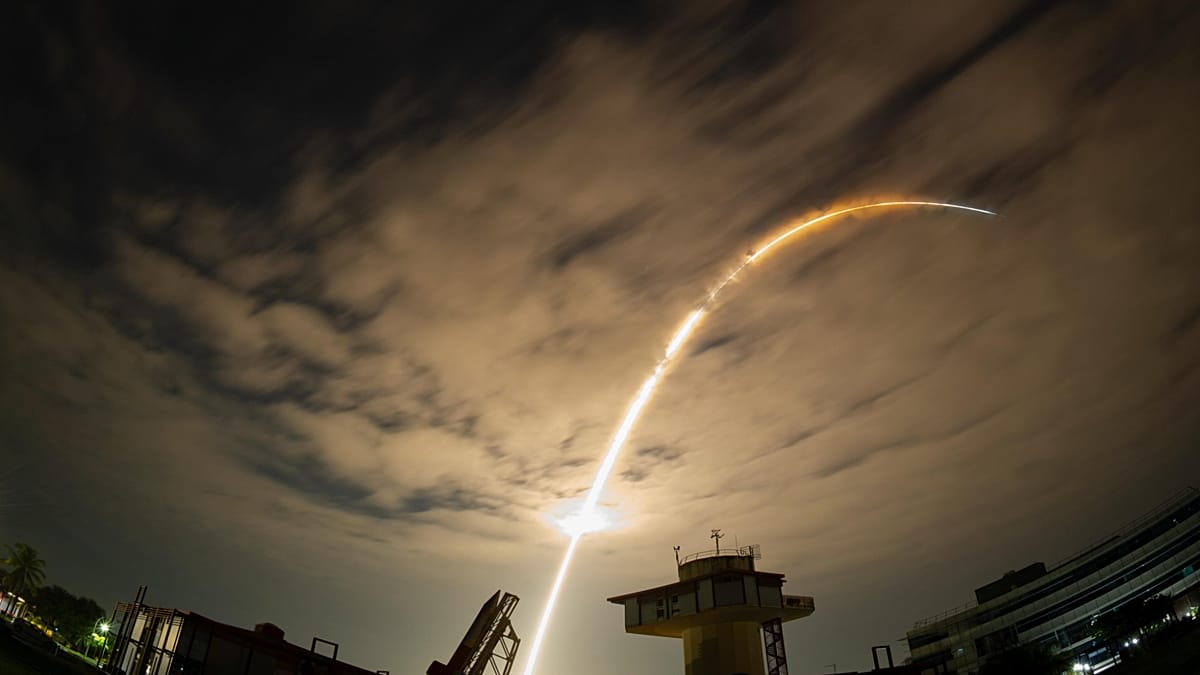
The Vega-C rocket has placed the FLEX and Sentinel-3C satellites in orbit from French Guiana, enabling scientists to study the state of vegetation and obtain new data on the oceans, land, ice and the atmosphere.

Since Tuesday, Europe has had two new satellites to observe Earth from space. The Vega-C rocket lifted off from the European spaceport in Kourou, in French Guiana, at 22:21 on Monday carrying the FLEX and Sentinel-3C satellites.

The mission, known as VV30, will help expand the information available on the state of the planet and the effects of climate change.

The main goal of FLEX is to gain a better understanding of how plants function and how they respond to situations such as extreme heat or a lack of water.

The satellite is equipped with an instrument capable of detecting a faint light that plants emit when they carry out photosynthesis. This signal cannot be seen with the naked eye, but it contains information about the state of vegetation and makes it possible to detect when plants are suffering because of environmental conditions.

FLEX will be able to produce maps of vegetation activity with a resolution of around 300 metres by 300 metres. The mission is designed to operate for at least three and a half years.

The mission also has significant Spanish involvement. Scientist José Moreno, a professor at the University of Valencia and principal investigator for FLEX, is leading the mission’s scientific team. Spain’s Ministry of Science itself has underlined the country’s role in this European Space Agency project.

Travelling alongside FLEX is Sentinel-3C, the third satellite in the Sentinel-3 mission under the European Copernicus programme. Its job will be to continuously monitor the oceans, land surface, ice and atmosphere. Its data are used, among other things, to improve weather forecasting and to study how the climate and the environment are evolving.

Sentinel-3C will join a mission that already includes the Sentinel-3A and Sentinel-3B satellites. The new spacecraft will replace Sentinel-3A, which has been in operation since 2016.

Although FLEX and Sentinel-3C travelled into space together, they will not initially remain in the same orbit. This will allow data from both missions to be combined to gain a better understanding of how vegetation responds to environmental conditions.

Share. Facebook Twitter Pinterest LinkedIn Tumblr Email

Keep Reading

Doomers vs boosters: Who’s who in the global fight over the risks of AI

Enter the hoax buster: Trump dismisses AI concerns as Europe and China fret

Microsoft introduces AI guardrails for US schools amid growing backlash

Kenya tests solar-powered ambulance for remote communities

There won’t be any cities on the Moon any time soon, scientists say

Could astronauts get cataract surgery on Mars? Scientists test eye implants in space

AI makers step up calls for a slowdown as fears of a rogue takeover grow

China’s Xi Jinping proposes BRICS ‘open-source AI zone’

3D-printed food: from niche technology to a potential future

Editors Picks

Video. Watch: Aftermath of NATO jets’ downing of drone in Lithuania

September 15, 2026

Europe’s fake pesticide crisis: inside a $20 billion illegal trade

September 15, 2026

SoftBank shares plunge as calls grow to slow AI development

September 15, 2026

Poké Ball-shaped hotel opens in Japan to mark 30th anniversary of Pokémon

September 15, 2026

Subscribe to News

Get the latest Europe and world news and updates directly to your inbox.

Latest News

‘Is this sport?’: Sydney Sweeney faces backlash from female athletes over nude advert

September 15, 2026

EU countries to discuss global AI rules on Thursday – POLITICO

September 15, 2026

Prominent Greek neo-Nazi exits prison and says he will return to politics

September 15, 2026
Facebook X (Twitter) Pinterest TikTok Instagram
© 2026 Daily Guardian Europe. All Rights Reserved.
  • Privacy Policy
  • Terms
  • Advertise
  • Contact

Type above and press Enter to search. Press Esc to cancel.