
Close Menu
Daily Guardian EuropeDaily Guardian Europe
  • Home
  • Europe
  • World
  • Politics
  • Business
  • Lifestyle
  • Sports
  • Travel
  • Environment
  • Culture
  • Press Release
  • Trending
What's On

Armenia sees ‘totally new global role’ for South Caucasus ‘as a whole’

November 4, 2026

Metsola tells MEPs not to rely on AI when drafting laws – POLITICO

November 4, 2026

Iranian MP tells Euronews Tehran’s missiles will strike Europe if US uses its bases there

November 4, 2026

Fridge hacks also hit French blood banks – POLITICO

November 4, 2026

After US midterms, a weakened Trump may pose a greater threat to Europe

November 4, 2026
Facebook X (Twitter) Instagram
Web Stories
Facebook X (Twitter) Instagram
Daily Guardian Europe
Newsletter
  • Home
  • Europe
  • World
  • Politics
  • Business
  • Lifestyle
  • Sports
  • Travel
  • Environment
  • Culture
  • Press Release
  • Trending
Daily Guardian EuropeDaily Guardian Europe
Home»Lifestyle
Lifestyle

FLEX satellite in orbit: studying plant responses to climate change from space

By staffSeptember 15, 20262 Mins Read
FLEX satellite in orbit: studying plant responses to climate change from space
Share
Facebook Twitter LinkedIn Pinterest Email

Published on 15/09/2026 – 10:03 GMT+2•Updated
11:16

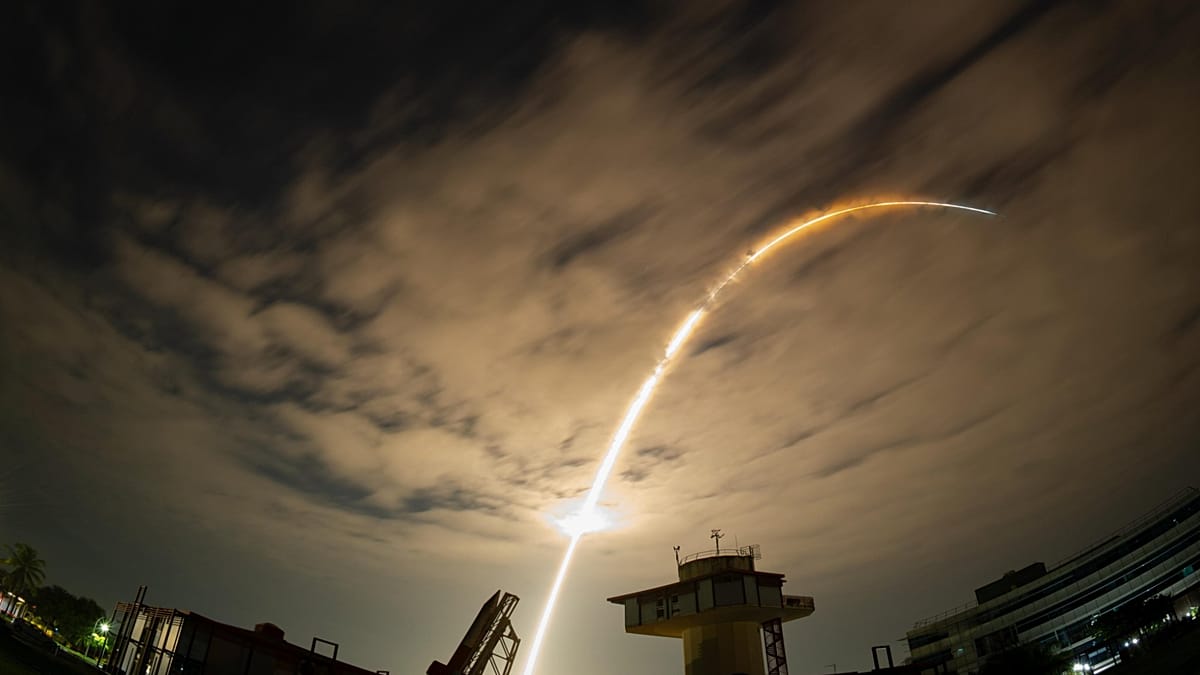
The Vega-C rocket has placed the FLEX and Sentinel-3C satellites in orbit from French Guiana, enabling scientists to study the state of vegetation and obtain new data on the oceans, land, ice and the atmosphere.

Since Tuesday, Europe has had two new satellites to observe Earth from space. The Vega-C rocket lifted off from the European spaceport in Kourou, in French Guiana, at 22:21 on Monday carrying the FLEX and Sentinel-3C satellites.

The mission, known as VV30, will help expand the information available on the state of the planet and the effects of climate change.

The main goal of FLEX is to gain a better understanding of how plants function and how they respond to situations such as extreme heat or a lack of water.

The satellite is equipped with an instrument capable of detecting a faint light that plants emit when they carry out photosynthesis. This signal cannot be seen with the naked eye, but it contains information about the state of vegetation and makes it possible to detect when plants are suffering because of environmental conditions.

FLEX will be able to produce maps of vegetation activity with a resolution of around 300 metres by 300 metres. The mission is designed to operate for at least three and a half years.

The mission also has significant Spanish involvement. Scientist José Moreno, a professor at the University of Valencia and principal investigator for FLEX, is leading the mission’s scientific team. Spain’s Ministry of Science itself has underlined the country’s role in this European Space Agency project.

Travelling alongside FLEX is Sentinel-3C, the third satellite in the Sentinel-3 mission under the European Copernicus programme. Its job will be to continuously monitor the oceans, land surface, ice and atmosphere. Its data are used, among other things, to improve weather forecasting and to study how the climate and the environment are evolving.

Sentinel-3C will join a mission that already includes the Sentinel-3A and Sentinel-3B satellites. The new spacecraft will replace Sentinel-3A, which has been in operation since 2016.

Although FLEX and Sentinel-3C travelled into space together, they will not initially remain in the same orbit. This will allow data from both missions to be combined to gain a better understanding of how vegetation responds to environmental conditions.

Share. Facebook Twitter Pinterest LinkedIn Tumblr Email

Keep Reading

US midterm elections: Backlash to AI data centres reaches ballot boxes

Supermarket cyberattacks in Europe hit Italy’s Coop stores in Catania and Palermo

Italy holds emergency talks as supermarket fridge attacks spread across Europe

UK likely to face AI-powered cyberattacks on critical infrastructure by 2028, cyber chief warns

InnoWeek 2026 showcases advances in robotics, aviation and clean energy

Which countries in Europe have been hit by supermarket fridge cyber incidents?

Why are supermarket freezers being hacked across Europe and could AI make it worse?

Why are supermarket fridges connected to the internet?

Dutch MP proposes law banning ‘harmful addictive design features’ on all digital platforms

Editors Picks

Metsola tells MEPs not to rely on AI when drafting laws – POLITICO

November 4, 2026

Iranian MP tells Euronews Tehran’s missiles will strike Europe if US uses its bases there

November 4, 2026

Fridge hacks also hit French blood banks – POLITICO

November 4, 2026

After US midterms, a weakened Trump may pose a greater threat to Europe

November 4, 2026

Subscribe to News

Get the latest Europe and world news and updates directly to your inbox.

Latest News

Eurozone inflation hits 4%: Which countries saw prices jump the most?

November 4, 2026

What Trump’s double defeat means for the UK – POLITICO

November 4, 2026

Hockey nations refuse to play Russia as Germany weighs pulling out as host

November 4, 2026
Facebook X (Twitter) Pinterest TikTok Instagram
© 2026 Daily Guardian Europe. All Rights Reserved.
  • Privacy Policy
  • Terms
  • Advertise
  • Contact

Type above and press Enter to search. Press Esc to cancel.