
Close Menu
Daily Guardian EuropeDaily Guardian Europe
  • Home
  • Europe
  • World
  • Politics
  • Business
  • Lifestyle
  • Sports
  • Travel
  • Environment
  • Culture
  • Press Release
  • Trending
What's On

EU institution leaders blast Serbia over ‘shocking’ Ratko Mladić’s funeral

September 9, 2026

AfD surge in Germany exposes deep divisions on the Italian right

September 9, 2026

The European commute: Which EU country spends the most time getting to work?

September 9, 2026

UK commits €116m for Ukraine’s winter air defence, including Patriot missiles

September 8, 2026

Nomad Games draw to an end in Kyrgyzstan after a week of celebrating nomadic culture

September 8, 2026
Facebook X (Twitter) Instagram
Web Stories
Facebook X (Twitter) Instagram
Daily Guardian Europe
Newsletter
  • Home
  • Europe
  • World
  • Politics
  • Business
  • Lifestyle
  • Sports
  • Travel
  • Environment
  • Culture
  • Press Release
  • Trending
Daily Guardian EuropeDaily Guardian Europe
Home»Europe
Europe

Extreme weather and jellyfish knock one-fifth of France’s nuclear capacity offline

By staffAugust 12, 20262 Mins Read
Extreme weather and jellyfish knock one-fifth of France’s nuclear capacity offline
Share
Facebook Twitter LinkedIn Pinterest Email
By&nbspGavin Blackburn&nbsp&&nbspSerge Duchêne

Published on 12/08/2026 – 16:09 GMT+2•Updated
17:29

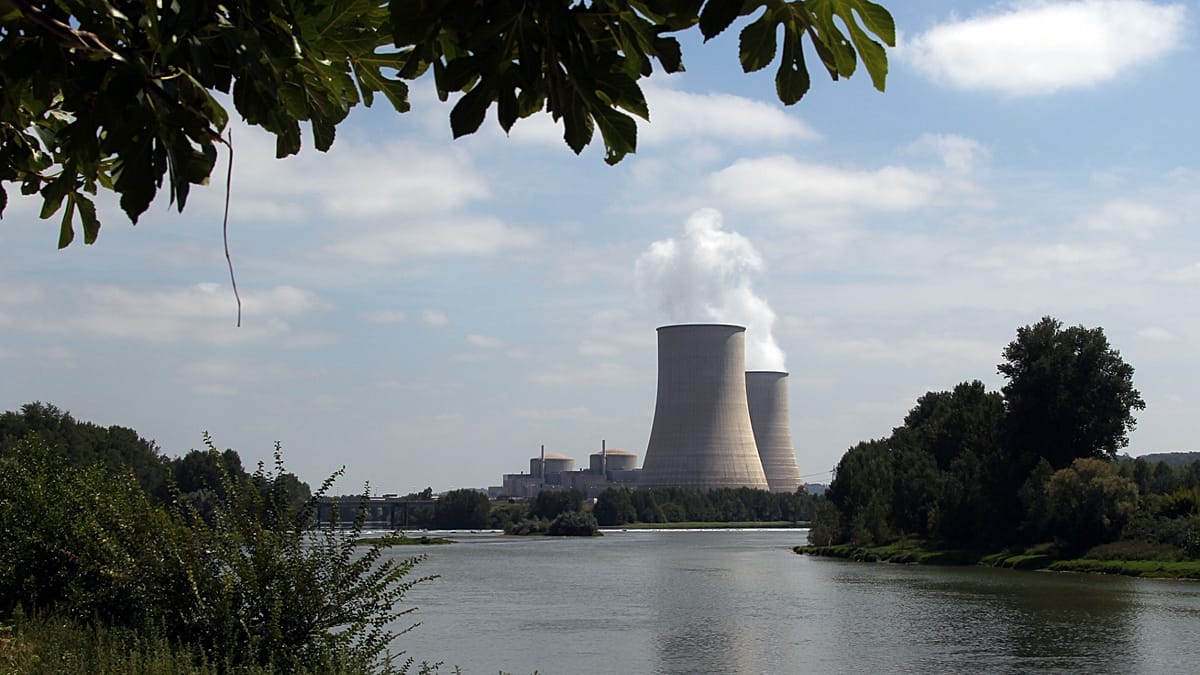
France recorded a more than 20% shortfall in nuclear power production capacity on Wednesday, a record deficit caused by environmental-related outages linked to drought, extreme heat and a jellyfish invasion.

France uses nuclear power to generate around 70% of its electricity. The country has seen nuclear power production disrupted by multiple heatwaves and droughts this year.

According to AFP calculations based on data published by energy group EDF since 2015, 20.4% of generating capacity was unavailable.

Between 9:45 am and 10:00 am, EDF’s nuclear fleet recorded a new peak in outages due to “environmental constraints” or “external environmental causes,” both in terms of the number of reactors shut down or operating at reduced output and in terms of lost generating capacity.

In total, 13 of the 57 reactors in EDF’s nuclear fleet were affected. Eight reactors were completely shut down while five were operating at reduced power.

Much of the lost nuclear generating capacity was due to full or partial shutdowns at five of the six reactors at the Gravelines nuclear power plant after a swarm of jellyfish clogged pumps used to cool the units.

Experts say overfishing, plastic pollution and warming seas due to climate change have created conditions allowing jellyfish to thrive and reproduce.

Outside the Gravelines plant, the largest in Western Europe, the shutdowns or production reductions affecting other reactors are linked to extreme heat and droughts, depriving the plants of the water they need for cooling.

During droughts or heatwaves, lower river flow and higher water temperatures can force EDF to cut, or even halt, production in order to protect the environment and biodiversity.

The operator is then unable to discharge chemical or radioactive effluents or further warm rivers with its cooling water, which is returned to the river at a higher temperature.

“But there is enough leeway that this does not pose any supply problems in the short term,” says Nicolas Goldberg, an energy expert at consultancy Colombus Consulting quoted by CNews.

Additional sources • AFP

Share. Facebook Twitter Pinterest LinkedIn Tumblr Email

Keep Reading

EU institution leaders blast Serbia over ‘shocking’ Ratko Mladić’s funeral

AfD surge in Germany exposes deep divisions on the Italian right

The European commute: Which EU country spends the most time getting to work?

UK commits €116m for Ukraine’s winter air defence, including Patriot missiles

Technical glitch leads to more than 1,000 flight cancellations across UK

Pupils’ reading and maths skills slump across the world as digitalisation soars, PISA study shows

Sweden heads to polls in close election race dominated by welfare state and security

Ceuta President urges the EU to take firm action against Morocco, as the city is ‘on the brink of collapse’

Hungary expels 10 Russian diplomats for ‘unacceptable activities’

Editors Picks

AfD surge in Germany exposes deep divisions on the Italian right

September 9, 2026

The European commute: Which EU country spends the most time getting to work?

September 9, 2026

UK commits €116m for Ukraine’s winter air defence, including Patriot missiles

September 8, 2026

Nomad Games draw to an end in Kyrgyzstan after a week of celebrating nomadic culture

September 8, 2026

Subscribe to News

Get the latest Europe and world news and updates directly to your inbox.

Latest News

EU pursues closer Israel ties on air defense and space – POLITICO

September 8, 2026

Technical glitch leads to more than 1,000 flight cancellations across UK

September 8, 2026

Video. Latest news bulletin | September 8th, 2026 – Evening

September 8, 2026
Facebook X (Twitter) Pinterest TikTok Instagram
© 2026 Daily Guardian Europe. All Rights Reserved.
  • Privacy Policy
  • Terms
  • Advertise
  • Contact

Type above and press Enter to search. Press Esc to cancel.