
Close Menu
Daily Guardian EuropeDaily Guardian Europe
  • Home
  • Europe
  • World
  • Politics
  • Business
  • Lifestyle
  • Sports
  • Travel
  • Environment
  • Culture
  • Press Release
  • Trending
What's On

Sweden to buy Lockheed Martin’s HIMARS rocket artillery in €630 million deal

September 8, 2026

Vivian Wilson hits out at AI and estranged father Elon Musk in new Desigual fashion campaign

September 8, 2026

Hungary expels 10 Russian diplomats amid espionage concerns – POLITICO

September 8, 2026

EU warns of new terror menace 25 years after 9/11 as online youths seek violent thrills

September 8, 2026

Qatar and UAE say Gulf cannot rely on US alone for region’s security

September 8, 2026
Facebook X (Twitter) Instagram
Web Stories
Facebook X (Twitter) Instagram
Daily Guardian Europe
Newsletter
  • Home
  • Europe
  • World
  • Politics
  • Business
  • Lifestyle
  • Sports
  • Travel
  • Environment
  • Culture
  • Press Release
  • Trending
Daily Guardian EuropeDaily Guardian Europe
Home»Business
Business

Exclusive: Italy proposes no fees for digital euro payments under €10

By staffSeptember 8, 20263 Mins Read
Exclusive: Italy proposes no fees for digital euro payments under €10
Share
Facebook Twitter LinkedIn Pinterest Email

Published on
08/09/2026 – 13:55 GMT+2

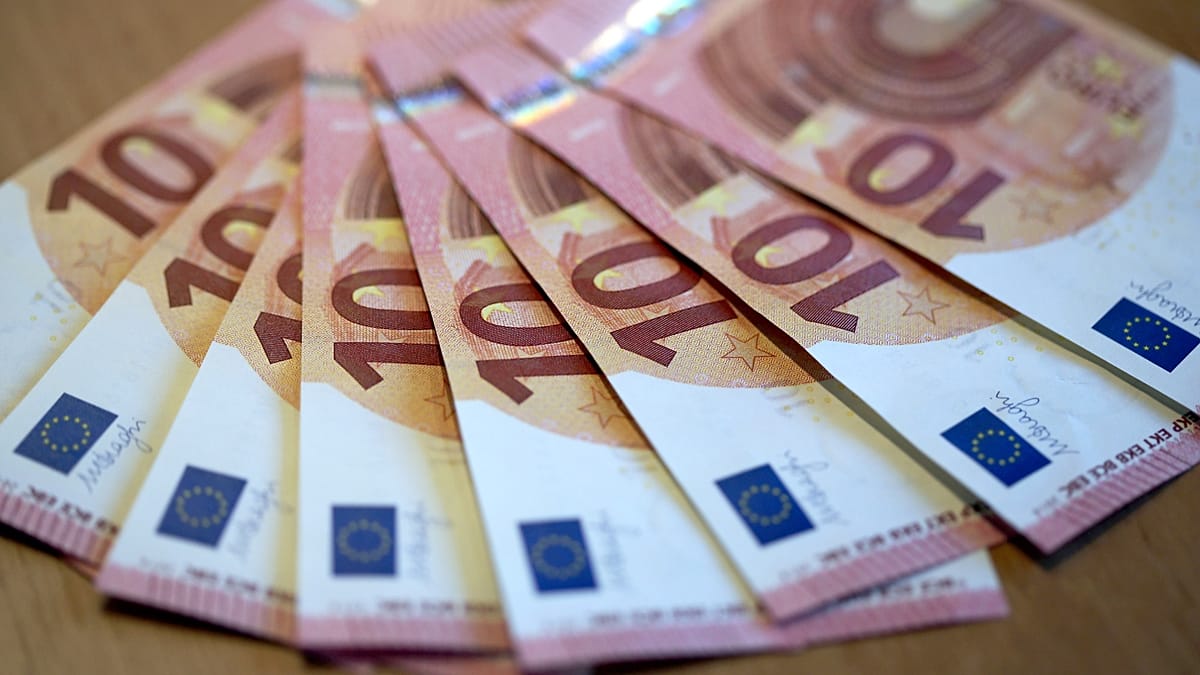
Italy has proposed introducing an exemption for digital euro transactions under €10 in a move that would favour small businesses, according to sources consulted and documents seen by Euronews

The move is viewed favourably by the central banking community, in particular by the European Central Bank (ECB), a source from the banking sector told Euronews.

The digital euro is a digital form of payment, expected to complement cash, with the ECB aiming to be ready for a potential first issuance in 2029, assuming the necessary regulation is adopted this year.

As Europe mainly relies on US-based payment schemes such as Visa and Mastercard, the EU is pushing for greater strategic autonomy in payments, with the digital euro seen as one potential solution.

It will have legal tender status, meaning merchants will generally be required to accept it, subject to certain exceptions. For this reason, legislators are negotiating how fees should be distributed among market participants, so that small merchants are not disadvantaged by the adoption of the new digital currency.

The distribution of fees among market participants, known as the “compensation model”, is among the most delicate parts of the negotiations in Brussels, alongside the “holding limits”, meaning the maximum amount of digital euro that can be held in a wallet.

“The proposal is a merchant service charge cap up to €0.02 for low value transactions, applicable especially to small merchants. But we’re open to consider a net zero, as de facto this would be the result anyway,” an EU diplomat told Euronews on condition of anonymity.

“Such a solution would also make the framework simpler,” the diplomat added.

According to internal documents seen by Euronews in relation to the negotiations, the fee scheme will be temporary, allowing the ECB to gather sufficient data before proposing a new model, if appropriate. The need for better data on payment fees has also been highlighted by the European Court of Auditors. In a 2025 report, the ECA found that the European Commission lacked sufficient data on merchant service charges and costs to effectively monitor the impact of existing price interventions in the payments market.

Other negotiation documents indicate that small merchants typically pay higher fees than large companies because they have weaker bargaining power with international payment schemes. These schemes are difficult for merchants to refuse, particularly when they are widely used. According to an ECB analysis, small merchants can pay three to four times more in fees than larger merchants.

The matter will be analysed by member states, the European Parliament and the European Commission during the next round of negotiations in Brussels, according to an internal document seen by Euronews.

Negotiators will meet again in Brussels on Thursday, 10 September, for further discussions.

Share. Facebook Twitter Pinterest LinkedIn Tumblr Email

Keep Reading

Sweden to buy Lockheed Martin’s HIMARS rocket artillery in €630 million deal

Canada hits US goods with tariffs of up to 50% as trade dispute escalates

Serbia and Uzbekistan target more trade as President Mirziyoyev visits Belgrade

Six months into Hormuz blockade, Qatar and UAE test ways to keep LNG moving

German exports fall for first time in five months, deepening recovery fears

Jaguar Land Rover cuts 4,000 jobs worldwide in effort to save costs

China exports accelerate on strong demand for autos and high-tech goods

CASA 47: what the new national public housing portal offers and how it works

Record fuel price rise triggers protests in Portugal

Editors Picks

Vivian Wilson hits out at AI and estranged father Elon Musk in new Desigual fashion campaign

September 8, 2026

Hungary expels 10 Russian diplomats amid espionage concerns – POLITICO

September 8, 2026

EU warns of new terror menace 25 years after 9/11 as online youths seek violent thrills

September 8, 2026

Qatar and UAE say Gulf cannot rely on US alone for region’s security

September 8, 2026

Subscribe to News

Get the latest Europe and world news and updates directly to your inbox.

Latest News

Canada hits US goods with tariffs of up to 50% as trade dispute escalates

September 8, 2026

France calls for new EU taxes to raise €60B – POLITICO

September 8, 2026

Zelenskyy expects Trump meeting in late September as Kyiv pushes for air defence and new talks

September 8, 2026
Facebook X (Twitter) Pinterest TikTok Instagram
© 2026 Daily Guardian Europe. All Rights Reserved.
  • Privacy Policy
  • Terms
  • Advertise
  • Contact

Type above and press Enter to search. Press Esc to cancel.